Spanish Activities for Preschoolers Using Play
Part of: Spanish Alphabet Worksheets for Preschool and K
By KubbyLab Team · Updated
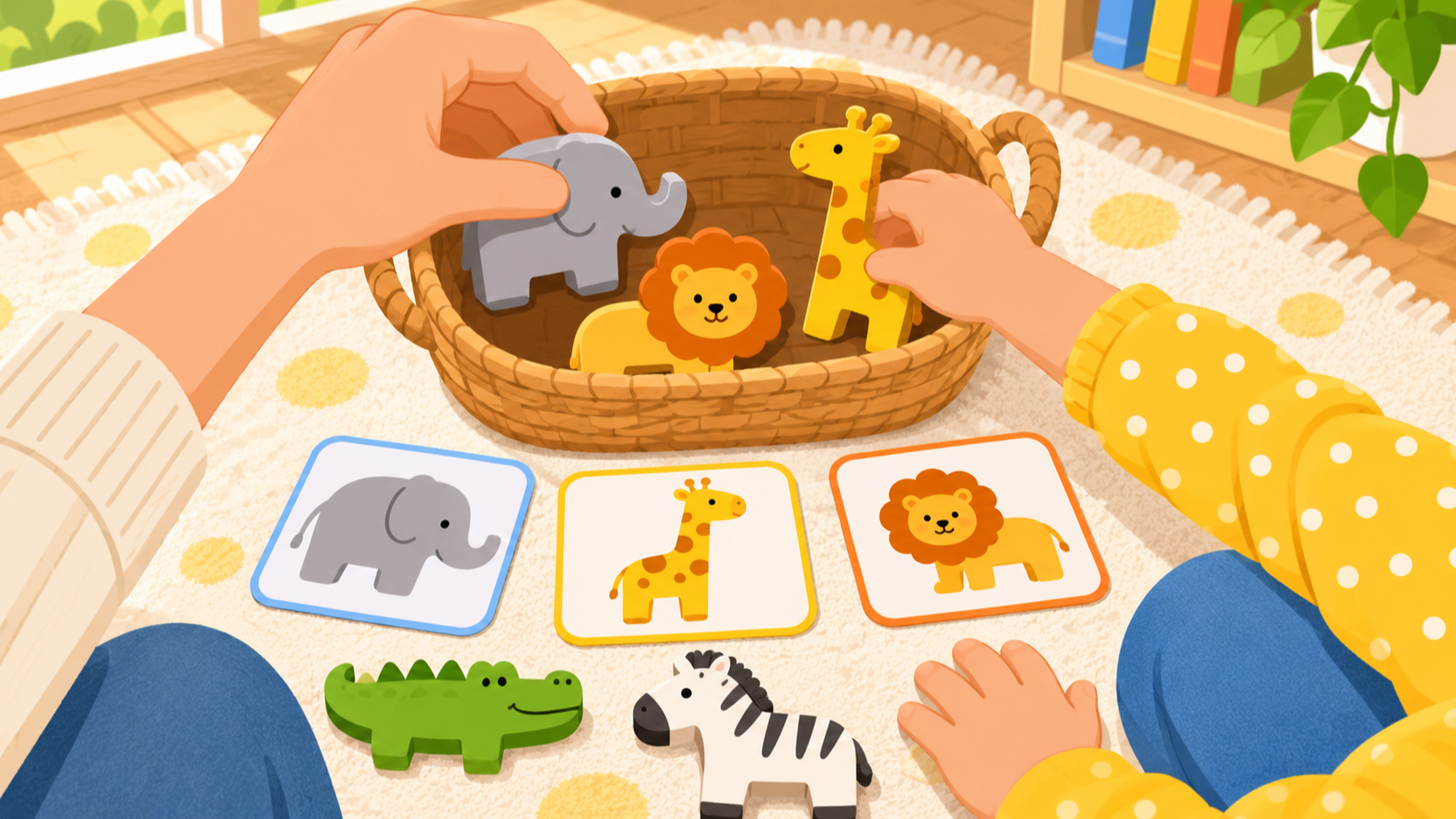
Start Spanish activities for preschoolers with a toy hunt. Hide a familiar toy in view, say its Spanish name as you point to it, and invite your child to bring it back. Reuse the same word during cleanup or a picture-book read-aloud. Once the word is familiar, you can connect it to a letter with an optional alphabet worksheet.
Key Takeaways
- Choose a familiar object or action so your child can see what the Spanish words mean.
- A point, a gesture, or a turn with a toy can be a complete response.
- Reuse the same phrase during play and in a familiar routine.
- Bring out a printable when you have a letter or picture to connect to the activity.
How do I teach my preschooler Spanish at home?
Teach your preschooler Spanish by choosing a familiar routine and using a short phrase while you show what it means. At cleanup, say La pelota va en la caja (The ball goes in the box) as you put the ball away, then offer your child a turn with the ball.
I like cleanup as a routine cue, a familiar moment that tells you when to use a phrase again. You already have a ball, a place to put it, and a reason to say the words. At snack time, the cue might be placing a cup on the table and saying Aquí está tu vaso (Here’s your cup). Choose the phrase that fits what you’re both doing.
During a turn, let the action carry the meaning. Hold out your hand and say Dame la pelota (Give me the ball). If your child holds it up for you to see, acknowledge what they showed you and say Sí, la pelota (Yes, the ball). You can offer an open hand again if they want another turn.
If your child asks what you said, give the English meaning and go back to the activity. If they answer in English, answer the idea they expressed and repeat the Spanish word where it fits. For an optional follow-up when your child wants to see the letter on paper, start with Spanish Alphabet Worksheets for Preschool and K.
What Spanish activities for preschoolers feel like play?
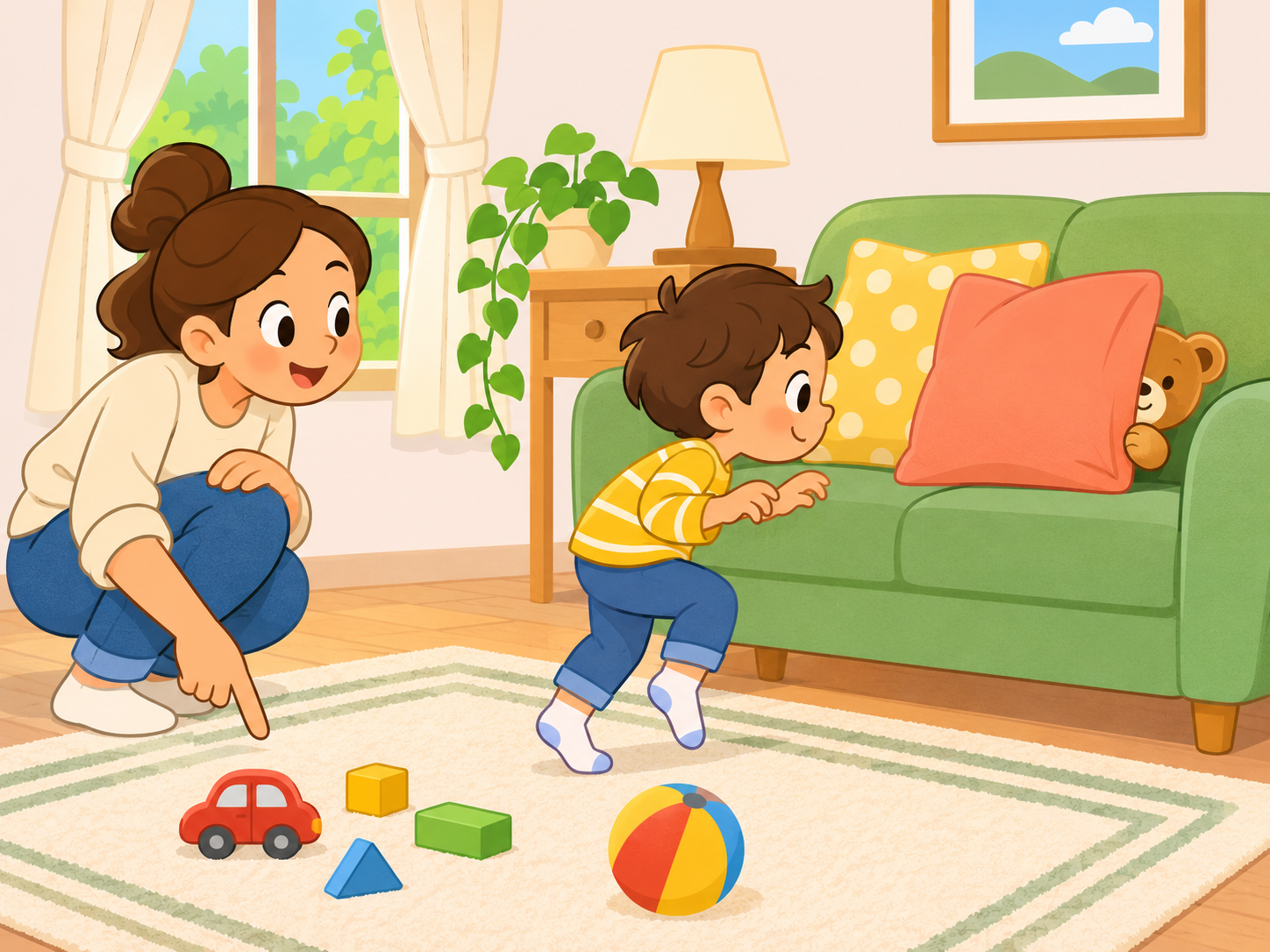
Toy hunts, action songs, picture-book games, and pretend shops give preschoolers a reason to use Spanish during play. Choose an activity around what your child already likes to do, then use a word or phrase that fits the action, such as Abre la caja (Open the box) during a search for a toy.
| Activity | What you need | Spanish to use | What your child can do |
|---|---|---|---|
| Toy hunt | A toy ball and a box | Busca la pelota (Find the ball) | Look for the ball and bring it back |
| Action song | Room to move | Salta (Jump), para (Stop) | Copy the moves or cue your turn |
| Picture-book game | A book with a cat in an illustration | Busca el gato (Find the cat) | Point to the cat and turn the page |
| Pretend shop | A basket and play fruit | Quiero una manzana (I want an apple) | Hand over the apple or ask for one |
| Playdough letters | Playdough and a handwritten P | P de pato (P as in duck) | Shape the letter or point to the matching P |
For the picture-book game, choose a page your child likes to revisit. Give the cue while the picture is in view. If they point to a dog beside the cat, name what they found, then show them the cat. On a second reading, let them find an animal for you to name.
The action song can be as simple as singing salta while you jump and para as you stop. Let your child take over the hand signal when they want you to move. For playdough, say pato while you show a duck picture so the letter activity has a word your child can connect to an object.
How can you teach kids Spanish with one toy hunt?
Use a toy hunt to bring back the same Spanish word as your preschooler listens, searches, and takes a turn leading the game. Start with the toy in sight and say its name as you touch it, then move it into a box so your child can find it after hearing the cue.
Try the hunt with la pelota (the ball), a box, and a chair. Keep the ball close enough to spot from the play area.
- Show the ball. Hold it up and say Mira, la pelota (Look, the ball). Roll it to your child so they can take the first turn.
- Give a clue. Put the ball in the open box while your child watches. Say La pelota está en la caja (The ball is in the box), then hold out your hand for the ball.
- Change the location. Put the ball under the chair and say La pelota está debajo de la silla (The ball is under the chair). Point under the chair if your child looks toward the box again.
- Swap roles. Let your child hide the ball. When they point you to it, describe where they put it. Repeat words from the earlier turns if the hiding place is the same.
In this example, your child brings back the ball from the box, then goes straight to the box again when you say it’s under the chair. Keep the ball visible during the next round and model the chair clue again. Finding the ball with your gesture is enough to keep playing. The child can lead the next round by pointing, even if you’re still saying the clue out loud.
What are fun activities to do in a preschool Spanish class?
For preschool Spanish class, use an action song at circle time, a picture hunt during a read-aloud, or a pretend shop during choice time. Begin with a cue the group can see and copy, then give children a way to take their own turn by moving, pointing, or speaking.
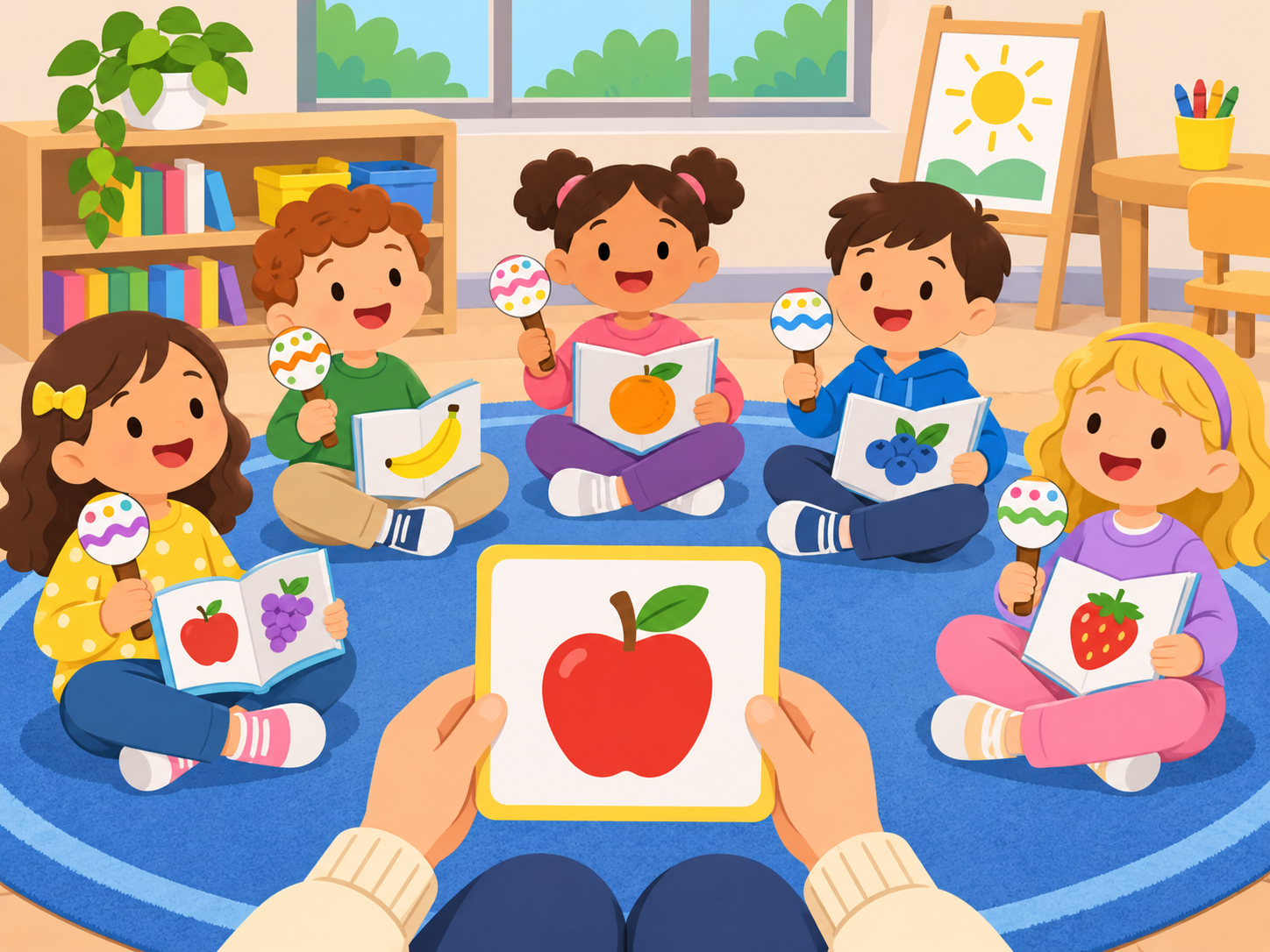
At circle time, put a puppet on your lap and say Siéntate (Sit down) as the puppet sits. Say Levántate (Stand up) as you lift it. Give the same cues again and invite children to move with the puppet. A child who prefers to stay seated can lift a hand when the puppet stands. After a few turns, hand the puppet to a child and follow their lead.
During a read-aloud, use a recurring picture as the prompt. If a dog appears on several pages, say Aquí está el perro (Here’s the dog) on the first page. On the next page with a dog, invite children to point to it. In a small group, offer the book to a child to hold so classmates can show the dog without crowding around your chair.
Karen Ford writes that classroom instruction should include “clear explanations and teacher modeling, with lots of time for students to practice.” A puppet demonstration followed by child-led turns is one way to put that guidance into practice. Colorin Colorado.
Set out the puppet again during choice time if children want to repeat the game. You can start with the same cues they heard on the rug.
How can you add Spanish alphabet worksheets to preschool play?
Add a Spanish alphabet worksheet after your preschooler has heard a word and explored what it means in play. Show the letter in the familiar word, then offer a simple task such as circling the letter in a label, matching uppercase and lowercase forms, or tracing the shape with a finger.
The abecedario is the Spanish alphabet. It has 27 letters, including ñ, which follows n. The combinations ch and ll are digraphs, pairs of letters that represent a single sound. The alphabet counts the letters in each pair individually. Real Academia Española.
For a paper follow-up to the ball hunt, draw a ball, write pelota beneath it, and point to the lowercase p as you say the word. Then put a handwritten uppercase P next to the word. If your child wants a pencil, invite them to circle the p in pelota. If they want to keep moving, let them carry the ball over to the card and place it beside the picture.
A worksheet gives you a place to look at the letter together. The ball hunt gives you a reason to say pelota and see how your child responds. Keep the worksheet optional and use play or conversation to give the word a purpose beyond the page. If your child wants another picture to match or a letter to trace, browse the Spanish abecedario worksheet activities for a paper follow-up.
How can you adapt preschool Spanish activities to your child?
Adapt preschool Spanish activities by changing how your child can answer while keeping the materials and words familiar. Offer a gesture or a choice between visible objects when your child wants to listen, invite a word when they’re ready to speak, and let them give the cue if they want to lead.
If you’re learning Spanish alongside your child, choose a phrase you can say comfortably for a real action. Use Abre la caja as you open a box. A speaker you know or a spoken recording that accompanies a book can help you check a phrase before you use it. Once you have the phrase, say it with the object in front of you both and let your child show you what comes next.
If your child already uses Spanish at home, give them something to decide. Have them hide the ball and tell you where to look. If they volunteer that it’s by the chair, you can ask them to show you which chair. In a group with different levels of Spanish, give all children the same objects and let each one choose how to join the exchange.
Notice what happens when you repeat a cue. A child who goes to the right box after following your pointing finger has used the gesture to join the game. On another turn, try saying the same words with your hand at your side, then point if they need help. End by choosing one cue to reuse the next time the toy comes out.
Keep reading
Indoor Active Play Ideas for Kids on a Rainy Day
Find 10 indoor active play ideas for kids on a rainy day, from freeze dance to sock rolls, with options for small spaces and preschool groups.
Play Based Assessment: What to Watch During Play
Use play based assessment to see what preschoolers know. Try five observation steps and turn a short play note into your next teaching move.
Play Based Preschool Curriculum You Can Plan at Home
Plan a play based preschool curriculum around your child's interests, with a sample week for early literacy, counting, and hands-on play.
Shop the topic
-
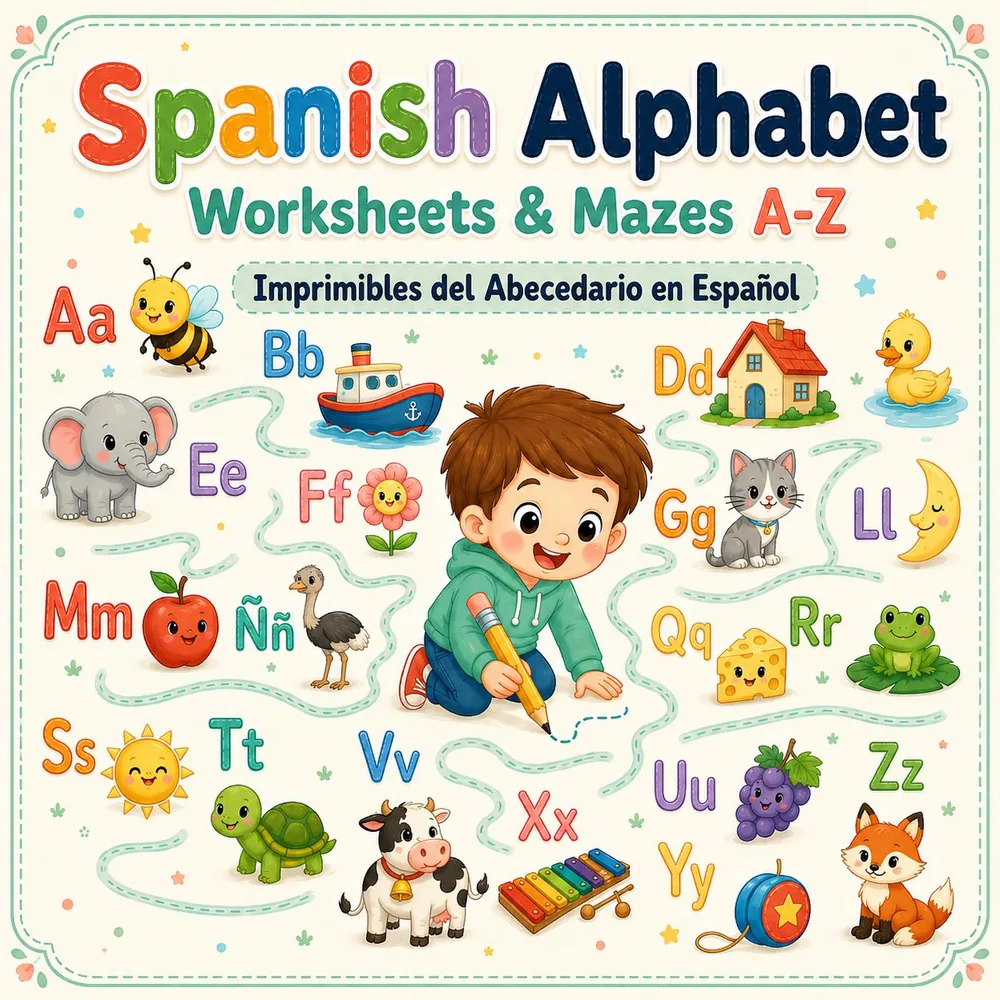
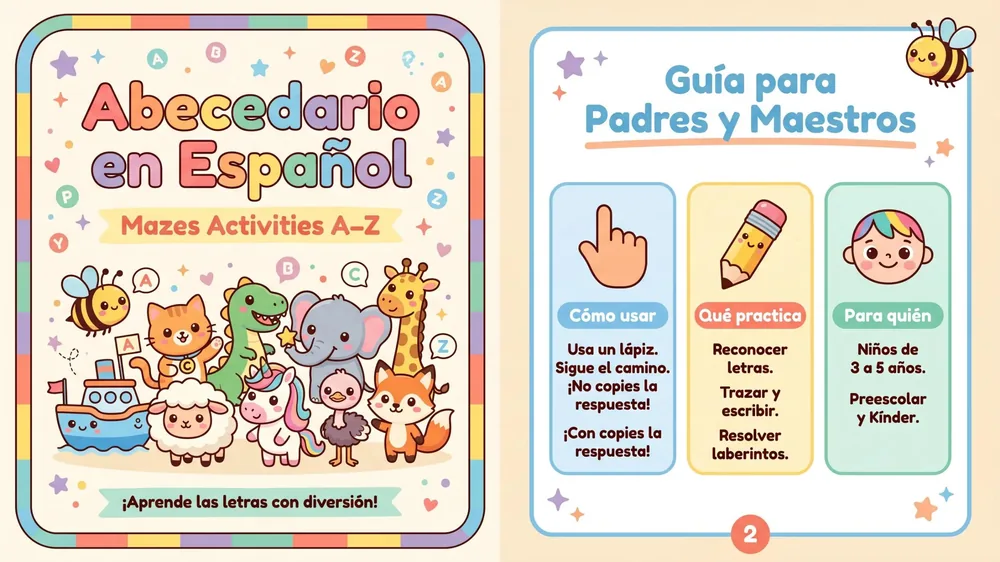
Spanish Alphabet Worksheets & Mazes
50 pages covering A–Z in Spanish: mazes, tracing, matching, beginning sounds and a completion certificate.
$7
Get this product View details -
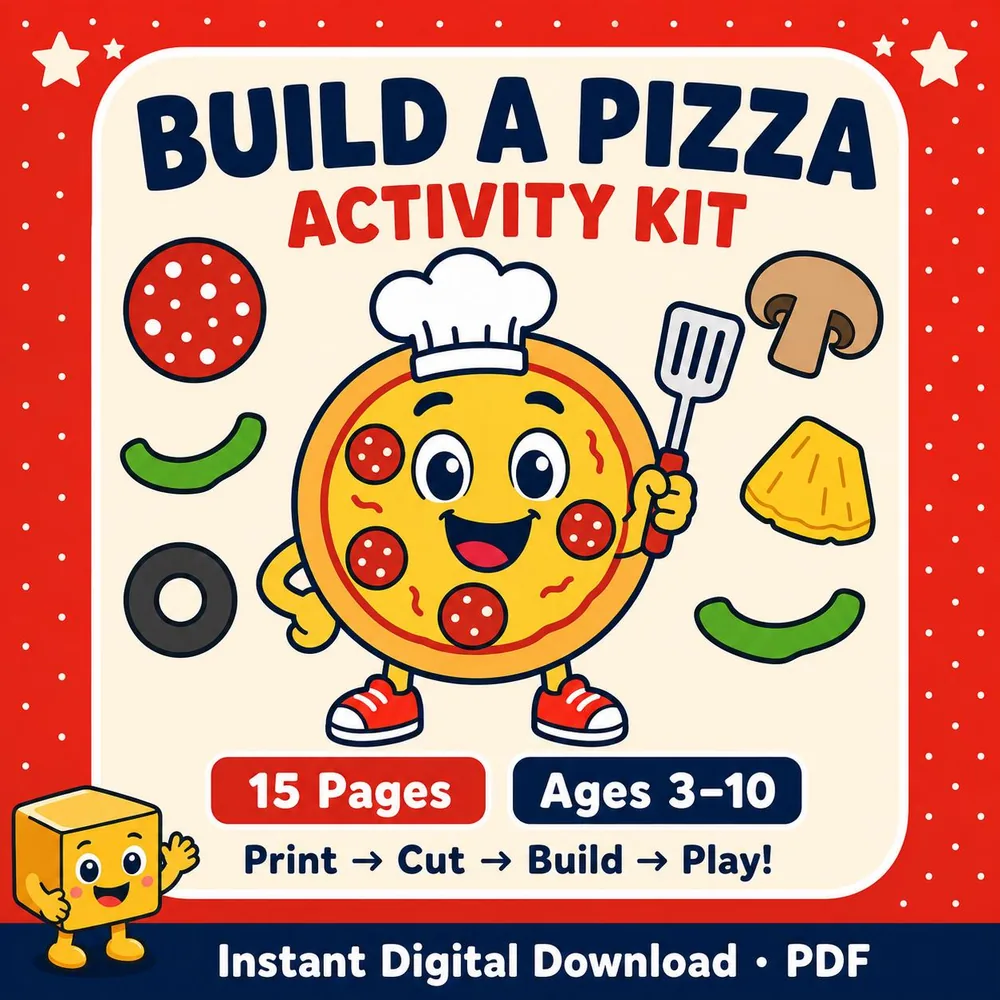
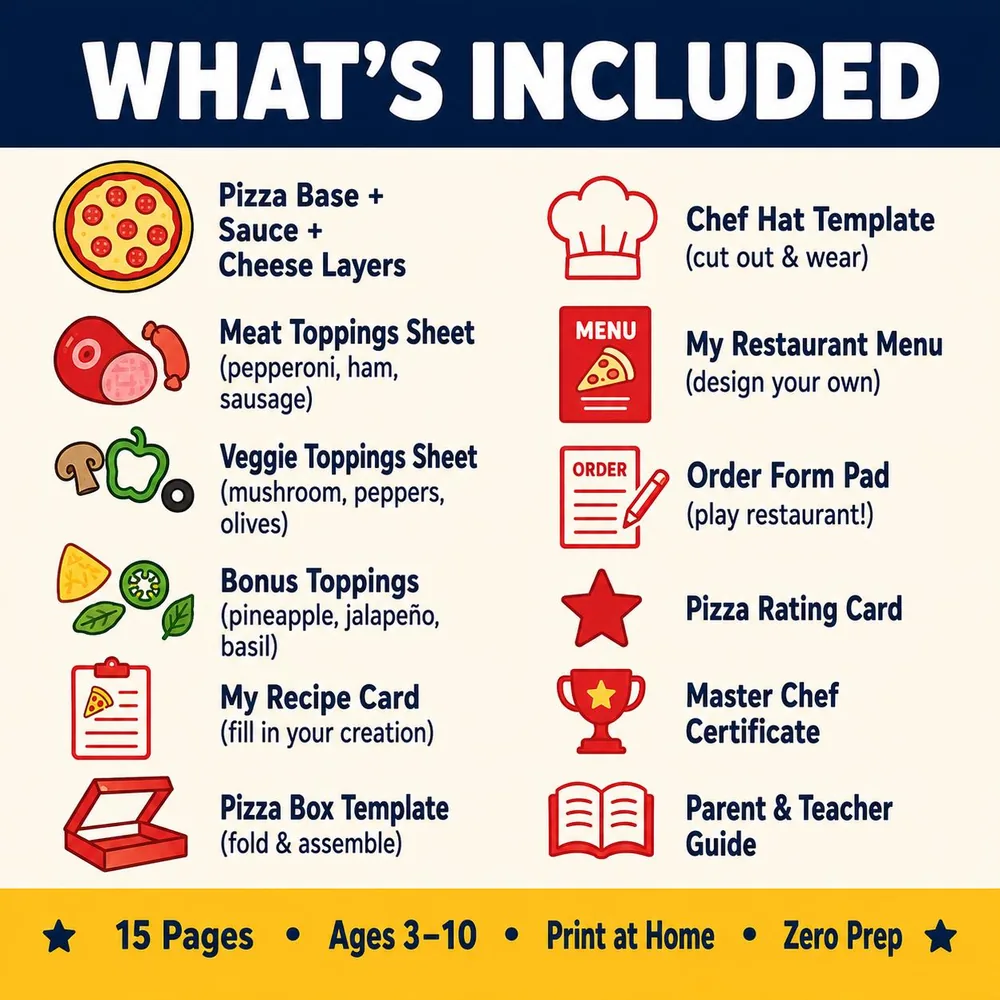
Pizza Chef Pretend Play Kit
15-page pizza pretend play kit: build-your-own pizza, restaurant role play, chef hat, menu and certificate.
$7
Get this product View details -
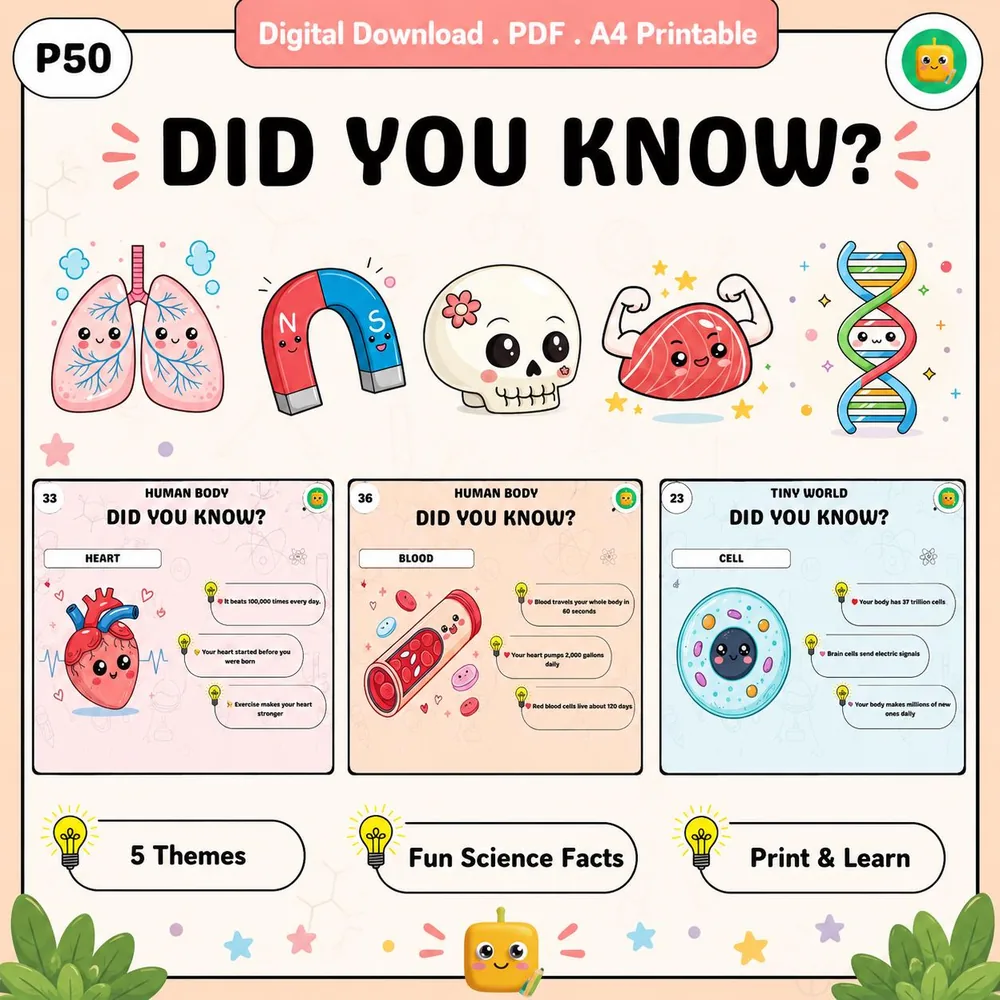
Preschool Science Facts: Did You Know?
50 'Did You Know?' science pages: one concept per page, visual learning, zero prep.
$7
Get this product View details
Frequently asked questions
How do I teach my preschooler Spanish if I only know a little?
Start with a short Spanish phrase tied to something you can show, such as Dame la pelota (Give me the ball). Use the phrase with the same toy during play. If you're unsure how to say it, listen to a Spanish speaker say the phrase before you try it together.
What are some fun ways to teach kids Spanish without worksheets?
Try a toy hunt, an action song, or a pretend shop with play food. In a toy hunt, say Busca la pelota (Find the ball) while the ball is in view, then let your child bring it back. Swap roles so your child gets to hide it.
What Spanish games can I use at preschool circle time?
Try a puppet game in which children copy the puppet as it sits and stands. Say Levántate (Stand up) as you lift the puppet, then invite the group to move or raise a hand. Give a child the puppet for the next turn and follow what they do.
Should preschoolers learn Spanish vocabulary or alphabet letters first?
For a play activity, start with a word your child can hear and connect to an object or action. Once the word is familiar, show its first letter on a card or worksheet if your child is interested. For example, roll a ball together before you point to the p in pelota.
Can my child answer in English during a Spanish activity?
Yes. Answer what your child says and repeat the Spanish word in context. If your child says the ball is in the box, acknowledge that they found it and say La pelota está en la caja (The ball is in the box) as you point to the toy.