
Indoor Active Play Ideas for Kids on a Rainy Day
Part of: Play Based Learning for Children: How to Start
By KubbyLab Team · Updated
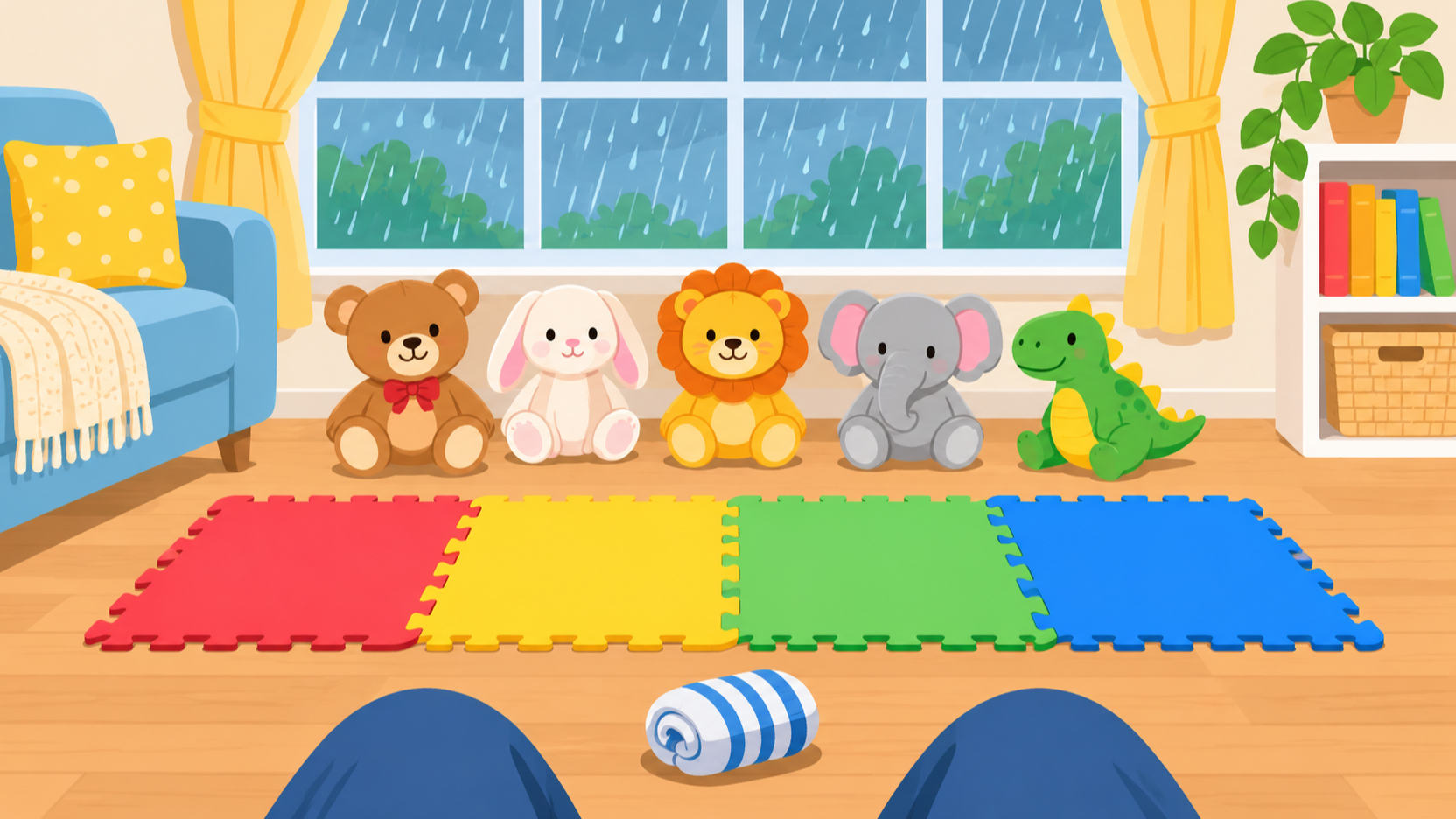
When it’s raining, get children moving with freeze dance, animal steps, a sock roll, or a floor-level obstacle course. If you searched for “indoor active play ideas for kids rainy day,” start with one game that fits the space you can clear. Show your child the first move, then let them choose what happens in the next round.
Key Takeaways
- Try marching and freezing in place if you can clear only a small patch of floor.
- Use a rolled pair of socks and a laundry basket for a game that stays close to the ground.
- Keep the same game for siblings and change the move each child does.
- Add a sound, shape, or counting cue if your child wants another round.
What can you do with children when it’s raining?
Start rainy-day indoor active play with a movement your child can see and copy, such as marching in place or taking slow animal steps. Clear a patch of floor, demonstrate how to start and stop, and invite your child to choose the next movement once the first round makes sense.
Active play is play that involves moving the body. A child can stretch up like a tall tree, reach across their body, walk a pretend path, or carry a soft toy to its pretend home. For an in-place game, try the move yourself at your child’s spot. Check the space at hand and elbow height as well as underfoot. Move loose rugs, cords, and hard toys out of the play area, and choose a spot away from stairs, windows, and furniture corners.
I like to keep the opening invitation small. Say, “Can you march with me?” and start marching. Once your child joins, pause and let them decide whether the next round has tiny mouse steps or slow elephant steps. In a classroom, have children face you from separate spots and show the stop signal before anyone moves. A raised hand gives children a cue they can see.
The freedom to change the game gives your child a hand in play-based learning, which here means exploring a word, idea, or action through play. See Play Based Learning for Children: How to Start.
What are 10 indoor active play ideas for rainy days?
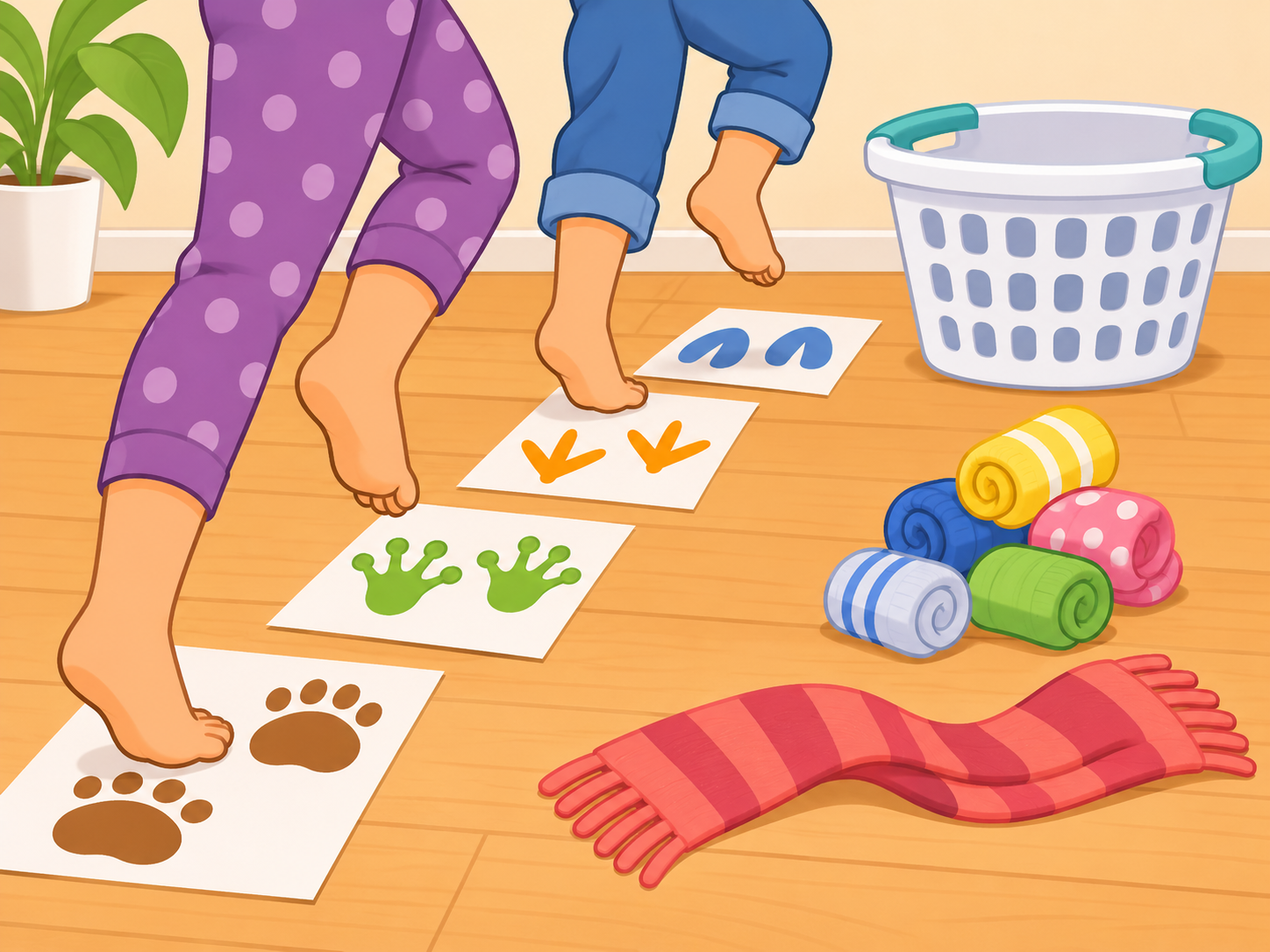
Ten indoor active play ideas for the wet season are freeze dance, mirror moves, animal steps, traffic lights, line walking, a sock roll, soft-toy delivery, a shape hunt, a movement story, and a floor course. Choose by the floor space you can keep clear and whether children will move together or take turns.
| Game | Setup | How to play |
|---|---|---|
| Freeze dance | One clear spot per child | Clap while children dance. Everyone freezes when the clapping stops. |
| Mirror moves | Two facing spots | One person reaches or sways. The partner copies. Swap leaders. |
| Animal steps | A spot or a walking lane | Take tiny mouse steps or make a tall giraffe reach. |
| Traffic lights | A spot or a walking lane | Say “green” for march and “red” for stop. |
| Line walking | A clear path along a floor seam | Walk beside the seam, pause, and turn at the end. |
| Sock roll | Rolled socks, basket on its side | Roll the socks into the basket along the floor. |
| Soft-toy delivery | Soft toy and two floor spots | Walk the toy from its starting spot to its pretend home. |
| Shape hunt | Visible objects and a clear route | Walk to a clear spot near something round and point to it. |
| Movement story | A spot beside the storyteller | Act out a character’s steps and stretches as the story unfolds. |
| Floor course | A clear lane and a place to turn | Follow a line, reach at the end, and walk back. |
In a shared room, try mirror moves with partners. If you have one clear lane, use it for line walking and keep the waiting spot to the side, outside the route.
What are easy, low-prep indoor games for preschoolers?
Freeze dance, mirror moves, and traffic lights are low-prep indoor games for preschoolers because each can start with a clear patch of floor and a cue you can show with your body. Demonstrate the cue and the matching move together, then let a child lead once everyone has tried a round.
For freeze dance, clap while your child sways or marches and hold up your hand when the clapping stops. Show what a freeze looks like with both feet planted. If your child keeps moving, copy a freeze together and start again. In a group, invite everyone back into the next round so children spend their turns playing.
Mirror moves work at arm’s length with extra room between partners. Face your child and slowly reach toward one side. Wait for their version of the move before you begin another. Sitting down works too. Try opening and closing your hands, lifting your arms within reach, or tapping your own shoulders. When your child leads, copy the movement at their pace.
For traffic lights, start with green and red. You can add yellow for slow steps once your child has a feel for the first cues. If you’re looking for a game to repeat with a preschool group, keep the same opening signal each time and let the leader pick the movement. Play Based Preschool Curriculum.
How do you set up an indoor obstacle course in a small room?
Set up a small-room obstacle course with a floor seam or a flat strip of painter’s tape, a clear spot to pause, and room to walk back. Keep the whole route on the floor. Walk it with your child before play starts and send one child along the route at a time.
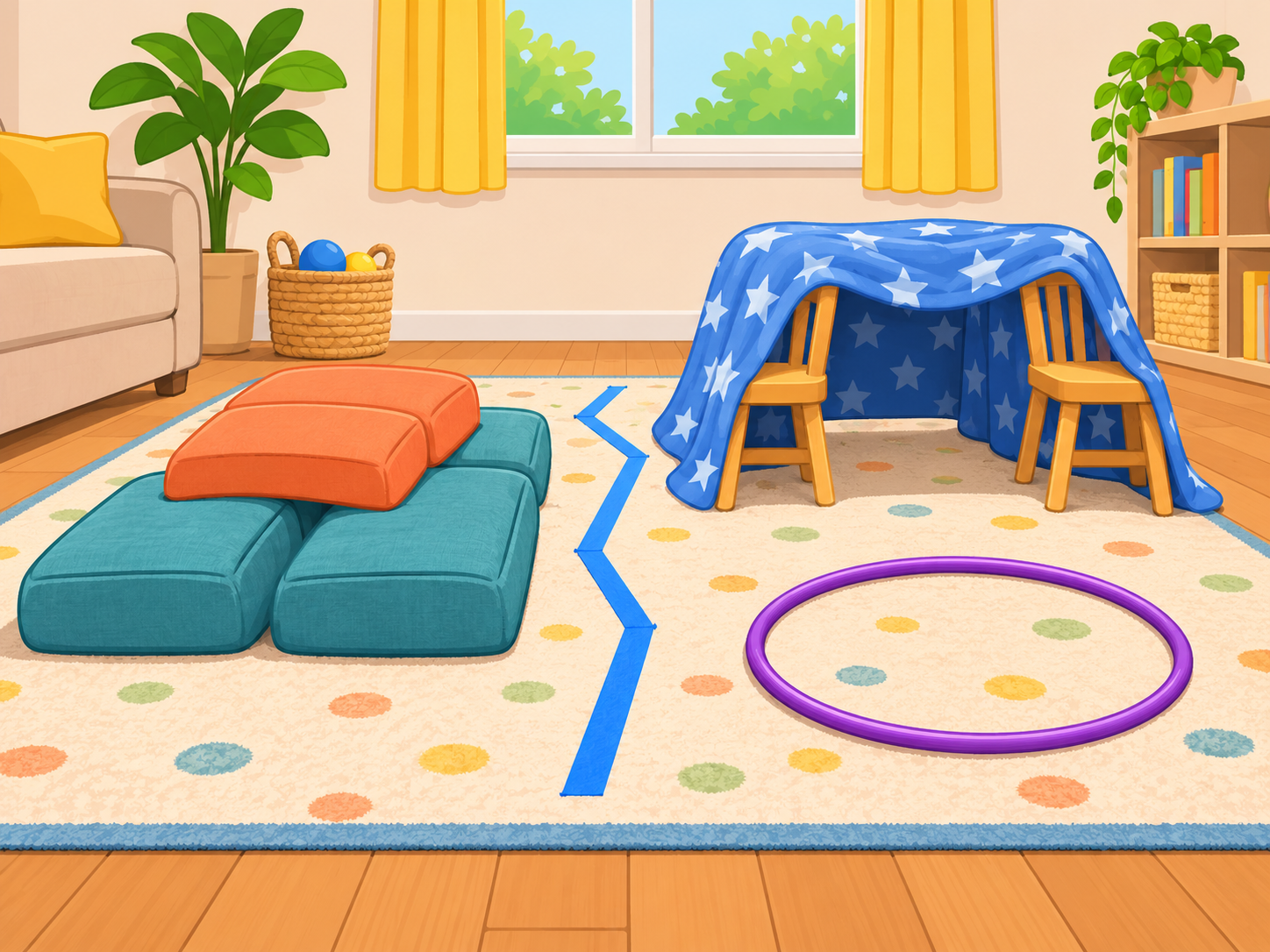
- Mark the route. Choose a clear line and a turning spot away from furniture. Walk the return path too, and move anything your child could trip over. Use an existing floor seam if tape lifts or the floor finish could be damaged.
- Show the moves. Walk beside the line, stop at the end, reach upward, then turn and walk back. Give each direction at the place where your child will use it.
- Change one move. Offer a sideways step or a slower walk. Leave the route as it is so your child knows where to start and turn.
Imagine you have one clear strip along the rug and two siblings want a turn. You walk the route with the younger child, who pauses at the end and reaches up. The older child uses the same route and decides to take slow sideways steps. One floor layout gives each child a different job. If the turning spot feels cramped, keep the reaching idea and move to mirror play in place. The game can carry on in a smaller space.
How do you adapt rainy-day movement games for different ages?
Adapt rainy-day movement games by changing what each child does within the same round. For a toddler or younger preschooler, demonstrate one action, such as rolling a soft ball toward you. For a kindergartner or early elementary child who wants another challenge, add a target or invite them to give the next direction.
I start with what the child shows me during play. If a preschooler rolls a ball but steps away when it comes back, sit closer and roll it gently between you. According to the CDC’s milestones by age 4, one movement milestone is “Catches a large ball most of the time.” In your game, a roll gives the child a way to take part while you see whether they want to try a catch.
For a line game, offer a flat-footed pause first. The CDC’s milestones by age 5 include hopping on one foot. If your child already enjoys hopping and has clear floor space, they can choose a hop in place for their turn. A child who prefers to stay seated can use a reach or a hand tap for the same cue.
Watch for the direction a child repeats without a reminder, or the change they request themselves. That gives you something concrete to build on in the next round. Play Based Assessment: What to Watch During Play.
How do you make rainy-day active play fun and bring in early learning?
Make a rainy day fun by letting your child turn a simple movement game into a pretend job, such as delivering a soft toy or carrying a paper order. Add one early-learning cue if it fits the story. Your child can follow a spoken direction, match a shape, or count one item per trip.
Try a pretend pizza delivery. Set up an order spot and a delivery spot with a clear walking route between them. Draw a circle on one slip of paper and a square on another. Your child picks up a slip, walks to the delivery spot, and places it beside a matching shape you’ve drawn there. Let the child choose whether to walk like a sleepy cook or a robot. For a younger player, show where the first order goes and walk there together. An older child can draw the next order or give you directions to the delivery spot.
If your child is playing with letter sounds, choose a word from the game. You might say, “Sock starts with /s/. Can you say /s/ as you stretch?” Leave space for your child to answer with a sound or a stretch. For counting, slide one paper order to the side after each trip and point to the delivered orders as you count them together.
A printable shape or letter card is optional. Use it as a prop while the walking, pretending, and turn-taking stay at the center of the game.
More in this series
Play Based Assessment: What to Watch During Play
Use play based assessment to see what preschoolers know. Try five observation steps and turn a short play note into your next teaching move.
Play Based Preschool Curriculum You Can Plan at Home
Plan a play based preschool curriculum around your child's interests, with a sample week for early literacy, counting, and hands-on play.
Keep reading
Play Based Assessment: What to Watch During Play
Use play based assessment to see what preschoolers know. Try five observation steps and turn a short play note into your next teaching move.
Spanish Activities for Preschoolers Using Play
Try Spanish activities for preschoolers with toy hunts, songs, picture books, and optional alphabet worksheets for home or circle time.
Shop the topic
-
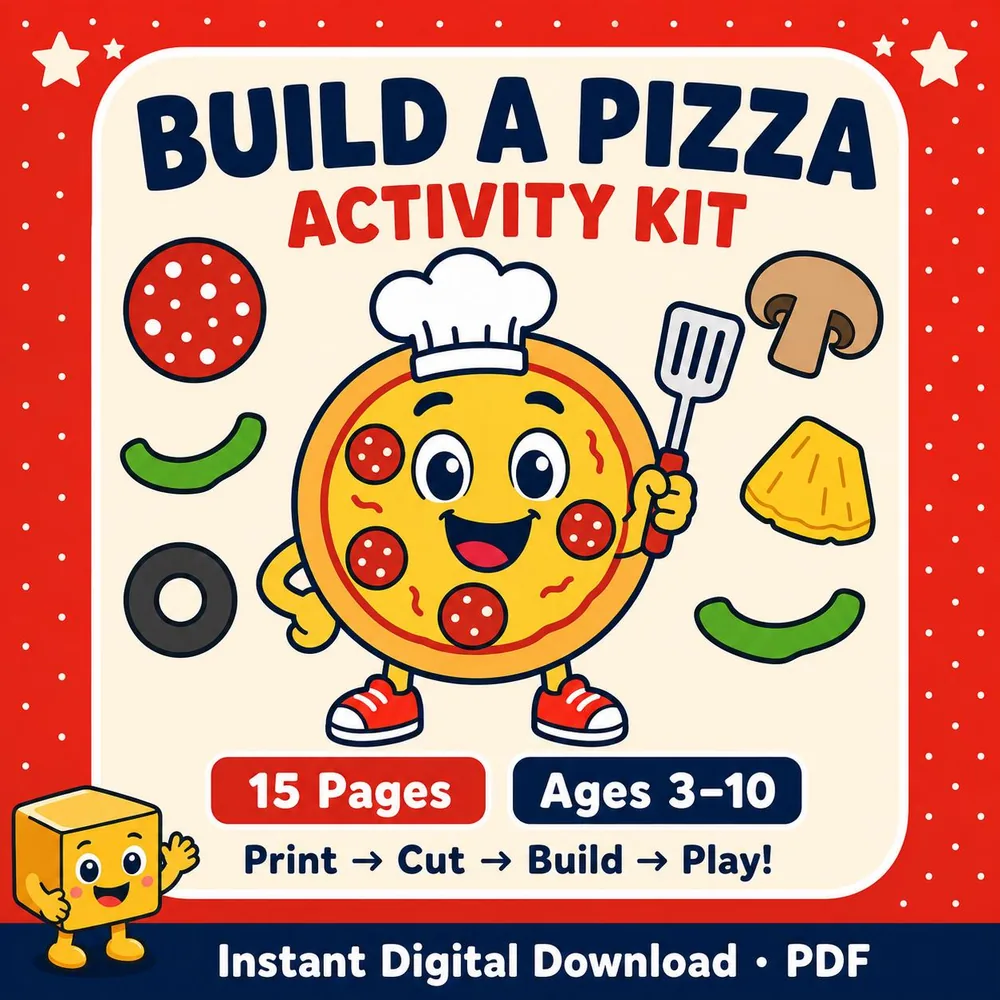
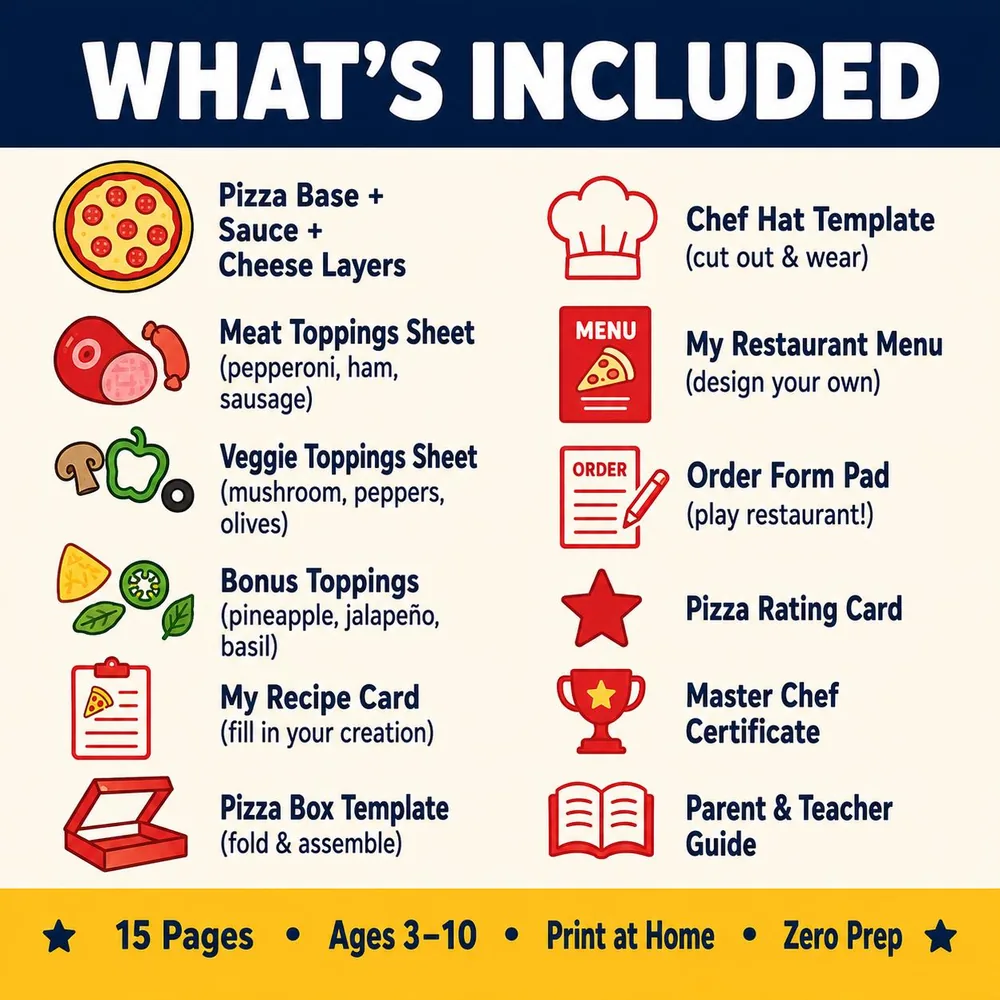
Pizza Chef Pretend Play Kit
15-page pizza pretend play kit: build-your-own pizza, restaurant role play, chef hat, menu and certificate.
$7
Get this product View details -
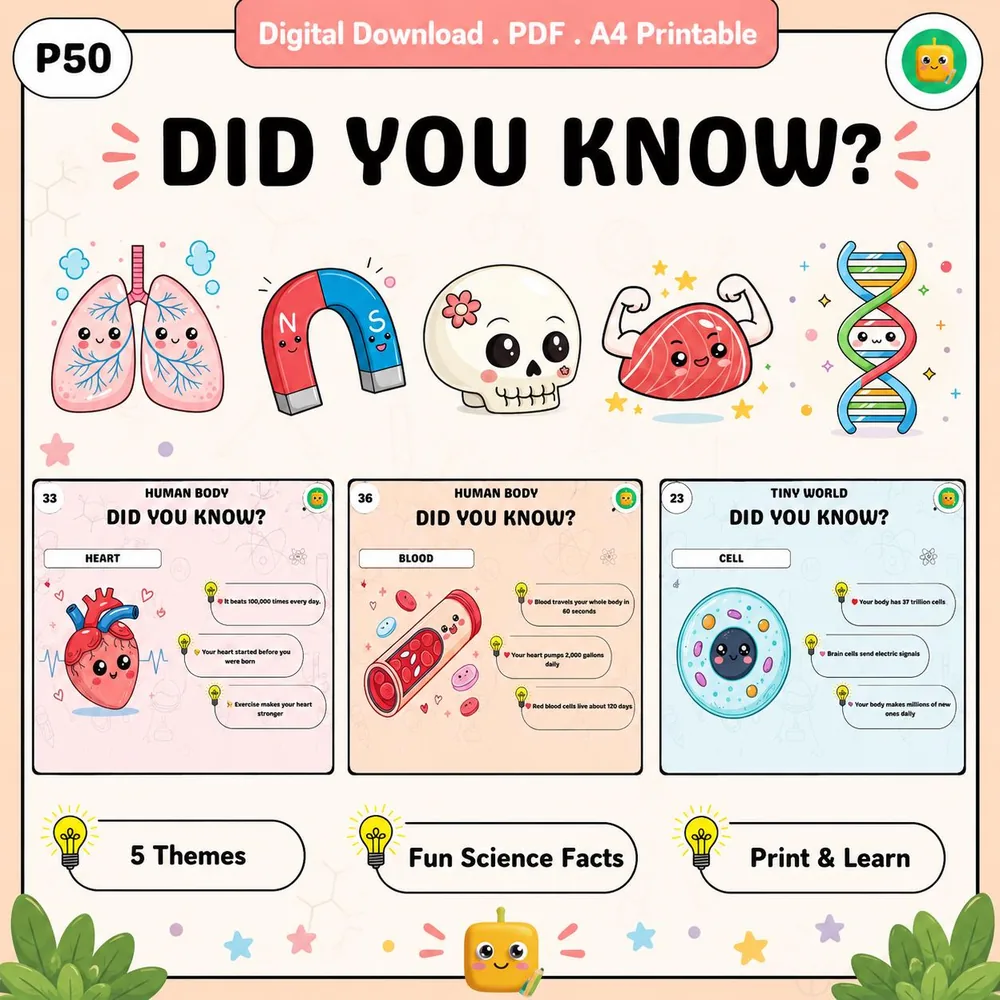
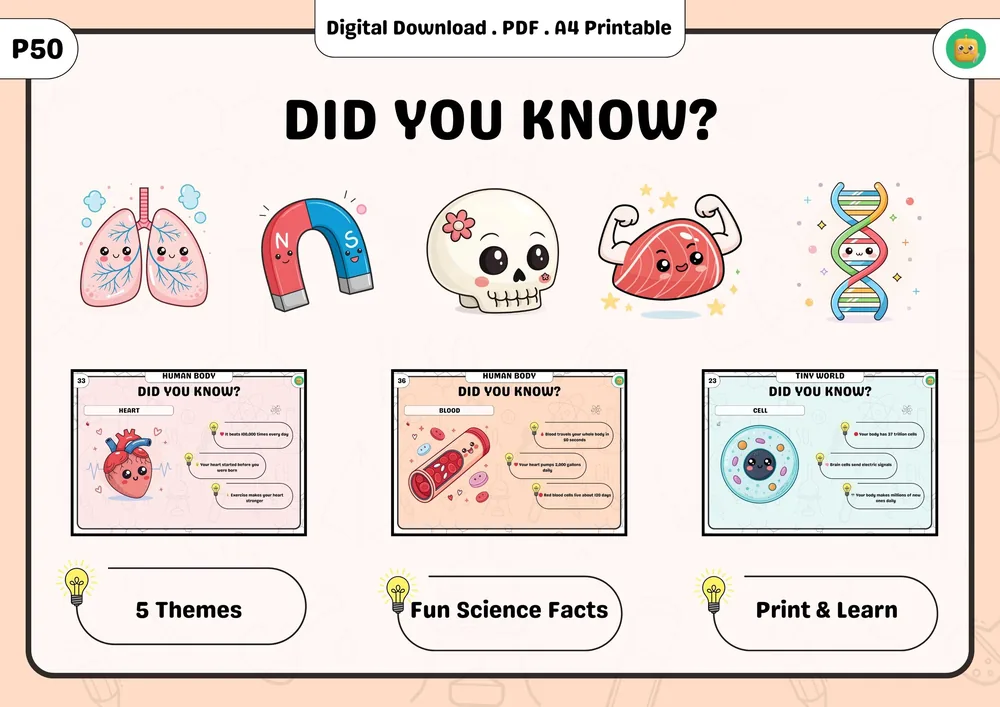
Preschool Science Facts: Did You Know?
50 'Did You Know?' science pages: one concept per page, visual learning, zero prep.
$7
Get this product View details -
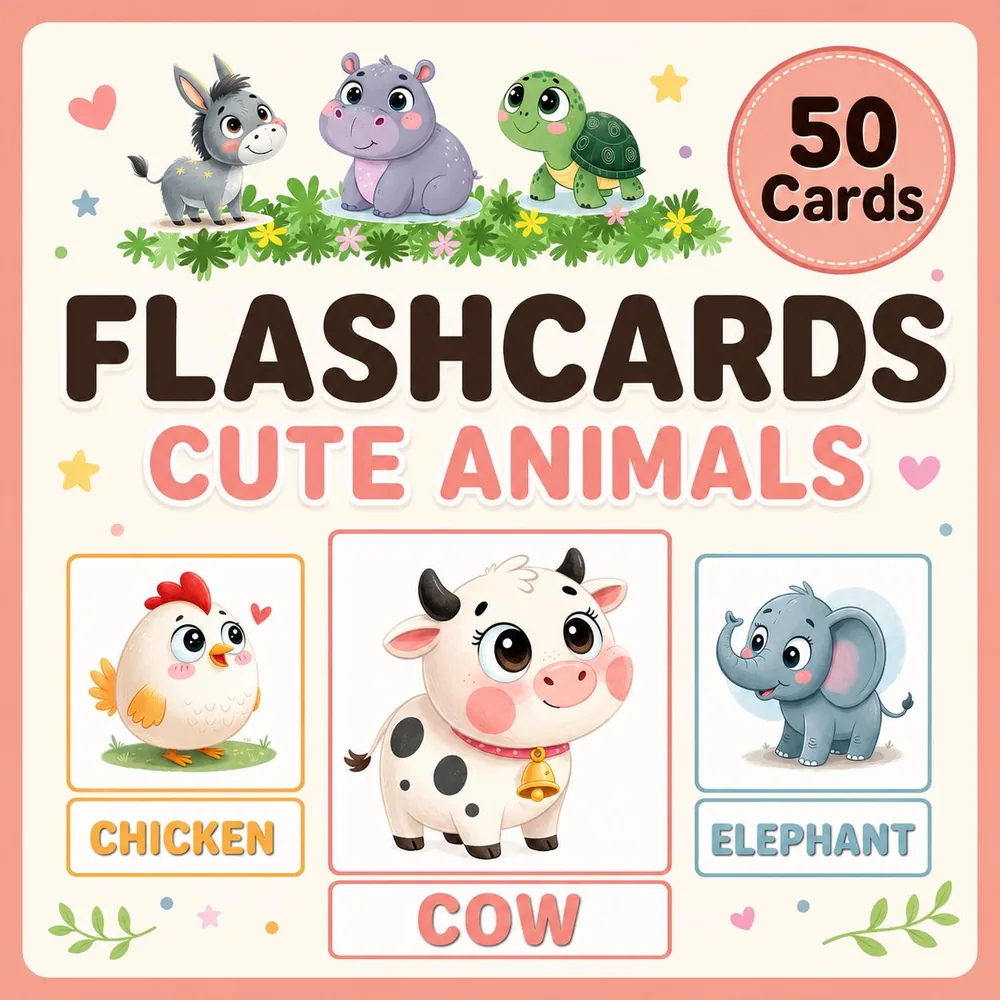
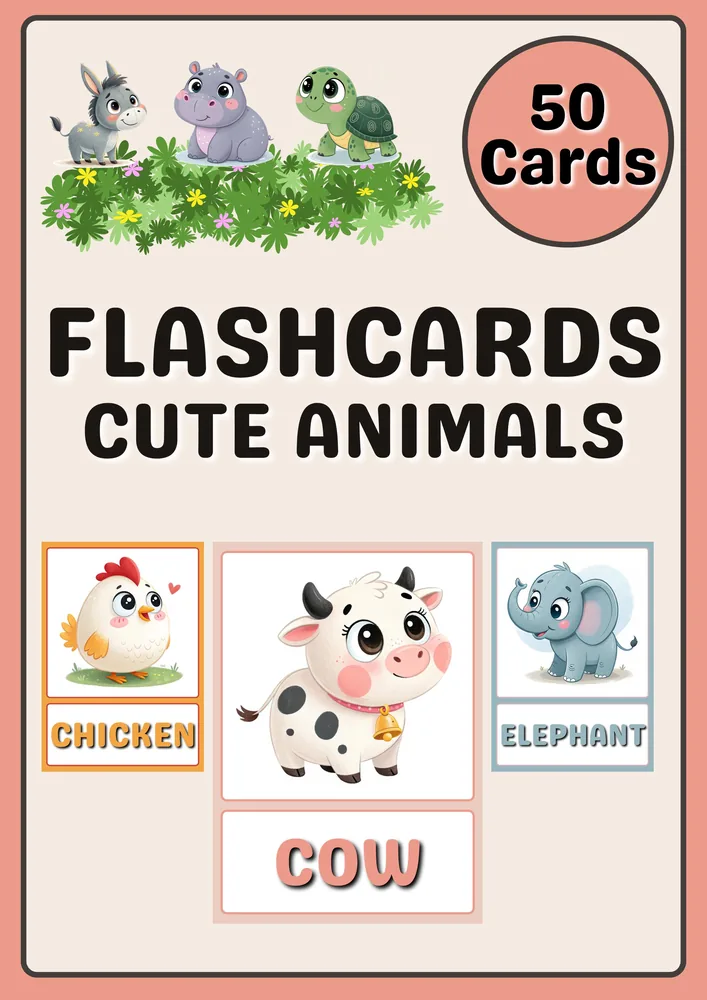
Animals Flashcards for Kids: 50 Cards
50 printable animal flashcards with cute illustrations: builds vocabulary, memory, and visual recognition.
$7
Get this product View details
Frequently asked questions
What can I do with my preschooler when it's raining and I have no equipment?
Try freeze dance with clapping, mirror moves, or a movement story. Stand or sit where your child can see you, show one action, and pause so they can copy it. Once you're moving together, let your child make up the next action and follow their lead.
What are some quiet indoor movement games for kids on a rainy day?
Try slow mirror moves, tiptoe traffic lights, or a sock roll into a basket laid on its side. Use a raised hand to pause the game and a wave to begin again. In a small room, keep the moves in place or use one clear walking lane with one child at a time.
How can I play the same indoor game with a toddler and a kindergartner?
Give both children the same game with a different action on each turn. In a soft-toy delivery game, your toddler can carry a toy to a spot you point to, while your kindergartner can follow a spoken direction or match the toy to a shape card.
How do I end indoor active play when it's time for a snack or story?
Give the game a visible finish, such as one last delivery or a final freeze with hands on knees. Let your child help put the sock roll in the basket or carry the game card to the table. Then name what comes next as you move there together.