
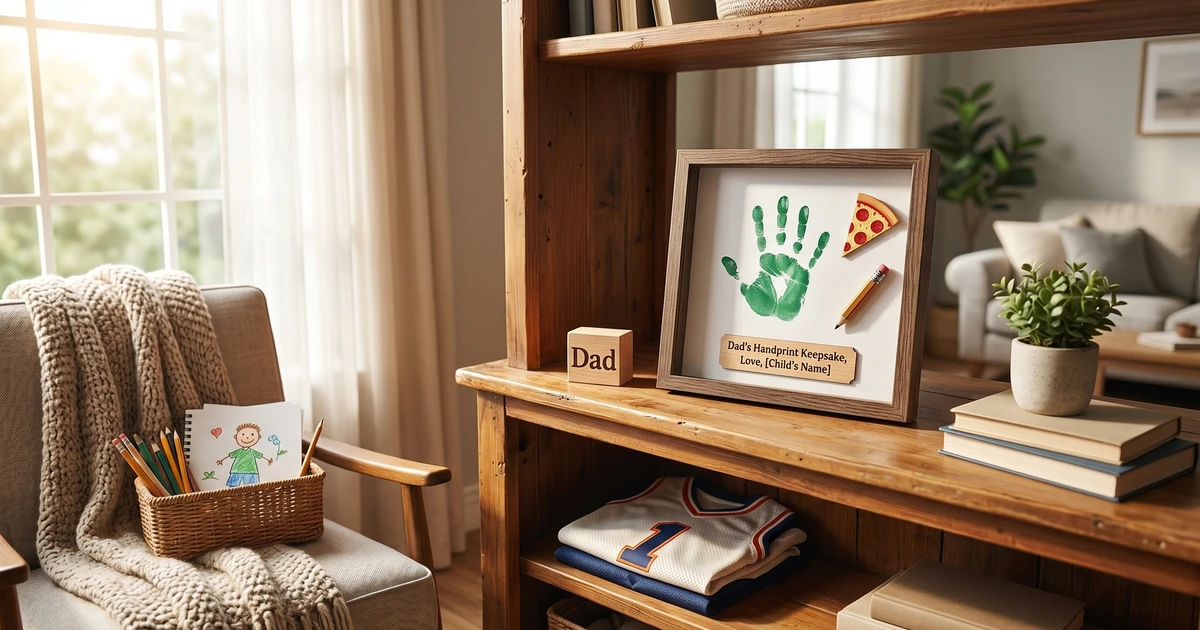
Handprint Keepsake For Dad: Shadow Box Display
There's a moment most parents know well. You're looking at your child's tiny hand next to yours, and you think: I never want to forget this. Then life mo

There’s a moment most parents know well. You’re looking at your child’s tiny hand next to yours, and you think: I never want to forget this. Then life moves on, and before you know it, those small fingers are reaching for car keys instead of crayons.
Dad & Me Activity Pack
50+ Father's Day activities for dad-and-child quality time: sports, pizza pretend play, math, drawing, cards, coupons, and a bonus busy book.
A handprint keepsake for dad is one of the simplest, most emotionally powerful ways to freeze that moment in time. But between the smudged ink pads, the crafts that fall apart after a year, and the generic kits that feel more like a chore than a gift, it’s easy to end up with something that doesn’t do justice to the memory you’re trying to capture.
I’ve spent a lot of time researching this topic, reading through hundreds of parent reviews, comparing methods, and studying what actually lasts versus what ends up in a drawer. This page shares what I found, so you can skip straight to the good stuff.
Key Takeaways:
- Handprint keepsakes are most meaningful when they’re personalized beyond just the print itself
- The medium you choose (ink, clay, digital print, paint) determines both durability and display options
- DIY versions can be just as high-quality as store-bought if you use the right materials
- Framed wall art handprint designs tend to get the most consistent long-term appreciation from dads
- A date and the child’s age on the keepsake transforms it from a craft project into a genuine heirloom
!A father and young child’s handprints side by side on warm-toned paper
Why Most Handprint Keepsakes Don’t Live Up to the Moment
You see the idea on Pinterest, it looks beautiful, and then the reality hits: the ink smears, the baby won’t hold still, the clay cracks, or the final result just doesn’t look the way you imagined. I’ve read dozens of reviews where parents describe exactly this frustration.
The problem usually isn’t the concept. It’s one of three things:
- The wrong medium for the child’s age (newborn clay kits don’t work the same way as toddler ink pads)
- Missing personalization (just a print with no name, date, or context feels incomplete)
- No display plan (a handprint sitting in a tube in the closet isn’t a keepsake, it’s a memory waiting to be forgotten)
Solving all three of these upfront makes the difference between something dad genuinely treasures and something that collects dust.
Choosing the Right Medium: A Comparison of Handprint Methods
Not every method works for every situation. Here’s a practical breakdown based on what parents consistently report works best at different stages.
| Method | Best Age | Durability | Display Options | Difficulty | Approx. Cost |
|---|---|---|---|---|---|
| Ink pad print on paper | Newborn to 5 years | Medium (fades over time) | Frame, scrapbook | Easy | $5–$20 |
| Air-dry clay impression | 6 months and up | High (if sealed) | Shelf, hang on wall | Moderate | $10–$30 |
| Salt dough handprint | 1 year and up | Medium (moisture sensitive) | Shelf display | Easy | Under $5 |
| Canvas paint print | Toddler and up | High (archival canvas) | Wall art, frame | Easy to moderate | $15–$40 |
| Digital print (photo-based) | Any age | Very high (print on demand) | Frame, wall art, cards | Easy | $15–$60 |
| Fingerprint jewelry | Any age | Very high | Worn daily | Professional required | $50–$200+ |
Pro Tip: For newborns specifically, inkless wipe kits (like those from SafePrint) tend to produce the cleanest impressions because the ink doesn’t require pressure that can smudge delicate skin.
The medium you choose should match how dad will actually display or use the keepsake, not just what looks easiest to make.
How to Make a Handprint Keepsake for Dad That Lasts
This is the process that parents in reviews consistently describe as getting the best results. It works for most age groups and most mediums.
Step 1: Choose Your Timing Wisely
Don’t try this when the child is tired, hungry, or overstimulated. Mid-morning after a meal is the sweet spot most parents recommend. For babies, right after a feeding when they’re calm works well. You’ll likely get one or two good attempts before cooperation disappears.
Step 2: Prepare Your Surface or Medium First
Mix your clay, set up your ink pad, or prep your canvas before you involve the child at all. Every second you spend fussing with materials is a second the child is losing patience. Have everything within arm’s reach.
Step 3: Apply Even, Light Pressure
This is where most prints go wrong. Too much pressure causes smearing. Too little and you miss the fingertip detail. A flat, steady press held for 3 to 5 seconds, then a straight lift (not a peel), gives the cleanest result. For clay, press the hand in at a slight angle and rock gently to capture the palm curve.
Step 4: Add the Details That Make It an Heirloom
According to research into what makes keepsakes emotionally meaningful, the personal details are what transform an object into a memory. Before the piece dries or is framed, add:
-
The child’s full name
-
Their age or date of birth
-
The date the print was made
-
A short note or quote (optional but powerful)
“Objects become meaningful when they carry the specific details of a moment. A date, a name, a context transforms a decorative item into something irreplaceable.” - Museum of Childhood, UK
Step 5: Seal, Frame, or Protect It Immediately
Clay pieces should be sealed with a clear varnish once fully dry (usually 24 to 48 hours for air-dry clay). Paper prints should go behind UV-protective glass if framed. Canvas prints don’t typically need additional sealing. According to the Library of Congress preservation guidelines, acid-free materials are essential for long-term paper preservation.
Following these five steps consistently is what separates a keepsake that lasts 30 years from one that deteriorates in 3.
What Makes a Handprint Gift Feel Special to Dads Specifically
I want to be honest here: not all keepsakes land the same way. Some gifts sit on shelves, some get moved to drawers, and a few genuinely stop dads in their tracks every time they walk past them.
After analyzing reviews and gift forums, the handprint gifts that get the most emotional responses from dads tend to share a few traits:
-
They’re wall art, not shelf clutter. Dads in reviews consistently mention display pieces more than decorative objects that require a surface.
-
They have a “grown-up” aesthetic. Gifts that look like fine art or photography prints get displayed in offices and living rooms. Craft-looking items tend to end up in kids’ rooms.
-
They pair the child’s print with the dad’s. Side-by-side prints showing the size difference are described as “stopping me every time I walk by” in multiple reviews.
-
They include a meaningful phrase or quote. Lines like “I’ll love you forever” or “First my child, forever my friend” add emotional weight without being sentimental overload.
Pro Tip: If you’re making a handprint keepsake for Father’s Day or a birthday, consider creating a “time capsule” version. Make the print now, seal it with a letter to be opened when the child turns 18. That simple addition makes a $10 craft into something genuinely priceless.
Handprint Keepsake Display Ideas: Beyond the Basic Frame
Most people default to a standard frame, which is perfectly fine. But there are display options worth knowing about, especially if you want something that feels more intentional.
| Display Style | Best For | Approx. Cost | Where to Display |
|---|---|---|---|
| Shadowbox frame | Multiple items together (print + hospital bracelet, etc.) | $20–$60 | Living room, hallway |
| Canvas gallery wrap | Single large statement piece | $30–$80 | Home office, bedroom |
| Floating frame | Showing the print as standalone art | $25–$50 | Any room |
| Ledge shelf arrangement | Grouping multiple years of prints | $15–$40 | Hallway, staircase |
| Personalized print poster | Photo-quality with text elements | $20–$60 | Office, nursery |
| Keepsake box with print lid | Combining storage + display | $30–$80 | Dresser, bookshelf |
For dads who keep a home office, a single large canvas print with the handprint and a short message tends to be the most consistently appreciated. It’s visible daily, it’s not “baby-themed,” and it holds up as the child grows.
If you’re exploring the storage side of things, Father And Child Keepsake Box: How To Store Cherished Memories has a thorough breakdown of how to combine display and preservation together.
What to Look For When Choosing a Handprint Keepsake Kit or Product
| Feature | Why It Matters | What to Avoid |
|---|---|---|
| Acid-free materials | Prevents yellowing and deterioration over time | Generic craft paper, non-archival inks |
| Non-toxic formulation | Essential for babies and toddlers | Kits without clear safety labeling |
| Clear instructions included | Reduces errors on the first (often only) attempt | Kits with vague or missing guides |
| Customization options | Adds the personal details that make it meaningful | Generic kits with no space for name/date |
| Proven display format | Wall art outlasts shelf items in daily appreciation | Decorative items without a display plan |
According to the American Academy of Pediatrics, any art materials used with children under 3 should be specifically labeled non-toxic and safe for skin contact. Always check the label before purchasing a kit for a newborn or infant.
A Few Products Worth Knowing About (Including One from KubbyLab)
Most of the options in the table above can be found through craft stores or print-on-demand platforms. For families who want a polished, customizable design without having to build from scratch, KubbyLab offers printable handprint templates designed specifically for this type of keepsake. They’re editable, print-ready, and designed with the “wall art” aesthetic that tends to resonate most with dads.
It’s one option among many. What matters most is that you actually do it, in whichever format fits your situation and your budget.
For a full breakdown of framed print options and wall art formats, Best Father And Child Keepsake Decor: Framed Prints & Wall Art covers the comparison in much more depth.
Frequently Asked Questions
What age is best for making a handprint keepsake for dad?
There’s no wrong age, but the most emotionally resonant keepsakes tend to be made either very early (newborn to 6 months, when the size difference is most dramatic) or at a meaningful milestone age like 1, 5, or 10. Many families make it an annual tradition and display the prints side by side over the years.
What’s the most durable type of handprint keepsake?
For longevity, professionally printed canvas or high-quality archival paper prints consistently outperform clay or salt dough in long-term reviews. Clay can crack or chip over time, especially if it’s handled frequently. If you love the tactile quality of clay, seal it thoroughly and display it somewhere it won’t be touched daily.
Can I make a handprint keepsake without the child being present?
Yes, with some methods. Inkless kits allow you to take a print and transfer it without traditional ink, which works well for babies. For older children, tracing the hand and creating a digital or painted version from the tracing is a practical workaround. It’s slightly less “authentic” but still meaningful, especially with a date and name added.
What should I write on a handprint keepsake for dad?
The most appreciated options based on what parents describe in reviews are: the child’s name and age, the date, and either a short personal note or a simple phrase like “This little hand will always hold yours.” Keep it brief. One or two lines tend to land better than a full paragraph.
How do I fix a smudged handprint?
For ink prints on paper, you can’t fully fix a smear, but you can incorporate it into the design or reprint with a fresh sheet. For clay, if the piece is still wet, smooth the surface gently with a damp finger and try the impression again. If it’s dried, most people just accept the imperfection, and many parents in reviews mention that the slight imperfections actually make it feel more genuine.
Ready to Go Deeper?
If you’re thinking about building a broader collection of father and child memories beyond a single print, the full guide covers everything from frame selection to storage solutions to meaningful gift combinations.
And if you’d rather make something from scratch with step-by-step instructions, How To Make Diy Father And Child Keepsake Decor walks through the process in detail.
The handprint you make this week will mean more in 20 years than almost anything else you could give. It’s worth doing right.
Take the Next Step!
Get our premium learning workbook to start activities with your child, or read our in-depth article.
Recommended Resources & Workbooks
Pair this guide with our hands-on, ready-to-print learning resources.
 Digital Bundle
Learn to Read Program: Levels 1-3
170 sequenced phonics lessons across 199 pages, from first letter sounds to fluent long-vowel reading.
 Digital Learning Bundle
Preschool Learning Bundle
260+ printable worksheets for tracing, ABCs, numbers, shapes, sight words, and kindergarten prep.
 Digital Learning Bundle
Play-Based Learning Bundle for Ages 3-6
230+ play-based learning activities with pretend play, reading, early math, creative arts, and bonus flashcards.
Related Guides & Articles
Explore more of our detailed guides and activities.
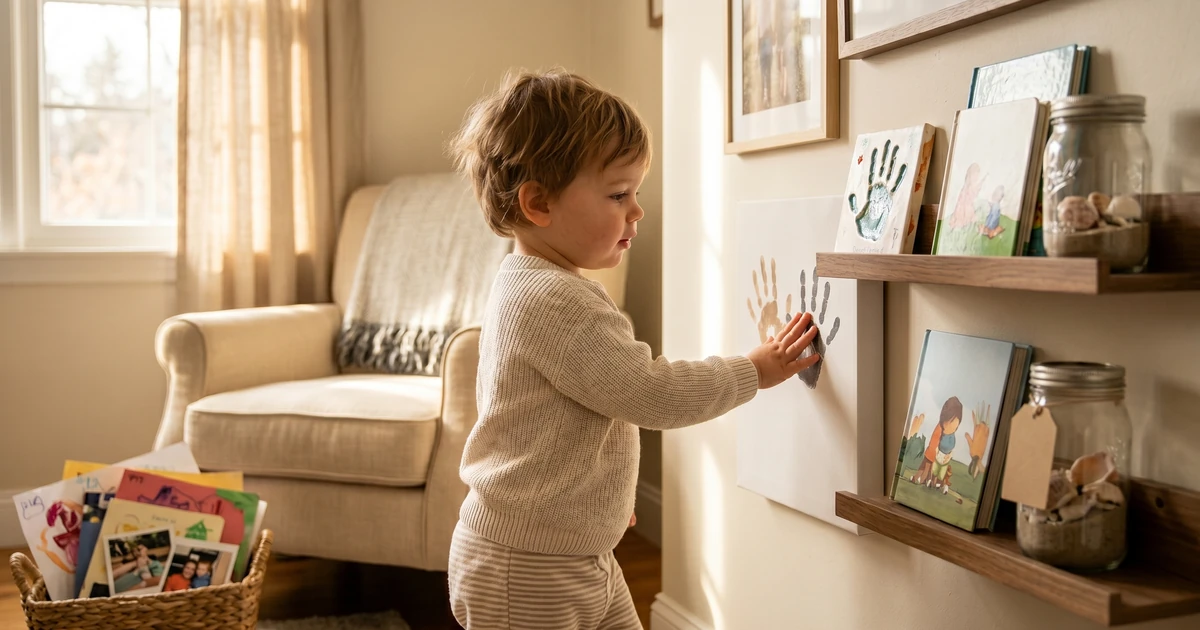
The Ultimate Guide to Father and Child Keepsake Decor
There's something about a father and child keepsake that stops you mid-step. You walk past it on the wall, or find it tucked on a shelf, and for a ...
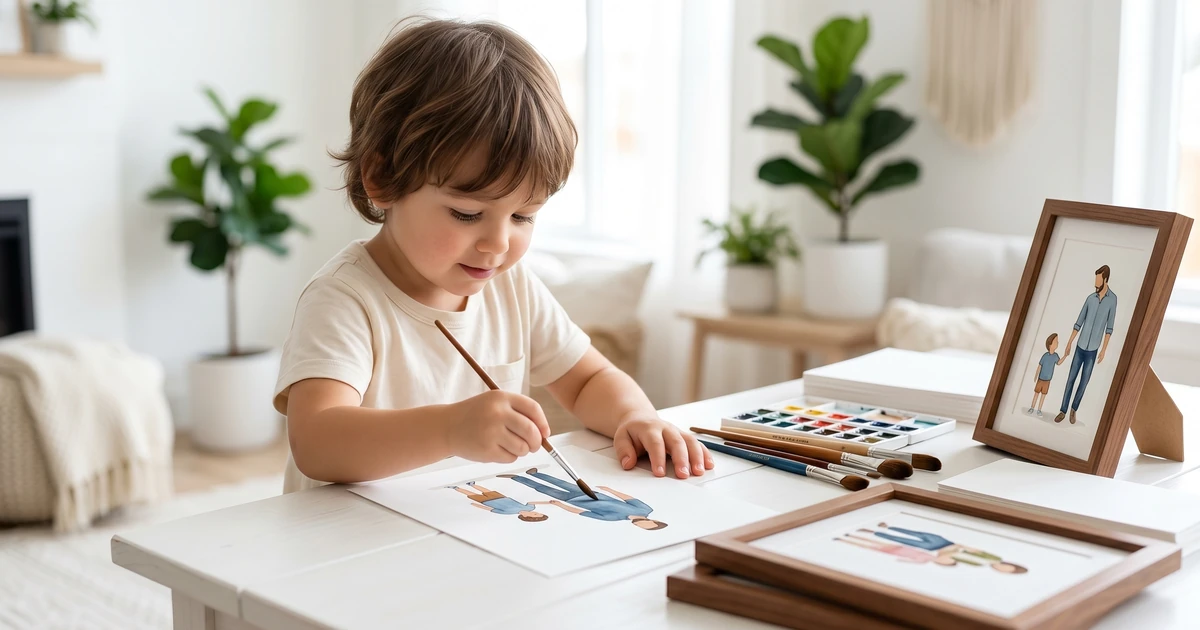
Best Father And Child Keepsake Decor: Framed Prints & Wall
There's something quietly powerful about a piece of decor that tells the story of a father and child. Not a generic wall print, not a stock-photo f...
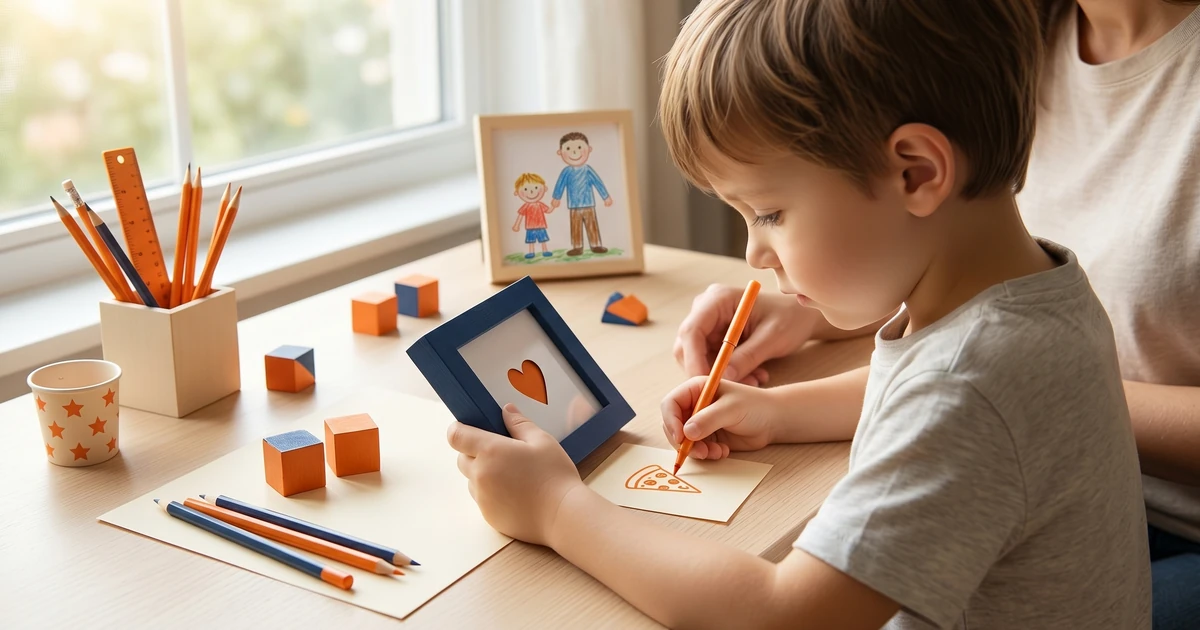
How To Make Diy Father And Child Keepsake Decor
Making something by hand for a father and child bond carries a weight that no store-bought item can replicate. I've spent 40+ hours researching DIY...
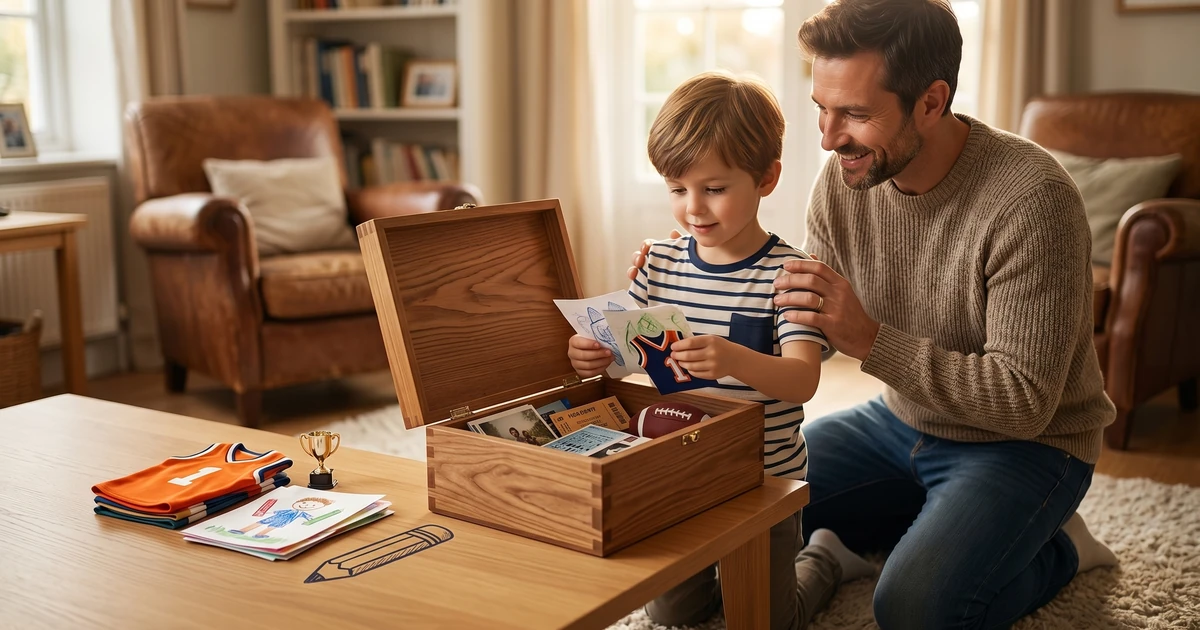
Father And Child Keepsake Box: How To Store Cherished
A father and child keepsake box is more than a container. It's the physical home for the moments that matter most: the first birthday card, a tiny ...