
A father and child keepsake box is more than a container. It’s the physical home for the moments that matter most: the first birthday card, a tiny handprint mold, a hospital bracelet, a folded drawing handed over with pride. After spending 40+ hours researching options, reading hundreds of customer reviews, and analyzing what families actually store (and regret not storing), I’ve put together everything you need to choose, fill, and treasure a keepsake box that will genuinely last decades.
Dad & Me Activity Pack
50+ Father's Day activities for dad-and-child quality time: sports, pizza pretend play, math, drawing, cards, coupons, and a bonus busy book.
This guide sits inside our broader The Ultimate Guide to Father and Child Keepsake Decor: Ideas, Gifts & Storage , so if you want the full picture of how a keepsake box fits into your overall memory-keeping strategy, that’s the place to start.
Key Takeaways:
- Father and child keepsake boxes range from $15 to $300+ depending on material, personalization, and size.
- Wood and MDF boxes dominate the market for sentimental gifting, but fabric-lined interiors are the real durability factor.
- Personalization (engraving, custom laser printing) adds $10-$50 but dramatically increases perceived and sentimental value.
- The most regretted purchase is a box that’s too small. Reviewers consistently recommend sizing up.
- A keepsake box pairs beautifully with framed prints and wall art as part of a cohesive memory display.
- Acid-free lining protects photographs and paper keepsakes from yellowing over time.
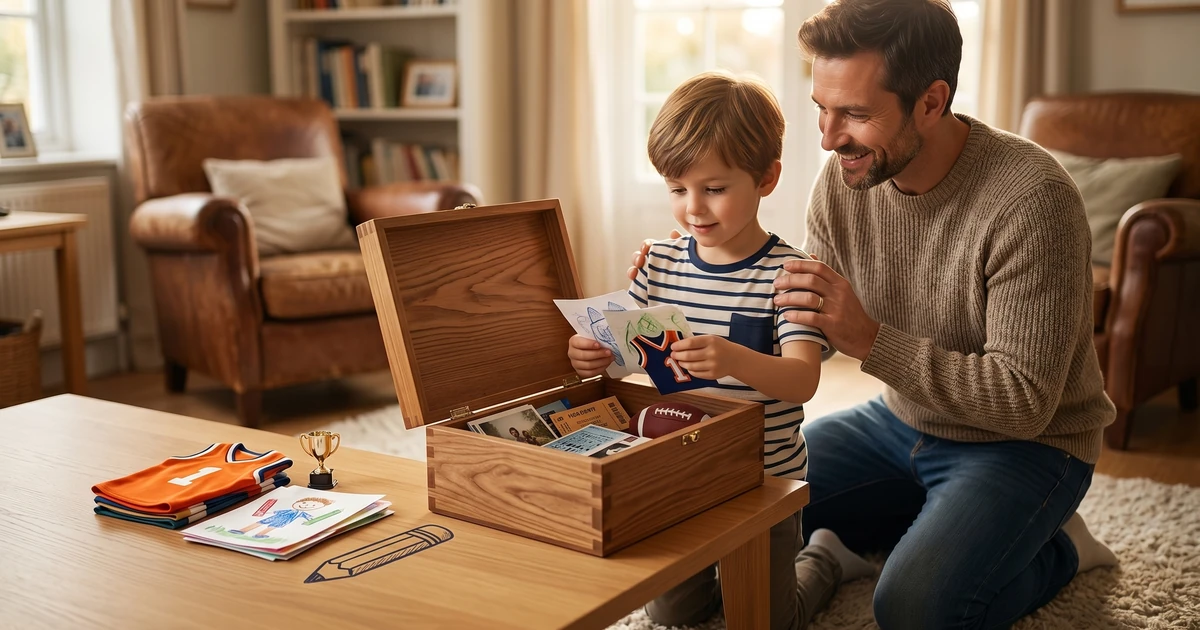
!A wooden personalized father and child keepsake box open on a table with photos, a handprint, and folded notes inside
What Makes a Father and Child Keepsake Box Different from a Regular Keepsake Box?
A standard keepsake box stores memories. A father and child keepsake box tells a specific story: the relationship between a dad and his kid, across years. The design language, personalization options, and interior compartments are intentionally built around the milestones unique to that bond.
Think about what typically lives inside one:
-
Hospital wristband from birth
-
First Father’s Day card
-
Printed photos from holidays and vacations
-
A child’s first lost tooth (yes, really)
-
Report cards and school certificates
-
Small drawings and handwritten notes
-
A lock of hair
-
A pressed flower from a shared garden
These aren’t random objects. They’re evidence of a relationship. The box that holds them should reflect that weight.
Compared to a generic memory box or photo storage box, father and child keepsake boxes tend to feature:
- Dual-name personalization (both father and child’s names)
- Date fields for birth year or “Est. [Year]” styling
- Imagery that references the father-child bond (trees, handprints, anchor motifs)
- Interior card or dedication space for a personal message
- Sizing designed to hold both flat items (photos, cards) and 3D objects (mementos, small toys)
The distinction matters when you’re buying as a gift, because a generic box sends a generic message.
How Much Does a Father and Child Keepsake Box Cost?
Prices vary widely depending on material, personalization type, and where you buy. After reviewing dozens of listings across Etsy, Amazon, and specialty gift retailers, here’s a realistic breakdown:
| Type | Price Range | What You Get |
|---|---|---|
| Basic unfinished wood box (no personalization) | $10 - $20 | Plain pine or MDF, DIY-ready |
| Pre-personalized printed box (mass-produced) | $20 - $45 | Generic “Dad & Me” text, basic design |
| Custom laser-engraved wood box (small-medium) | $40 - $90 | Names, dates, custom design, quality wood |
| Premium handcrafted engraved box (walnut, oak) | $90 - $200 | Heirloom-grade materials, intricate engraving |
| Luxury bespoke or artisan box | $200 - $400+ | Fully custom, handmade, archival interior |
“A keepsake is only as lasting as its container. Acid-free materials, tight-fitting lids, and UV-protective coatings make the difference between a memory and a deteriorating pile of paper.” - Conservation Resources International
The sweet spot for most buyers is the $45-$90 range. You get genuine wood, laser engraving that won’t fade or peel, and a box that looks impressive when gifted. Cheaper options often use MDF with vinyl sticker “engraving” that peels within a few years, which reviews consistently flag as a major disappointment.
Spending $60-$80 on a laser-engraved solid wood box is the most cost-effective decision for long-term satisfaction.
What Materials Should a Father and Child Keepsake Box Be Made From?
Material choice affects three things: durability, appearance, and the safety of the items stored inside. Here’s my breakdown:
Wood Types Compared
| Wood Type | Durability | Appearance | Price Impact | Best For |
|---|---|---|---|---|
| Pine | Moderate | Light, knotty grain | Low (+$0) | Budget buys, DIY painting |
| MDF | Low-moderate | Smooth, uniform | Low (+$0) | Printed designs, painted finishes |
| Bamboo | High | Clean, modern | Low-medium (+$10-$20) | Eco-conscious buyers |
| Maple | High | Fine grain, pale | Medium (+$20-$40) | Mid-range engraved gifts |
| Walnut | Very high | Dark, rich grain | High (+$40-$80) | Premium heirloom boxes |
| Oak | Very high | Prominent grain | High (+$30-$60) | Traditional, classic look |
Interior Lining
This is where many buyers make their mistake. A beautiful exterior box with an unlined interior will cause photographs to yellow and paper to degrade over decades. Look for:
-
Acid-free lining (velvet, satin, or foam)
-
Felt or velvet padding for fragile 3D mementos
-
Dividers or trays for organized storage
Reviewers who store photos inside unlined pine boxes report visible yellowing within 5-7 years. That’s not a legacy. That’s a loss.
Pro Tip: If you fall in love with a box that has an unlined interior, buy acid-free tissue paper ($5-$8) and line it yourself before placing any photographs inside.
The interior lining matters as much as the exterior wood when it comes to protecting what’s inside.
How to Choose the Right Father and Child Keepsake Box: Key Criteria
Buyers who regret their purchase almost always overlooked one of these five factors. Use this table as your checklist:
| Criteria | What to Look For | Red Flags to Avoid |
|---|---|---|
| Size | At least 12” x 8” x 4” for meaningful capacity | Anything under 10” x 7” fills up fast |
| Personalization method | Laser engraving, wood burning | Vinyl stickers, inkjet printing on wood |
| Interior protection | Acid-free, velvet or felt lining | Bare unfinished wood interior |
| Lid mechanism | Hinged lid with smooth action | Snap-fit lids that warp or crack |
| Material quality | Solid wood or premium bamboo | Thin MDF under 6mm |
| Seller reviews | 4.5+ stars, 50+ reviews | Under 20 reviews, no photos from buyers |
Common Sizes Explained
-
Small (8” x 6” x 3”): Cards, photos only. Fills up within 1-2 years of active use.
-
Medium (12” x 8” x 4”): Photos, cards, small 3D items. Good for the first 5 years.
-
Large (14” x 10” x 6”): Full first-decade of memories. Recommended by experienced reviewers.
-
Chest-style (16”+ x 12” x 8”): Heirloom-grade storage. Room for clothing items, multiple photo albums.
“Parents who document the first three years of a child’s life generate an average of 7,000 to 10,000 digital and physical mementos. Physical storage that grows with the collection is essential.” - According to research cited by the Library of Congress Preservation Resources
Sizing up is the single most consistent piece of advice across hundreds of buyer reviews.
Step-by-Step: How to Set Up and Organize a Father and Child Keepsake Box
Once you have the box, how you organize it determines whether it becomes a treasured archive or a chaotic junk drawer. Here’s the approach owners consistently find most effective:
Step 1: Line the Interior (If Not Already Done)
Place acid-free tissue paper or felt across the base and sides. This takes 5 minutes and protects photos for 20+ years.
Step 2: Create a Simple Labeling System
Use small acid-free card stock labels or self-adhesive archival tabs. Label by year or milestone (Birth, Year 1, First Day of School, etc.) rather than by object type.
Step 3: Sort Before You Store
Gather all the items you plan to store before placing anything in the box. Group by year or milestone. This prevents the “pile everything in” approach that makes retrieval frustrating later.
Step 4: Place Flat Items at the Bottom
Photos, cards, and folded letters go flat at the base. Stack them in chronological order with a labeled divider between each year.
Step 5: Use Small Pouches for 3D Items
Teeth, buttons, pressed flowers, and other small 3D mementos go into small archival envelopes or cotton pouches placed on top of flat layers.
Step 6: Write a Dedication Card
Most premium keepsake boxes include space for this. Write one now, even if it feels premature. Future-you (or your child decades from now) will appreciate it.
Step 7: Store in a Stable Environment
Keep the box away from attics (temperature extremes) and basements (moisture). A bedroom closet shelf at room temperature is ideal.
A 30-minute setup session when you first receive the box creates a system that works for years without effort.
Father and Child Keepsake Box as a Gift: When and How to Give One
A keepsake box is one of those gifts that lands differently depending on timing. Here’s when owners report giving them to most meaningful effect:
Best gifting occasions:
- Father’s Day (especially the first one after a child is born)
- Birth announcement gifts (given to the new dad)
- Child’s first birthday
- Adoption milestones
- A father’s milestone birthday (40th, 50th) when looking back at years of memories
What to Include When Gifting
Gifting an empty box feels underwhelming. Reviewers who pair the box with even a few starter items report dramatically better reactions. Consider adding:
-
A printed photo of father and child
-
A handwritten note explaining the intention behind the gift
-
A small printed “Memory Prompts” card listing things to save (hospital band, first card, etc.)
-
A packet of acid-free envelopes for organizing
Pro Tip: If you’re giving this as a baby shower gift before the child is born, include a printed “future memory prompt list” as an insert. Owners report this transforms the box from a nice object into an active tradition from day one.
A keepsake box works beautifully as part of a broader gifting set alongside items like framed prints or wall art. See our guide to Best Father And Child Keepsake Decor: Framed Prints & Wall Art for pairing ideas.
DIY vs. Buying: Should You Make or Purchase a Father and Child Keepsake Box?
This question comes up constantly in reviews and gift forums. Here’s my honest breakdown:
| Factor | DIY | Buy Ready-Made |
|---|---|---|
| Cost | $15-$40 materials | $40-$150 finished |
| Time required | 3-8 hours | 0-30 minutes (assembly) |
| Personalization control | Total control | Limited to seller options |
| Skill required | Moderate (sanding, painting, engraving) | None |
| Heirloom quality potential | High (if executed well) | High (premium buys) |
| Risk of failure | Moderate | Low |
| Emotional story | Built into the object itself | Requires separate framing |
DIY works best when you have woodworking or crafting experience, or when the handmade quality is central to the gift’s meaning. A box built by dad’s own hands carries a story that a purchased box simply can’t replicate.
For most people without crafting experience, though, a quality purchased box at $60-$80 outperforms an amateur DIY at a similar cost because the construction quality affects long-term function.
If the DIY route appeals to you, our sibling article How To Make Diy Father And Child Keepsake Decor walks through the full process with tools, materials, and design templates.
Buy if you want reliability and speed. Make if you want the process to be part of the gift’s meaning.
What Buyers Consistently Get Wrong About Father and Child Keepsake Boxes
After reading through hundreds of reviews, a few patterns stand out as the most common regrets:
-
Choosing too small. This is the number one complaint. Reviewers say things like “filled it within the first year” or “wish I’d bought the large version.”
-
Ignoring interior finish. A stunning exterior on an unlined box leads to yellowed photos. Buyers who discover this years later are genuinely upset.
-
Selecting vinyl “engraving.” Several lower-priced sellers use vinyl stickers designed to look like engraving. These peel within 1-3 years, especially in humid environments.
-
Forgetting to add a message. Buyers who don’t write a dedication note at the time of gifting often intend to “add it later” and never do.
-
Storing in an attic or basement. Temperature and moisture extremes degrade wood, warp lids, and damage stored items.
“Improper storage conditions, including temperature fluctuations above 75°F and humidity above 65%, are responsible for the majority of archival material deterioration in home settings.” - National Archives and Records Administration
Avoiding these five mistakes separates a 10-year memory from a 50-year heirloom.
FAQ: Father and Child Keepsake Box
What size keepsake box do I actually need for a child’s first five years?
Based on reviewing dozens of parent accounts, a medium-to-large box (minimum 12” x 8” x 4”) handles the first five years comfortably if you’re selective. If you plan to store clothing items, larger keepsakes, or multiple photo albums, go to 14” x 10” x 6” or larger. The single most common regret in reviews is underestimating how quickly a box fills.
How long does laser engraving last on a wooden keepsake box?
Laser engraving on solid wood is essentially permanent. The design is burned into the wood fibers, not applied on top, so it won’t peel, fade, or wear away under normal handling and storage conditions. In contrast, vinyl sticker “engraving” (sold by some budget sellers) typically lasts 1-5 years before peeling, especially in humid environments. Always confirm the engraving method before purchasing.
Is a father and child keepsake box appropriate for adoptive fathers?
Absolutely. Many sellers on Etsy and specialty gift sites offer custom text options that replace birth-specific language with adoption milestone dates. Phrases like “Forever Family Est. [Year]” or “The day we chose each other” are popular customizations. The box itself is entirely suitable, and the contents simply start from the adoption milestone rather than birth.
Can I store photos directly in an unlined wooden box?
Technically yes, but I wouldn’t recommend it for long-term storage. Direct contact between photographs and bare wood causes yellowing and chemical degradation over 5-10 years. Line the interior with acid-free tissue paper before storing photos, or purchase a box with an acid-free fabric lining. This $5 fix protects decades of irreplaceable