Can YouTube Videos Teach a Child to Read at Home?
Part of: Kindergarten Readiness Worksheets: 8 Skills to Practice
By KubbyLab Team · Updated
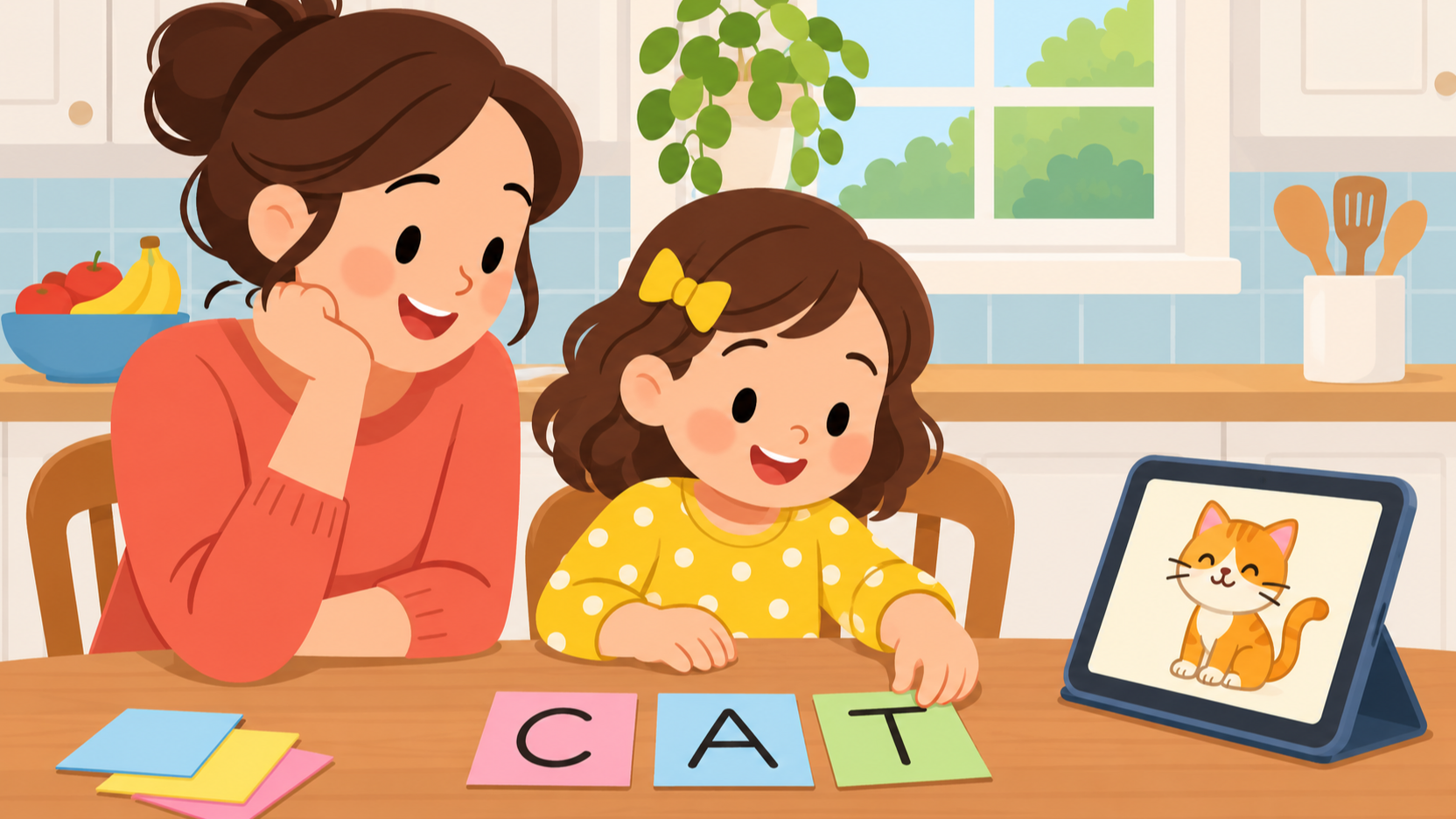
For parents asking whether YouTube videos teach a child to read at home, the practical answer is yes, as part of a lesson you do together. Pick a clip that models one skill, pause for your child to try it, and repeat the activity with paper letters. Use your child’s response off-screen to choose what to practice next.
Key Takeaways
- Match the clip to the next skill your child is ready to practice.
- Pause before the presenter gives the answer so your child can have a turn.
- Change one letter off-screen to check whether your child can use the same move on another word.
- Keep sharing books for the story, even when your child is practicing only a few letter sounds.
What can YouTube reading videos teach a beginner?
YouTube reading videos can show a beginner how to match a letter to a sound and how to join sounds to read a word. A clip gives your child an example to copy. When you pause and offer a turn, you can hear which part your child can do and where they need help.
Letter recognition means identifying a printed letter. A child might point to m or call it em. Phonemic awareness means noticing or working with individual sounds in spoken words. You can practice it with no letters in view. Say map and ask your child to listen for the first sound. Phonics connects those spoken sounds to written letters and letter patterns. Show m and say /m/, the sound at the beginning of map.
Blending means joining sounds into a spoken word. If you say the sounds and your child joins them with no print in view, that’s oral blending. If your child looks at map, works out the sounds from the letters and blends them, that’s decoding. Both belong in a beginner lesson. The distinction tells you what to practice when your child knows the alphabet song and is still working out how to read a word on paper.
According to NAEYC, families can explore sounds through rhymes and sound-matching games and offer alphabet play with materials such as magnetic letters. For other skills to practice alongside early reading, see Kindergarten Readiness Worksheets: 8 Skills to Practice.
Which YouTube phonics video should I start with?
Start with a YouTube phonics video that teaches a skill your preschooler or kindergartner can try with a little help. If your child is learning letter sounds, pick a clip that shows one letter as the presenter says its sound. If those sounds are familiar, choose a lesson that joins them into a word.
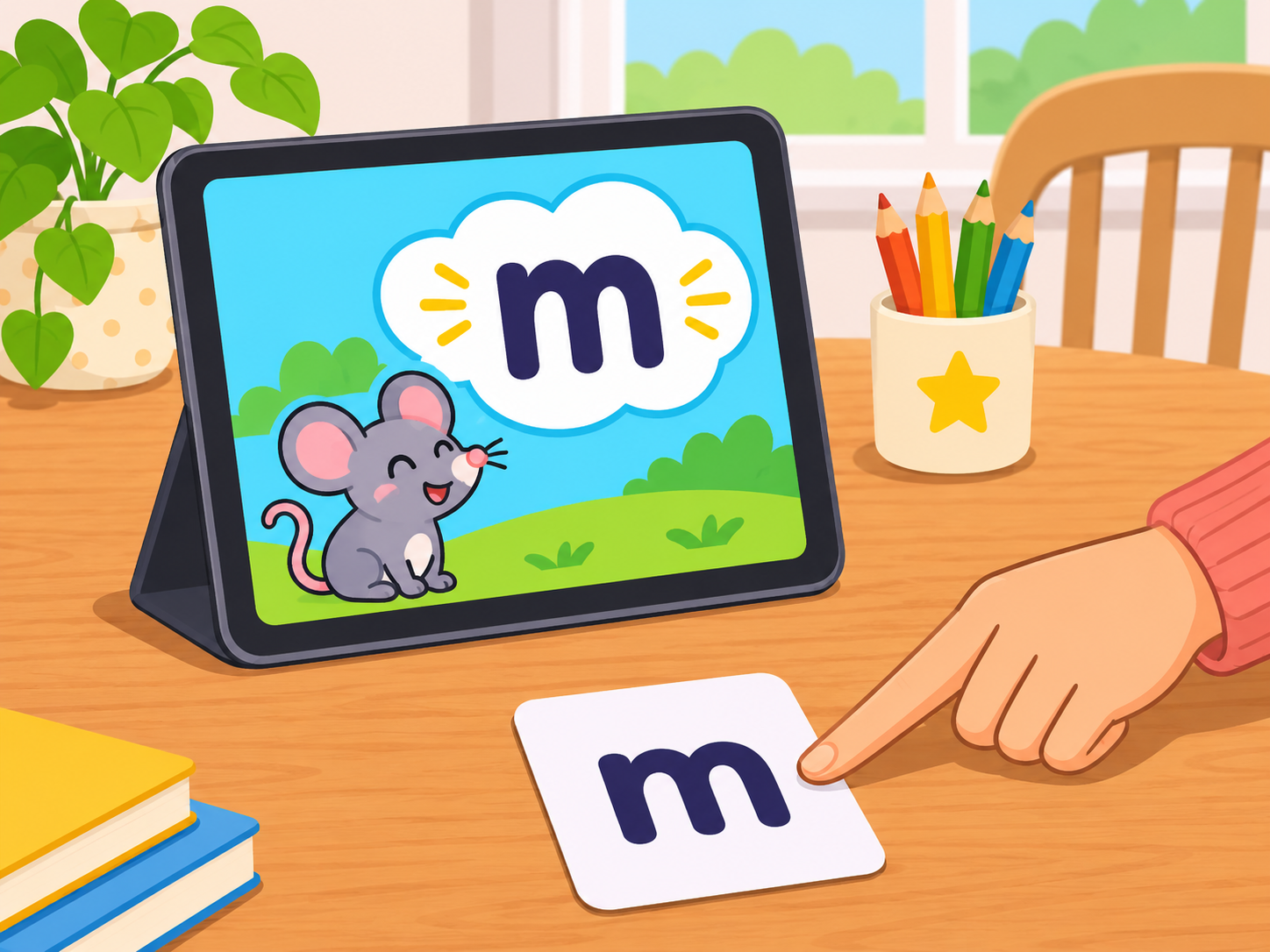
Preview the example before you play it together. For a letter-sound lesson, listen to how the adult says the sound. A continuous /m/ is easier to carry into a blend than muh, which adds a vowel. For a word lesson, look for plain print and a pointer or finger that moves from left to right. You want to be able to pause while the word is visible, before the presenter says it or reveals a picture.
| Video type | What your child can practice | What to try after the clip |
|---|---|---|
| Alphabet or letter-sound lesson | Finding a letter and saying its sound | Show m and s on paper and ask for /m/ |
| Spoken sound game | Joining sounds without printed letters | Say the sounds in sun and ask your child to put them together |
| Beginner word-blending lesson | Reading a printed word using familiar sounds | Build map with letter cards and blend it together |
| Story read-aloud | Listening for meaning and talking about events | Ask your child to tell a toy what happened in the story |
Search by the task, such as short a blending for beginners or first sound listening game for preschool. A clip labeled learn to read may cover several skills. You only need the part your child can take a turn doing.
How do I use a YouTube clip in a first reading lesson?
Use a YouTube clip in a first reading lesson by watching one example together, pausing for a turn, and moving the same task onto paper. For a child who knows the sounds for m, a, and p in map, choose a model that shows how to join those sounds as the letters stay in view.
Write m, a, and p on separate scraps of paper. Put them in order below the screen. For this example, a represents the short vowel sound you hear in map. If that sound is unfamiliar, use the routine for the single letter first.
- Watch the model. Play the part where the presenter points to the letters in map, says the sounds, and pulls them together. If the clip uses a different word, use the letters for that word so the video and paper examples match.
- Pause for a turn. Before the presenter gives the answer again, point under the first letter and invite your child to say the sound. Slide your finger under the whole word as you blend together. Keep the sounds close, with a brief /p/ at the end.
- Read it on paper. Turn the screen away and put the letters in front of your child. Say, “Start here. Slide your finger under the word.” Wait before supplying the first sound so you can hear how your child starts.
If you need to help with the first sound, give it and blend together. That still counts as practice. The next section shows how to use one letter swap to decide whether to repeat the model or move forward.
How can I tell whether my child can read the word off-screen?
To see whether your child can use a YouTube reading lesson off-screen, offer the word shown in the video and then change one letter to make another word with familiar sounds. Listen for how your child works through the changed word. The response helps you choose the next practice step from something you can actually observe.
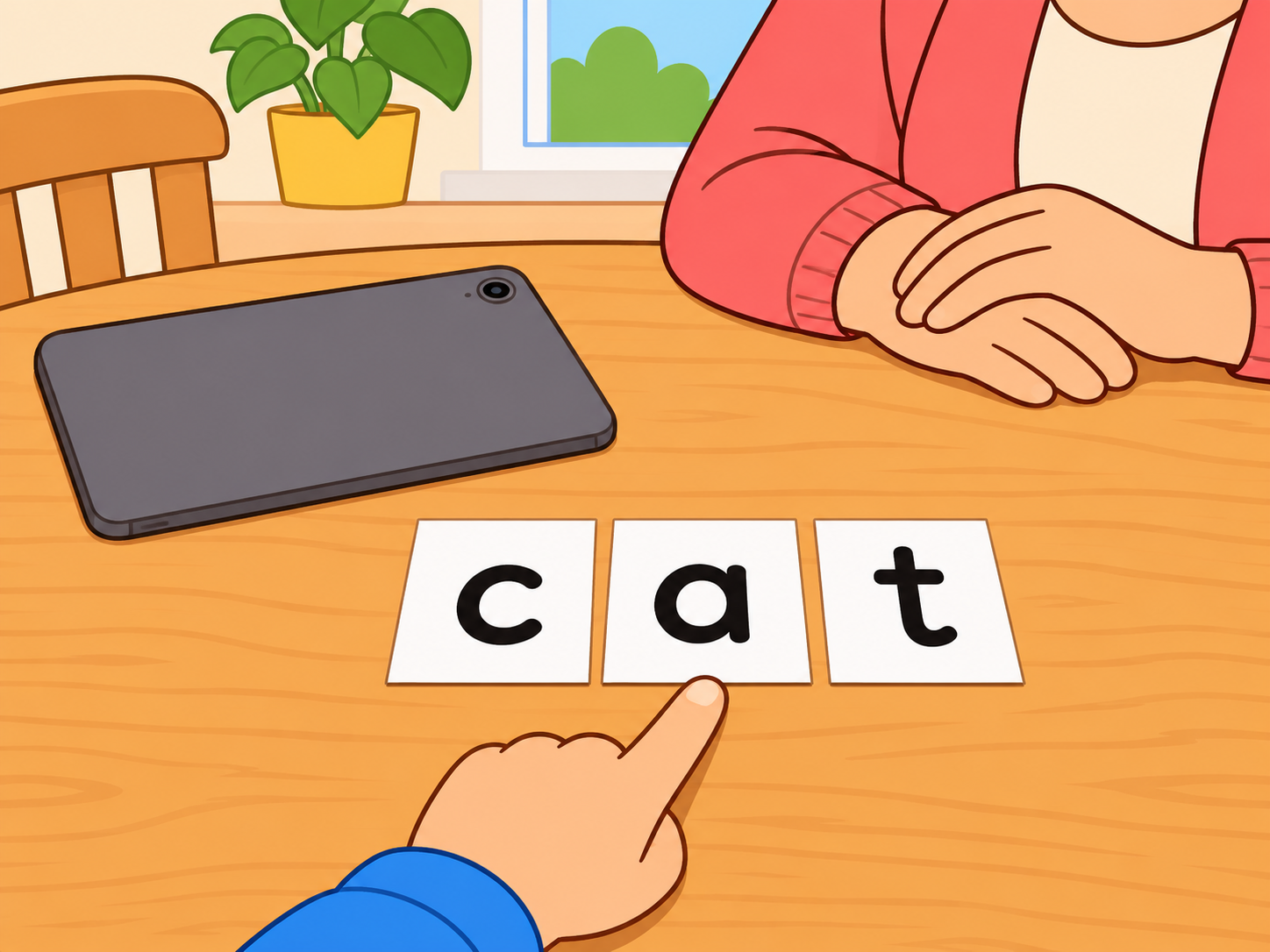
Imagine you’ve just watched map being blended. Your child says map when you lay out the cards. Slide m away and put t in its place, provided your child already knows the /t/ sound. You now have tap, with the same vowel and final letter. Keep the cards plain so the printed word supplies the clues.
If your child says map again, touch the t and say, “Look at the first letter. What sound goes here?” If they say /t/ and still arrive at map, point to each letter again and model the blend from the beginning. If they say each sound with a long gap and lose the first one, draw your finger under the letters in one motion and say the sounds close together. Let your child try the slide with you.
If your child reads tap, ask them to show what tap means by tapping the table. That gives the word a purpose after the sound work. Treat the swap as a clue about this example. On another day, try a different pair with letters your child knows so you can see the same skill in another word.
How should phonics videos change from preschool to kindergarten?
Choose phonics videos by what your child can do with sounds and print. A preschooler who enjoys rhymes can start with a listening game or a letter from their name. A kindergartner who can say several letter sounds and join them aloud can try a clip that blends those sounds in a written word.
With a child who is beginning to notice sounds, say sun and sock as you set the objects or pictures side by side. Stretch the /s/ in each word and let your child join you. When you introduce printed s, put it beside one of the pictures and repeat the sound. Later, offer the letter by itself so you can see what your child does when the picture is gone.
When a child can connect several letters to their sounds, try a consonant-vowel-consonant word, often called a CVC word. Mat fits that pattern. Ask your child to say the sounds and slide them together. Once that feels familiar, offer a decodable book, a book whose words are selected to give readers practice with sound-spelling patterns they’ve been taught. Preview the page to see whether your child’s familiar patterns are there. You can read any words that need patterns you haven’t practiced together.
If your child works with a teacher, ask which sounds and spellings the class is practicing so the video gives them another example of something familiar. During a shared book, read the story in your normal voice. Your child can join in on a word when they want a turn.
How do reading videos fit with printables and books?
A YouTube reading video can model a sound or a blend, while a printable gives your child a place to try it on paper. Use the page for the same skill you picked for the clip. Keep picture books in the routine so your child also hears language and gets to talk about what it means.
For children practicing /s/, a page with s and a few pictures gives you a sound-matching activity. Say each picture name together first. If a child calls a picture a boat while the page expects sailboat, agree on the word before asking about its first sound. If the activity is word blending, fold the page to show one printed word at a time and check that the letters match the sounds you’ve practiced.
Writing can be part of the play. Teacher educators Christina Mirtes and Jessica Grimone-Hopkins describe a class turning a pizza vote into a pretend restaurant, with a teacher who says, “I wrote down the sounds I heard” as she models the spelling of pop. At home, your child can say the word and move paper letters while you do the writing. NAEYC’s preschool literacy article.
If your child wants to form a letter, offer a finger trace or a marker and say the sound together. For a starting point, see Tracing Sheets for Preschoolers: Where to Start. A printable is optional. The same lesson fits on scrap paper. Leave room for a book your child picks and talk about the parts they want to revisit.
More in this series
Fine Motor Activities for Preschoolers: 6 Core Hand Skills
Build hand strength and pencil control with fine motor activities for preschoolers ages 3 to 5, using a 5-day home plan and printable tracing sheets.
Tracing Sheets for Preschoolers: Where to Start
Choose tracing sheets for preschoolers by the strokes your child can make, then try lines, shapes, letters, and names through play.
Keep reading
Fine Motor Activities for Preschoolers: 6 Core Hand Skills
Build hand strength and pencil control with fine motor activities for preschoolers ages 3 to 5, using a 5-day home plan and printable tracing sheets.
Kindergarten Readiness Worksheets: 8 Skills to Practice
Choose kindergarten readiness worksheets for eight preschool skills. Use the printable checklist to pair each page with a hands-on activity.
Tracing Sheets for Preschoolers: Where to Start
Choose tracing sheets for preschoolers by the strokes your child can make, then try lines, shapes, letters, and names through play.
Shop the topic
-
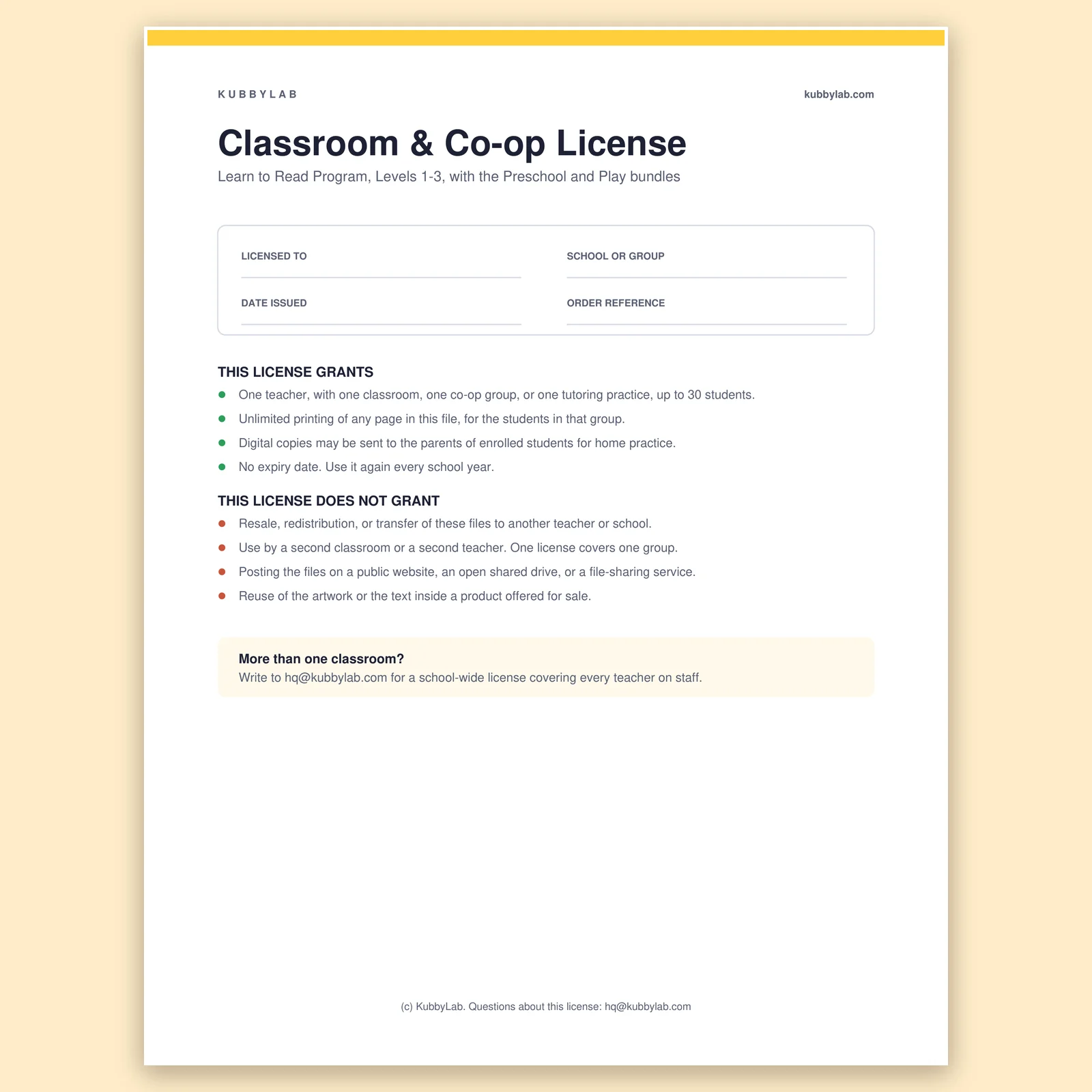
Learn to Read Program: Classroom & Co-op License
The full Learn to Read program licensed for one classroom or co-op, up to 30 students, unlimited printing.
$79
Get this product View details -
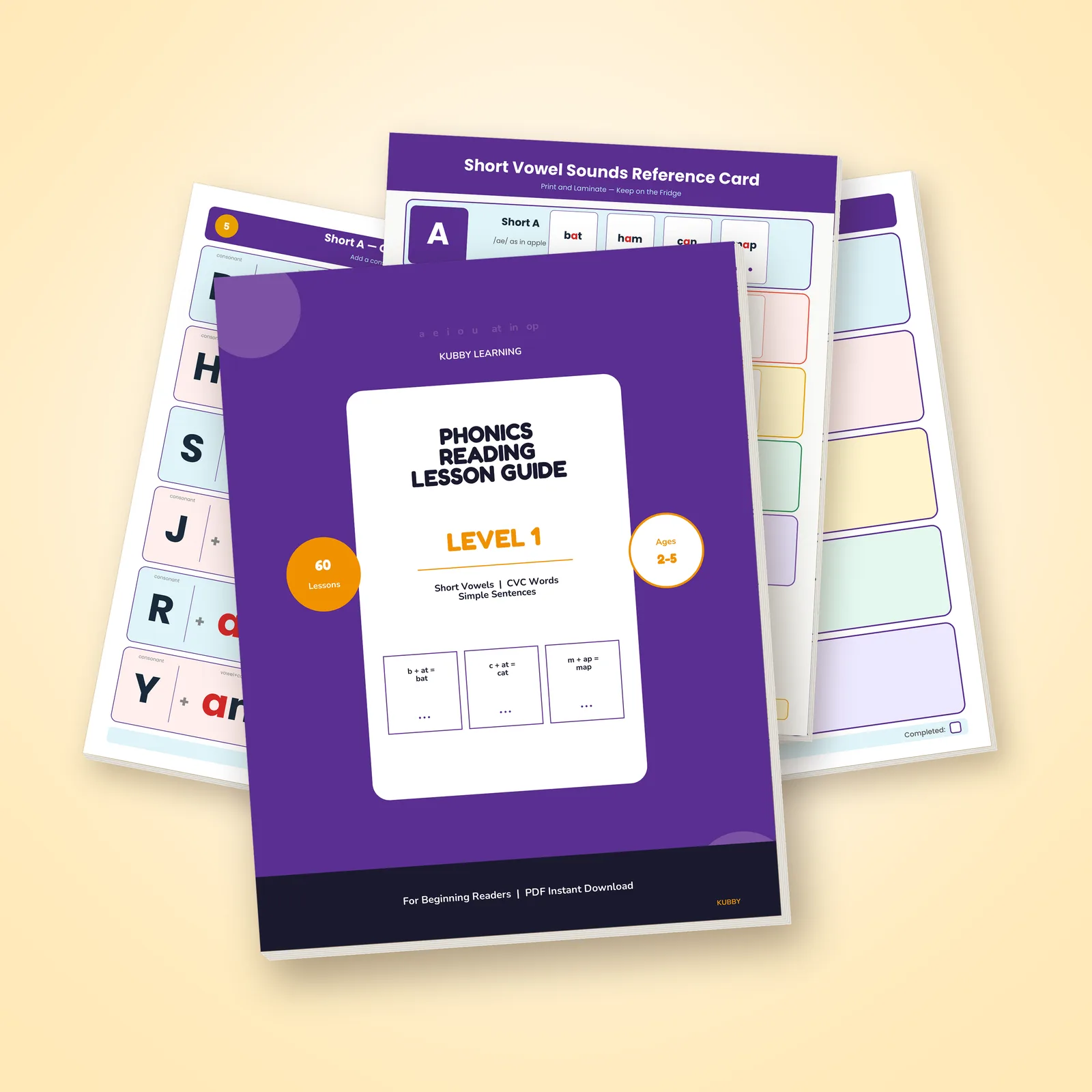
Learn to Read Program: Levels 1-3
170 sequenced phonics lessons across 199 pages, from first letter sounds to fluent long-vowel reading.
$27
Get the bundle View details -
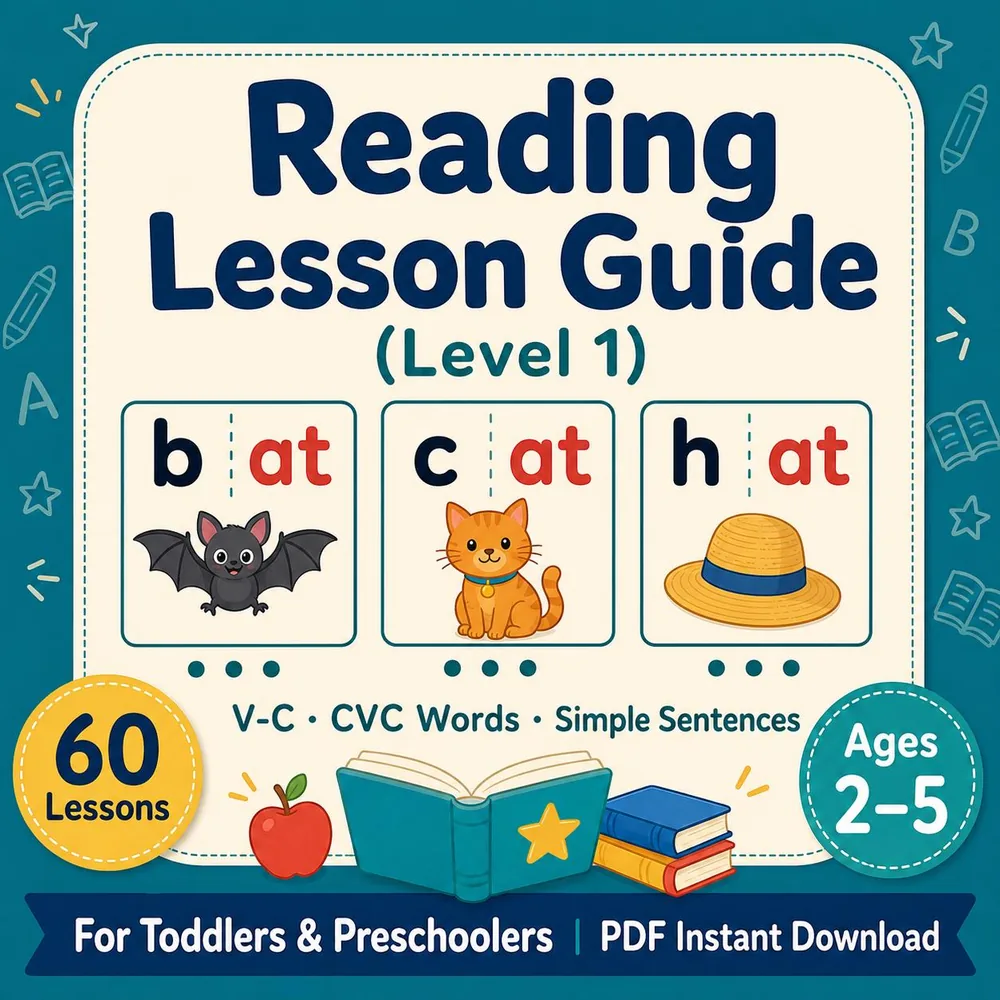
Phonics Reading Lesson Guide Level 1
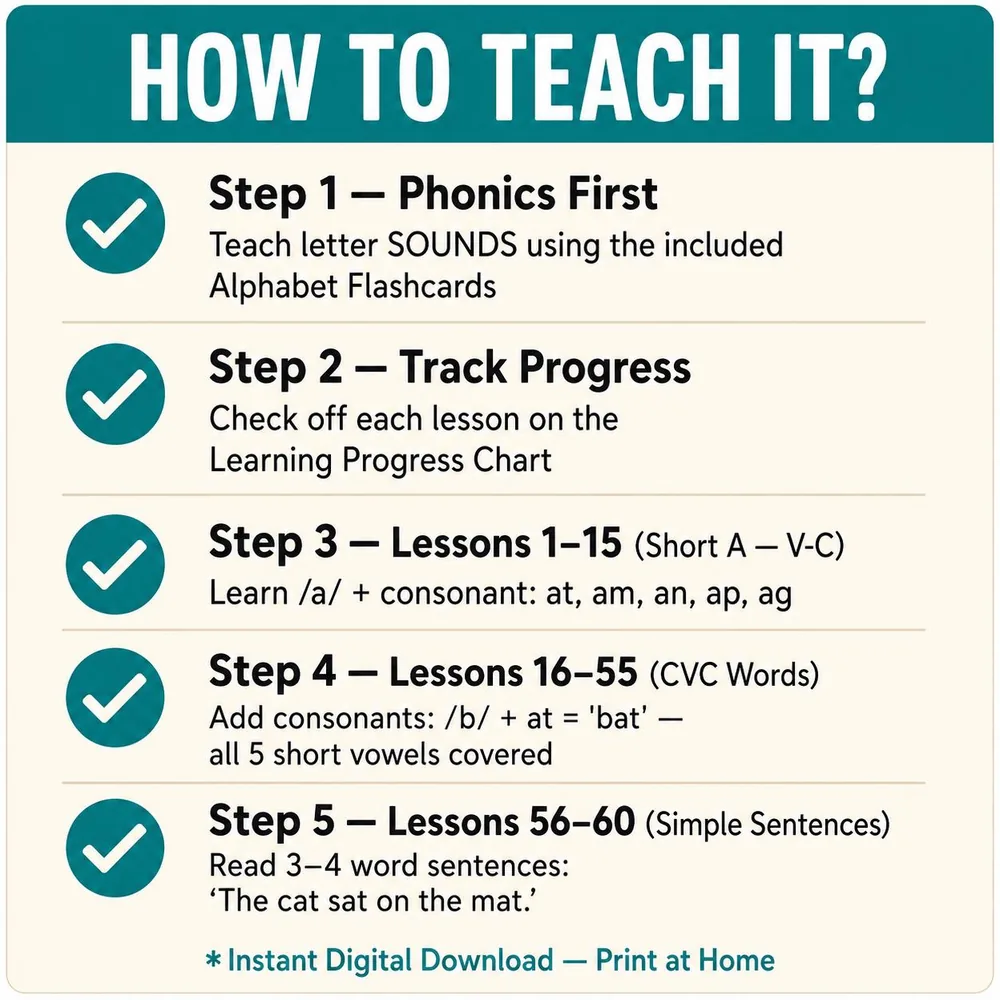
67 pages, 60 short phonics lessons: short vowels, V-C patterns, CVC words and early sentences.
$9
Get this product View details
Frequently asked questions
Can my child learn to read from YouTube alone?
Use YouTube to model a reading skill and practice it together away from the screen. A prerecorded lesson gives the same prompt to every viewer. When you listen to your child try a word on paper, you can respond to the sound or letter they need help with.
What kind of reading video should I show my 3-year-old?
Try a clip that plays with rhymes, repeats the first sound in familiar words, or introduces a letter your child sees in their name. Pause and copy the sound together. If your child likes the example, turn off the clip and look around for another object whose name starts with that sound.
What if my child knows letter sounds but can't blend them?
Model how the sounds flow together in a word made from familiar letters. For *mat*, stretch /m/ into the short vowel sound and finish with a brief /t/. Run your finger beneath the letters as you say the word, then invite your child to try it with you.
Should I use sight word videos or phonics videos first?
Start with a phonics video if your child is learning how to work out words from print. Choose a lesson that shows how familiar letter sounds join into a word. For a common word with an unexpected spelling, say the word together, point out the sounds that match familiar letters, and explain the unusual part.