
Coffee Connoisseur's Pick: Seasonal Holiday Coffee Blends
Every December, I watch the same thing happen. Someone picks up a festive tin of holiday coffee blend from the grocery store end cap, brews a pot on Christ
Every December, I watch the same thing happen. Someone picks up a festive tin of holiday coffee blend from the grocery store end cap, brews a pot on Christmas morning, and ends up with something that tastes vaguely like cinnamon-scented disappointment. The label promised cozy warmth and spiced magic. The mug delivered lukewarm mediocrity.
 DIGITAL PRODUCT
holiday coffee blends
Recommended products related to this guide.
If that sounds familiar, you’re not alone. Holiday coffee blends are one of the most misunderstood seasonal products out there. People either buy the wrong roast for their brewing method, store it incorrectly, or skip the preparation steps that actually make a difference. The result is that a genuinely delicious category of coffee gets a bad reputation.
I spent time digging into hundreds of customer reviews, roaster notes, and barista forums to figure out what separates a truly memorable holiday coffee experience from a forgettable one. What I found surprised me.
Key Takeaways:
- Holiday coffee blends vary widely by roast level, and matching the roast to your brewing method makes a significant difference in flavor
- Flavored holiday blends and naturally spiced blends behave differently and need to be stored separately from other coffees
- Most people brew holiday coffees at the wrong water temperature, which kills the spice notes they paid for
- Whole bean holiday blends consistently outperform pre-ground versions in blind taste reviews
- The best holiday coffee experiences combine the right blend with a simple preparation ritual, not expensive equipment
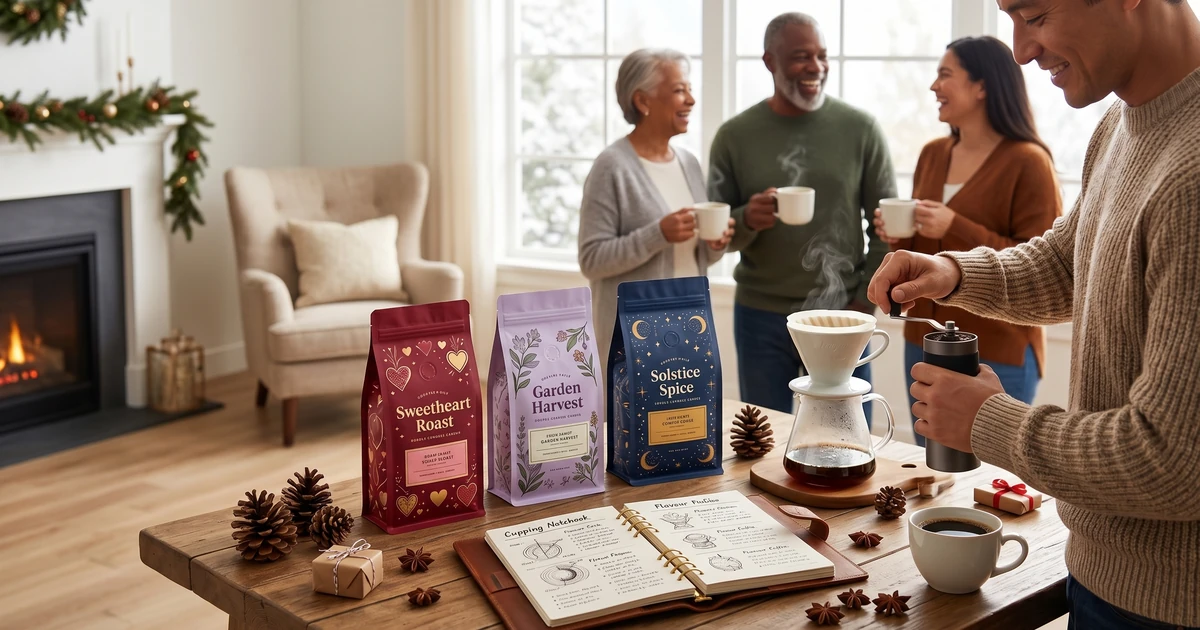
!Festive holiday coffee blends in decorative tins with cinnamon sticks and star anise
What Actually Makes a Holiday Coffee Blend Different
A holiday coffee blend is a coffee product formulated specifically for the autumn and winter season, typically featuring either naturally roasted flavor profiles (dark, chocolatey, smoky) or added flavoring compounds (cinnamon, nutmeg, vanilla, peppermint, gingerbread). The distinction between these two types matters more than most people realize.
Naturally flavored holiday blends use beans selected for their inherent tasting notes. A dark-roasted Ethiopian and Brazilian blend, for example, might produce flavors of dark chocolate, clove, and brown sugar without a single drop of artificial flavoring. These blends tend to be more versatile across brewing methods and hold up better in milk-based drinks.
Artificially flavored blends, on the other hand, use flavoring oils applied directly to the roasted beans. They smell incredible in the bag. But those oils can turn rancid faster, coat your grinder with residue, and produce a thin, one-dimensional cup if brewed incorrectly.
“Flavored coffees contain oils that break down significantly faster than unflavored beans. Always check the roast date, not just the ‘best by’ date.” - Coffee Quality Institute
The type of blend you choose should match how you plan to brew it and how quickly you’ll finish the bag.
How to Choose the Right Holiday Blend for Your Brewing Method
This is where most people go wrong. Not all holiday coffee blends work equally well across every brewing method. Here’s a quick breakdown based on what customer reviews and roaster recommendations consistently show.
| Brewing Method | Best Roast Level | Flavor Profile That Works | Avoid |
|---|---|---|---|
| Drip machine | Medium to dark | Chocolate, caramel, warm spice | Heavy artificial flavoring |
| French press | Dark roast | Bold, smoky, brown sugar | Light roasts (get muddy) |
| Pour over | Light to medium | Fruit, floral, gentle spice | Very dark, heavy roasts |
| Espresso | Dark blend | Rich, chocolatey, vanilla | Peppermint-flavored blends |
| Cold brew | Medium dark | Chocolate, nutmeg, molasses | Light or heavily spiced |
| Pod machine | Medium (pre-ground pods) | Mild spice, caramel | Whole bean only options |
Pro Tip: If you use a grinder for other coffees, run a small batch of plain rice or a dedicated cleaning tablet between grinding a flavored holiday blend and your regular beans. The oils from flavored coffees linger.
Matching roast level to brew method is the single biggest upgrade most home brewers can make.
The Brewing Temperature Problem Nobody Talks About
Here’s something that took me a while to piece together from roaster forums and barista Q&As. The spice and flavor notes in holiday coffee blends are highly sensitive to water temperature. Most drip machines brew at around 185-195°F (85-90°C). The ideal extraction range for most holiday blends, especially those with cinnamon, cardamom, or clove notes, is 195-205°F (90-96°C).
That 10-20 degree gap flattens the spice notes almost completely. You end up tasting mostly bitterness and caffeine with a vague holiday-ish aroma rather than the full warm, layered experience the blend was designed to deliver.
Step 1: Check Your Machine’s Actual Brew Temperature
Most budget drip machines don’t reach optimal temperature. The Specialty Coffee Association recommends 197.6°F (92°C) as the gold standard. If your machine doesn’t specify its temperature, it probably doesn’t hit this range.
Step 2: Use an Alternative if Needed
A simple fix: bring your kettle water to a full boil, then wait 45 seconds before pouring (for pour over). For drip machines, preheat the carafe with hot water before brewing to reduce heat loss during the cycle.
Step 3: Adjust Your Grind Slightly Coarser
Holiday blends with added spice compounds can over-extract slightly in a standard grind. Going one step coarser than your usual setting lets the flavors develop without turning bitter.
“Temperature control is the most underrated variable in home coffee brewing. A 10-degree difference can completely change the flavor profile of the same bean.” - James Hoffmann, author of The World Atlas of Coffee
Getting your brew temperature right costs nothing and delivers a noticeably better cup.
How to Store Holiday Coffee Blends Properly
Holiday coffee blends, especially flavored ones, degrade faster than standard year-round roasts. Based on what coffee enthusiasts consistently report across Reddit threads, home barista forums, and verified purchase reviews, here are the storage rules that actually make a difference.
| Storage Method | How Long Flavor Lasts | Notes |
|---|---|---|
| Original sealed bag (unopened) | Up to 6 months from roast date | Keep in cool, dark place |
| Airtight container, room temperature | 2-3 weeks after opening | Avoid clear containers |
| Refrigerator (airtight) | Up to 1 month | Only if you don’t open repeatedly |
| Freezer (airtight, portioned) | Up to 3 months | Portion first, never refreeze |
| Open bag on counter | 5-7 days | Flavor oils oxidize quickly |
A few things I’d add based on what reviewers flag most often:
-
Store flavored holiday blends away from your regular coffee, especially in a pantry. The flavoring oils are volatile and can migrate to nearby beans.
-
Whole bean holiday blends last roughly 30-40% longer than pre-ground versions after opening.
-
The roast date matters far more than the “best by” date on holiday tins. A tin roasted in August for December shelves isn’t going to taste fresh.
Pro Tip: Buy holiday coffee blends from roasters who print the roast date on the bag, not just a best-by date. Most specialty roasters do this. Most grocery store brands don’t.
Fresh whole bean coffee stored in an airtight, opaque container is always going to outperform pre-ground, regardless of how premium the blend is.
Building a Simple Holiday Coffee Ritual That Actually Works
This is the part that reviews and roaster notes don’t often cover, but it’s what separates a good cup from a genuinely memorable one. The “ritual” aspect of holiday coffee isn’t marketing fluff. It’s practical.
According to research from the National Coffee Association, Americans drink an average of 3.1 cups of coffee per day, but the enjoyment peaks when coffee is consumed intentionally rather than habitually. Holiday coffee blends are designed for intentional moments.
Here’s what that looks like in practice:
- Grind fresh the morning you brew. Even 30 minutes between grinding and brewing costs you noticeable aromatics.
- Smell before you brew. Holiday blends are rich in volatile aromatic compounds. Take 10 seconds before you start the machine to smell the ground coffee. It sounds small. It’s not.
- Use a pre-warmed mug. Pour hot water into your mug for 30 seconds before adding coffee. Cold mugs drop the temperature of your coffee by 10-15°F in the first two minutes.
- Pair intentionally. Cinnamon-forward blends pair well with butter-based pastries. Chocolate and dark roast blends work better with nutmeg-spiced foods.
- Reduce distractions for the first cup. This sounds absurd, but reviews of premium holiday blends consistently mention flavor complexity. You can’t notice complexity while scrolling your phone.
A $15 bag of good holiday coffee enjoyed intentionally will beat a $40 bag consumed on autopilot every time.
For everything else, including my full breakdown of the best holiday coffee blends available this season, roast-by-roast comparisons, and which grocery store tins are actually worth buying, read the complete guide at The Complete Holiday Planning Resource.
And if you’re building out your holiday season more broadly, these are worth a look too: Best Christmas Holiday Movies to Watch This Season has some great ideas for what to pair with that perfect morning cup, and if you’re trying to track which holidays fall when this season, What Holiday Is Today? Find Today’s Celebrations is a handy reference.
Frequently Asked Questions About Holiday Coffee Blends
Are holiday coffee blends just regular coffee with flavoring added?
Not always. Some holiday blends are carefully sourced single-origin or blended coffees chosen specifically for seasonal tasting notes like chocolate, dried fruit, brown sugar, or warm spice. These get their flavor from the bean and roast profile, not from added compounds. Others do use flavoring oils applied post-roast. Both can be excellent, but they behave differently during storage and brewing.
How do I know if a holiday coffee blend is fresh?
Look for a roast date on the bag, not just a “best by” date. For optimal flavor, you want to brew whole bean holiday coffee within 2-4 weeks of the roast date, and within 10 days of grinding. If a bag doesn’t show a roast date, that’s a red flag. Many seasonal tins are roasted months before the holiday season and sit in warehouses, which is why they often taste flat.
Can I use holiday coffee blends in an espresso machine?
Yes, but with some caveats. Naturally roasted dark holiday blends work well as espresso. Artificially flavored blends (peppermint, gingerbread, etc.) are trickier because the flavoring oils coat the portafilter and group head, which is difficult to clean and can affect the taste of subsequent shots. If you want holiday flavor in your espresso, add a small amount of spice directly to the cup rather than running flavored beans through the machine.
Why does my holiday coffee taste bitter even though I followed the instructions?
Bitterness in holiday coffee usually comes from one of three things: water that’s too hot (above 205°F), grind that’s too fine, or beans that are past their peak. Check your water temperature, adjust your grind one step coarser, and check the roast date on your bag. Over-extraction is the most common issue, especially with dark holiday roasts.
Is it worth buying expensive holiday coffee blends vs. grocery store options?
It depends on what you value. Specialty roaster holiday blends (typically $16-30 per 12 oz bag) are almost always fresher, more traceable, and more flavor-complex than grocery store tins ($8-14). However, grocery store options can be perfectly enjoyable when purchased early in the season before the tins have been sitting on shelves too long. The freshness gap matters more than the price gap.
Recommended Resources & Workbooks
Pair this guide with our hands-on, ready-to-print learning resources.
 Digital Bundle
Learn to Read Program: Levels 1-3
170 sequenced phonics lessons across 199 pages, from first letter sounds to fluent long-vowel reading.
 Digital Learning Bundle
Preschool Learning Bundle
260+ printable worksheets for tracing, ABCs, numbers, shapes, sight words, and kindergarten prep.
 Digital Learning Bundle
Play-Based Learning Bundle for Ages 3-6
230+ play-based learning activities with pretend play, reading, early math, creative arts, and bonus flashcards.
Related Guides & Articles
Explore more of our detailed guides and activities.
The Complete Holiday Planning Resource
Holidays shape the rhythm of our lives. They give us reasons to gather, celebrate, remember, and rest. Whether it's a federal observance, a religio...

Best Christmas Holiday Movies to Watch This Season
Christmas holiday movies are one of the most beloved traditions of the season, right up there with decorated trees and hot cocoa. Every December, f...
Is Valentine's Day a Holiday? History and Status Explained
Valentine's Day falls on February 14th every year, and the question of whether Valentine's Day is a holiday comes up more than you'd think. People ask
What Holiday Is Today? Find Today's Celebrations
Every so often, I'll glance at my calendar and think, "Wait, is today a holiday?" Sometimes it's a federal bank holiday I forgot about. Sometimes i...