
Fire Safety for Preschoolers: Exit Drills and Printables
By KubbyLab Team · Updated
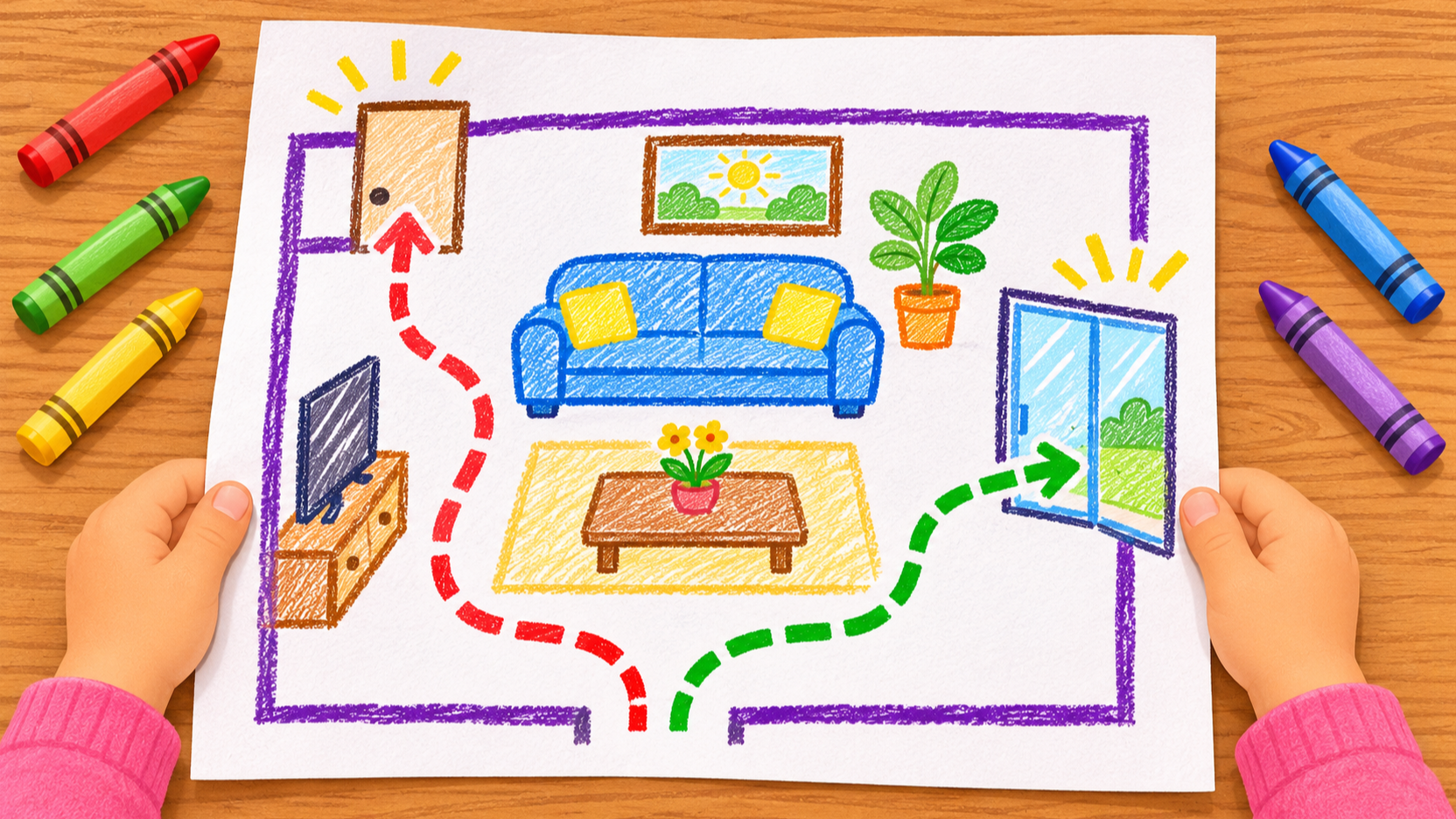
Practicing fire safety for preschoolers gives children ages 3 to 6 three physical actions they can perform on cue during an emergency: stopping play at the chirp of a smoke alarm, walking through two ways out to an outdoor family meeting place, and calling out to firefighters in turnout gear instead of hiding. Pairing short hallway walk-throughs with tabletop sequencing sheets builds calm motor habits without causing bedtime fear.
Parents and teachers looking for early childhood fire safety lessons want a clear sequence they can teach in one afternoon without scaring sensitive three- and four-year-olds. At KubbyLab, I build and review early-learning printables alongside parents, homeschoolers, and classroom educators who run safety units for ages 3 to 6. Our printable PDF activity sheets include both US Letter (8.5 x 11 inches, 21.6 x 27.9 cm) and A4 (21 x 29.7 cm) page sizes inside the same digital file, ready to open in any free PDF reader and print on a home printer or at a local print shop with nothing shipped physically. Paper worksheets introduce exit vocabulary and equipment labels at the kitchen table, while physical floor drills build the walking routine a child uses when a detector sounds. You can combine these hallway drills with hands-on pretend play from Preschool Fire Truck Activities From Craft to Play.
Key Takeaways
- Begin home exit practice around age 3 by framing hallway walk-throughs as a daytime movement game rather than a lecture about danger.
- Train three physical actions in strict sequence: freeze at the smoke alarm beep, walk straight outside without picking up toys, and wait beside one fixed outdoor landmark.
- Teach the clothing-fire action (stop, drop, and roll) in a separate lesson from the smoke alarm drill so young children do not drop and roll on the hallway rug when a detector chirps.
- Pair printable picture cards on US Letter or A4 paper with physical doorway checks so children connect spoken rules to the real doors and stairs in their building.
What Are Fire Safety Instructions for Preschoolers Ages 3 to 6?
Fire safety instructions for preschoolers ages 3 to 6 are short, movement-based rules that train a child to recognize a smoke alarm tone, follow a clear path out of the building with an adult, and stand at a designated outdoor landmark. These instructions rely on physical repetition rather than abstract explanations of heat or fire behavior.
Young learners process emergency rules through physical movement and familiar community helpers. According to CDC, a three-year-old child reaches the developmental milestone of following two- to three-step instructions and naming familiar objects in picture books. Abstract warnings about house damage overload a preschooler’s working memory. Effective instructions shrink the routine into three short action verbs: listen, walk, and wait.
In KubbyLab’s curriculum observations with parents and early childhood teachers, adults consistently note that graphic explanations of flames trigger nighttime worry without improving hallway recall. When an adult replaces warnings with concrete movement scripts, the child treats a home exit drill the same way they treat lining up for outdoor recess at school. Introducing firefighters as friendly neighbors during unit studies, such as the cut-and-paste pages in our Community Helpers Preschool Printable Pack, builds familiarity before you run your first timed hallway walkthrough.
| Age Band | Spoken Rule Script (Under 8 Words) | Physical Skill Practiced | Tabletop Printable Task |
|---|---|---|---|
| Age 3 | “Hear the beep, move your feet outside.” | Holding an adult’s hand and walking to the front yard tree. | Pointing to the smoke alarm and fire truck on a coloring sheet. |
| Age 4 | “Walk out fast, meet by the mailbox.” | Opening the bedroom door and crawling below a held bedsheet. | Putting 3 picture cards in order: alarm, door, outdoor tree. |
| Ages 5 to 6 | “Check the door, take the clear path.” | Touching a closed door with the back of a hand and naming two exits. | Tracing a 2-path arrow map on an 8.5 x 11 inch bedroom grid. |
Use the table above as a ladder. A three-year-old masters one verbal cue and walks beside an adult. By age five, that same child can check a closed bedroom panel with the back of one hand and trace a backup path on a printed floor grid.
What Should Kids Do if There Is a Fire at Home?
When there is a fire at home, kids should stop playing the instant the smoke alarm beeps, leave every toy and pet behind, drop to hands and knees if smoke is in the air, move out through the nearest clear doorway, and walk directly to the outdoor family meeting place.
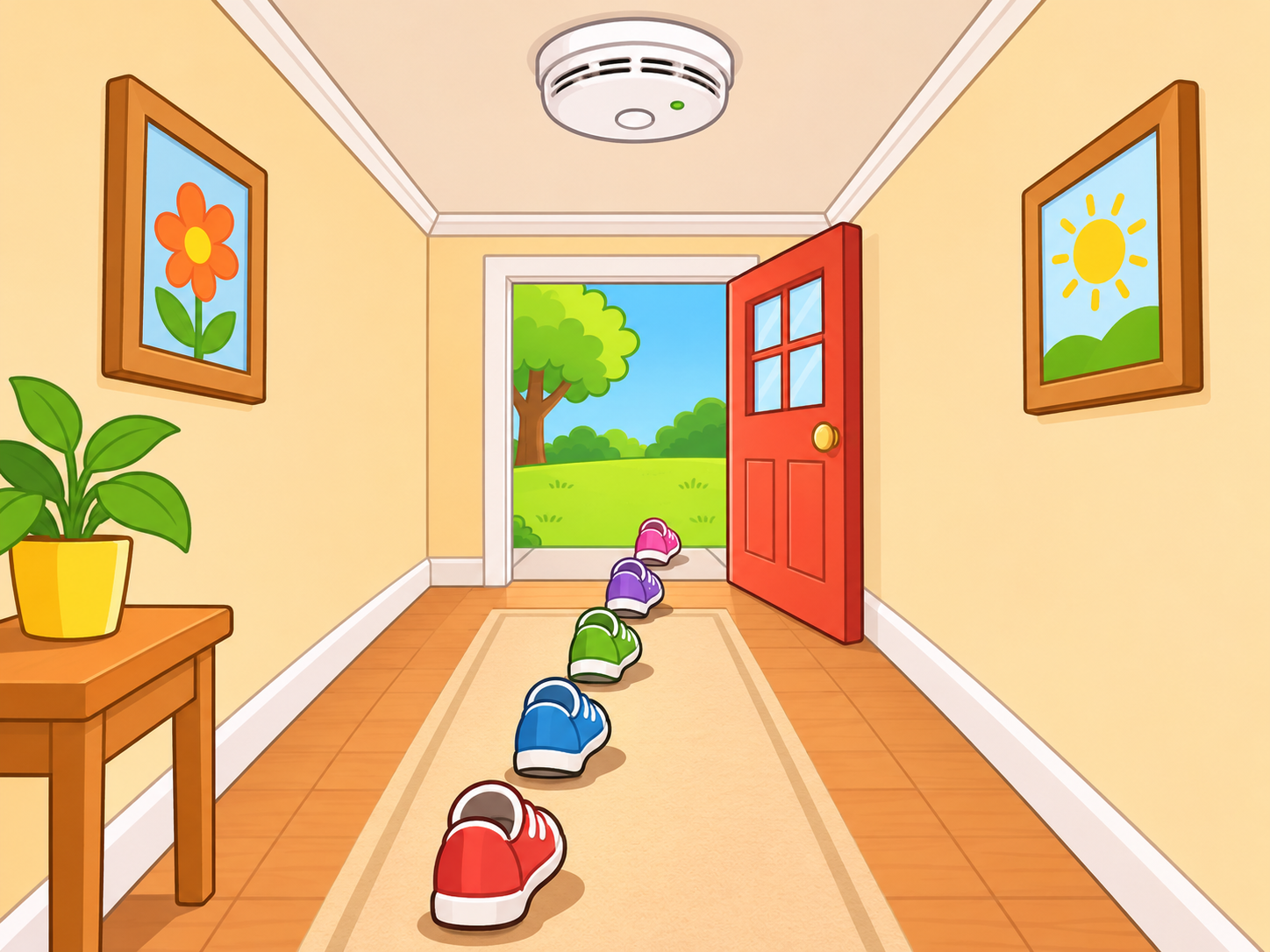
Fire departments organize child evacuation around a single foundational command: get out and stay out. For a child between ages 3 and 6, every extra choice slows down departure. Teaching a single exit habit means giving your child one linear sequence with zero exceptions for favorite blankets, stuffed animals, shoes, or family pets.
Practice these five physical actions in exact order during your home walkthroughs:
- Drop any crayon, block, or toy the moment the smoke alarm sounds its three-beep pattern and stand up from the floor.
- Look toward the doorway and drop to hands and knees to crawl low under smoke if haze hangs in the room.
- Move out through the main bedroom door and exterior entrance, or take the backup door or ground-floor window route if the main hallway is blocked.
- Walk straight to the fixed outdoor landmark and keep both feet planted there until a parent or firefighter arrives.
- Yell for help and wave a light-colored cloth or flashlight at the bedroom window if a closed door feels warm or smoke blocks the exit, and never climb inside a closet, cabinet, or under-bed frame.
Notice that stop, drop, and roll does not appear in the five evacuation steps above. Stop, drop, and roll is an action used strictly when clothing catches a flame: a child stops running, drops flat to the ground, covers their eyes and mouth with both hands, and rolls side to side until the fire is smothered. Keep that clothing rule separate from smoke alarm practice. When parents teach both rules in the same session, three- and four-year-olds frequently drop onto the living room rug and roll in place when the smoke detector chirps instead of walking out the front door.
How Do You Run a Preschool Fire Safety Drill at Home Without Causing Fear?
Parents run a preschool fire safety drill at home without causing fear by treating the rehearsal as a daytime movement game, letting the child watch an adult press the smoke alarm test button, walking two exit routes from the bedroom pillow, and finishing at the outdoor family meeting spot.
Preschoolers handle loud sounds and rapid transitions best when they know what happens first, second, and last. According to CDC, preschoolers ages 3 to 5 respond well when parents state expectations in clear, consistent steps and practice everyday habits through active play. Calling your rehearsal a “Hallway Exit Game” removes alarm shock while building the exact footwork required during an actual emergency.
Picture a Saturday morning at your kitchen table before you run your first practice. An unmapped house layout sits on the table, and the path from the bedrooms to the front sidewalk has never been walked as a single drill. You open a printable PDF floor-plan grid on US Letter paper, sit beside your four-year-old with a red crayon, and draw two big arrows from their bed to the front maple tree. Next, you walk to the hallway detector together, count to three before pressing the test button with a wooden spoon handle, and walk briskly out the front door to touch the tree trunk. Afterward, your child can point to both exit doors from the porch and repeat the three exit steps without bedtime tears.
Walk through these six steps twice a year with your child:
Step 1: Show Turnout Gear Photos in Daylight
Look at real photographs of a firefighter putting on heavy boots, canvas pants, a reflective coat, a helmet, and an air mask. Explain that the face mask makes a loud mechanical breathing sound while keeping the helper safe from smoke. You can print and cut out our Printable Fire Truck Badge Template for Kids so your child wears a paper badge on their shirt during the practice walk.
Step 2: Count Down Before the Detector Test Beep
A sudden alarm chirp startles young ears. Give your child a clear three-two-one countdown and let them watch you press the test button on the ceiling unit. Watching the button press teaches your child that the three-beep tone is simply a signal to start their walking feet.
Step 3: Walk Two Ways Out From the Bedroom Pillow
Start every round with your child sitting on their bedroom pillow. Walk the primary path out the bedroom door, down the hall, and out the front entrance. Walk back inside together and trace the second path, such as a back patio door or a ground-floor window exit.
Step 4: Practice the Bedsheet Crawl and Back-of-Hand Touch
Hold a bedsheet three feet above the living room floor to represent a layer of smoke. Have your child crawl on hands and knees underneath the fabric to reach the closed door, then touch the door panel and handle with the back of one hand to check that the surface feels cool before opening it.
Step 5: Touch the Outdoor Family Meeting Place
Finish every drill by walking all the way to your fixed outdoor landmark, such as a specific front-yard tree, a driveway mailbox post, or a neighbor’s porch column. Have your child place one flat hand on the tree trunk or post to mark the finish line.
Step 6: Run One Pajama Walkthrough Before Toothbrushing
Once your child knows the daytime walking game, run one practice in pajamas and slippers just before evening toothbrushing. Walking the hallway with the overhead lights dimmed helps the path feel familiar after sunset.
What Are the 5 E’s of Fire Safety in Early Childhood Education?
The 5 E’s of fire safety in early childhood education are Education, Engineering, Enforcement, Economic Incentives, and Emergency Response. Fire prevention planners use these five categories to combine children’s picture-book lessons with working smoke alarms, clear exit hallways, free community detector programs, and rehearsed building evacuation plans.
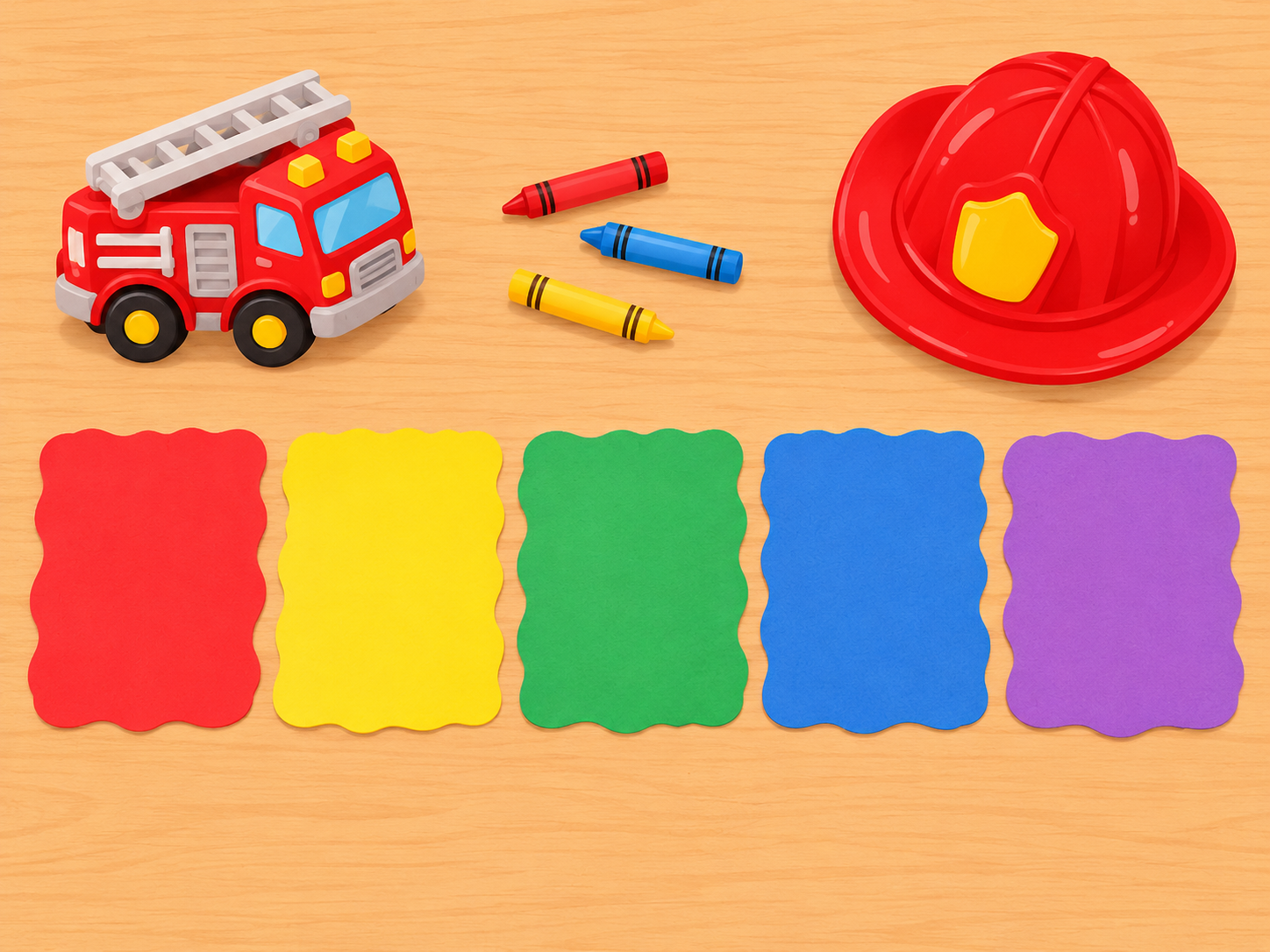
Community risk-reduction teams created the five-part framework to show that teaching children verbal rules is only one piece of keeping a home or school safe. A three-year-old cannot maintain a building alone. Adults construct the safety net around the child through hardware installation, furniture layout, and rehearsed response plans.
| The 5 E’s Pillar | Definition in Plain Terms | Adult Setup in Home or Preschool | Preschooler Learning Activity (Ages 3 to 6) |
|---|---|---|---|
| Education | Teaching age-appropriate prevention and escape habits. | Scheduling short monthly safety story and floor-map sessions. | Sequencing 3 exit picture cards and walking to the meeting tree. |
| Engineering | Physical devices and hardware that detect or block hazards. | Installing interconnected smoke alarms and stove knob covers. | Listening to the smoke alarm test beep and spotting red exit signs. |
| Enforcement | Daily household and classroom safety rules that never bend. | Keeping a 36-inch clear path to doors and a 3-foot zone around stoves. | Checking that blocks and shoes stay off the hallway exit floor. |
| Economic Incentives | Accessing free or low-cost community safety equipment. | Requesting free smoke alarm installation from local fire departments. | Visiting a local fire station open house to meet community firefighters. |
| Emergency Response | Actions taken from the first alarm chirp until helpers arrive. | Posting the street address near phones and running 2 drills a year. | Practicing saying first and last name clearly to a uniform helper. |
When parents and preschool directors pair the Education pillar with Engineering and Enforcement, the young child does not carry the weight of emergency judgment alone. Interconnected detectors wake the household, clear corridors prevent stumbles, and practiced routines guide the child’s feet out the door.
What Are Fire Safety Norms for Preschool Classrooms and Homes?
Fire safety norms for preschool classrooms and homes are daily environmental rules that prevent ignitions and keep exit routes open, including maintaining a 36-inch clear path to all doors, marking a three-foot child-free zone around stoves and heaters, locking matches in upper cabinets, and testing smoke alarms monthly.
While escape drills prepare a family for an alarm, daily norms prevent accidents during ordinary meals and playtime. Consistent fire safety for preschoolers works best when physical boundaries are visible on the floor and tied to daily tidy-up habits.
Set three daily household and classroom norms that children ages 3 to 6 can help check:
- Stick blue painter’s tape on the kitchen floor to mark a 36-inch (91 cm) border around the stove or any space heater, and teach children that no toes or toys cross inside that taped rectangle.
- Teach the hands-behind-the-back rule for matches, lighters, and utility candles so a child who spots one on a counter or sidewalk leaves it untouched and walks immediately to tell a grown-up.
- Fold exit-path clearing into daily clean-up before naptime and bedtime so backpacks, wooden trains, and laundry baskets never sit in front of bedroom doors or hallway stairs.
The table below compares how daily safety norms operate across a family residence, a licensed preschool room, and a tabletop printable review.
| Safety Dimension | Family Home Norms | Preschool Classroom Norms | Tabletop Printable Review |
|---|---|---|---|
| Alarm Sound Check | Test smoke alarms on the 1st of every month with children watching. | Monthly school-wide alarm drill logged on the classroom wall chart. | Coloring the smoke alarm icon and saying “Beep, beep, feet!” aloud. |
| Exit Path Standard | Two clear paths from each bedroom; toys cleared before bedtime. | Two marked exits with 36-inch clear aisles maintained all day. | Tracing the clear path through a printed hallway maze with a crayon. |
| Outdoor Meeting Spot | One fixed front-yard object (tree, mailbox, neighbor’s porch post). | Painted fence post or playground zone well clear of the building. | Circling the outdoor meeting landmark on a printable house diagram. |
| Adult Role During Drill | Gather children, check bedrooms, call emergency services outside. | Carry attendance clipboard and emergency roster, count heads at fence. | Guide pencil grip, ask sequence questions, confirm calm answers. |
| Skill Built by Child | Real-world navigation through the child’s own bedrooms and stairs. | Group line-up order and following a teacher alongside classmates. | Vocabulary recall, three-step sequence memory, and daytime familiarity. |
How Do Fire Safety Worksheets and Early Literacy Printables Help Preschoolers Practice?
Fire safety worksheets and early literacy printables help preschoolers practice by turning spoken emergency rules into picture sequencing cards, sight-word labels, and crayon-tracing maps at the kitchen table. Working with paper cutouts in daylight gives children ages 3 to 6 visual memory anchors before they walk physical exit routes.
Preschoolers hold onto multistep rules longer when they manipulate physical picture props during calm play. According to NAEYC, placing thematic print materials and picture labels inside children’s play routines helps preschoolers connect spoken vocabulary to real-world actions. When a four-year-old colors a red exit sign, traces the five uppercase letters in ALARM, and lines up three story cards showing a child hearing a beep, walking out a door, and waiting beside a tree, the spoken script becomes a visible story.
At KubbyLab, we state clearly what a printable file covers and where paper practice stops. When you download one of our early-learning PDF packs, you receive a digital file formatted for both US Letter (8.5 x 11 inches, 21.6 x 27.9 cm) and A4 (21 x 29.7 cm) paper in the same download, so there is no size option to select at checkout. You open the PDF on your computer or tablet, print the pages on standard home printer paper or take the file to a local print shop, and set out crayons and child-safe blunt scissors. Nothing is shipped in the mail.
A flat paper worksheet cannot teach a child how loud a ceiling detector sounds in a tiled hallway or how much push a heavy exterior door requires. Use tabletop printables to preview the vocabulary and put the three exit pictures in order first, then push the chairs back and walk the physical hallway route together.
Which Common Mistakes Disrupt Fire Safety for Preschoolers and How Do You Fix Them?
Common mistakes that disrupt fire safety for preschoolers include mixing smoke alarm exit drills with clothing-fire rolling exercises, running unannounced nighttime sound tests that trigger fear, picking movable objects like parked cars as meeting spots, and treating paper coloring sheets as a substitute for walking through real doorways.
Even well-planned family drills can stall when a three- or four-year-old misinterprets an instruction. Reviewing the four trouble spots below before you practice keeps your child’s recall clean.
First, adults often teach stop, drop, and roll during the exact same ten-minute talk as the smoke alarm exit walk. For a child under age five, rolling on the carpet is a fun physical game, so it crowds out the instruction to walk outside. Fix this by separating the two topics by at least two weeks and using distinct rhymes: “Hear the beep, move your feet” for the smoke detector, and a separate clothing-safety lesson for five- and six-year-olds.
Second, families sometimes pick a parent’s parked car in the driveway as the outdoor meeting spot. If that car is away at the grocery store or moved to the street during an alarm, a literal-minded four-year-old may wander look for the vehicle. Fix this by choosing an object anchored permanently into the ground, such as a specific front-yard tree trunk, a brick mailbox pillar, or a neighbor’s front porch post.
Third, some parents test a child’s reaction by setting off the 85-decibel hallway alarm without warning during the very first lesson. A startled toddler or preschooler often claps both hands over their ears and freezes in the bedroom. Fix this by giving a three-second countdown on the first two drills so your child expects the chirp, and step straight into the walking routine while praising brisk feet.
Fourth, adults sometimes stop after the child arranges picture cards properly on the table, assuming verbal recall equals physical readiness. A child who can point to a paper door may still struggle to turn a stiff brass knob or unlatch a screen door. Fix this by watching your child open their own bedroom door and step across the exterior threshold with their own feet during every twice-yearly drill.
Shop the topic
-
Fire Truck Activity Workbook
50 pages of fire truck discovery: matching, sorting, tracing, sequencing and safe-choice thinking.
$7
Get this product View details -

Preschool Science Facts: Did You Know?
50 'Did You Know?' science pages: one concept per page, visual learning, zero prep.
$7
Get this product View details -

Animals Flashcards for Kids: 50 Cards
50 printable animal flashcards with cute illustrations: builds vocabulary, memory, and visual recognition.
$7
Get this product View details


Frequently asked questions
What are fire safety instructions for preschoolers?
Fire safety instructions for preschoolers are three physical rules for children ages 3 to 6: stop playing when the smoke alarm beeps, walk outside through a clear exit door, and wait at a fixed outdoor meeting spot. Parents teach these steps through daytime hallway games and picture cards. Tying rules to movement prevents confusion during an alarm.
What should kids do if there is a fire?
If there is a fire, kids should leave all toys and pets behind, crawl on hands and knees under smoke, exit through the nearest clear door, and wait at the outdoor family meeting place. If smoke blocks the bedroom doorway, children should close the door and wave at the window. They must never hide inside closets or under beds.
What are the 5 E's of fire safety?
The 5 E's of fire safety are Education, Engineering, Enforcement, Economic Incentives, and Emergency Response. In homes and preschools, these five pillars combine children's exit lessons with working smoke alarms, clear 36-inch doorway paths, free community smoke detector installations, and practiced evacuation routes. Together, they keep the building environment safe around young learners.
What are fire safety norms for a preschool classroom or home?
Fire safety norms are everyday household and classroom setup habits that stop fires from starting and keep exit doors clear. Core norms include testing smoke alarms on the first day of every month, taping a 36-inch child-free zone around stoves and heaters, storing matches in locked high cabinets, and clearing toys from hallway floors before bedtime.
How often should parents practice a home fire drill with a preschooler?
Parents should practice a physical home fire drill with a preschooler at least twice a year, running one rehearsal during daylight hours and a second rehearsal in pajamas right before bedtime. Between full drills, families can review exit routes monthly at the kitchen table using printable picture sequencing cards when testing the hallway smoke alarm.