
How to Use Calm Down Cards for Toddlers at Home
Part of: Calm Down Choices for Kids: What Can They Try?
By KubbyLab Team · Updated
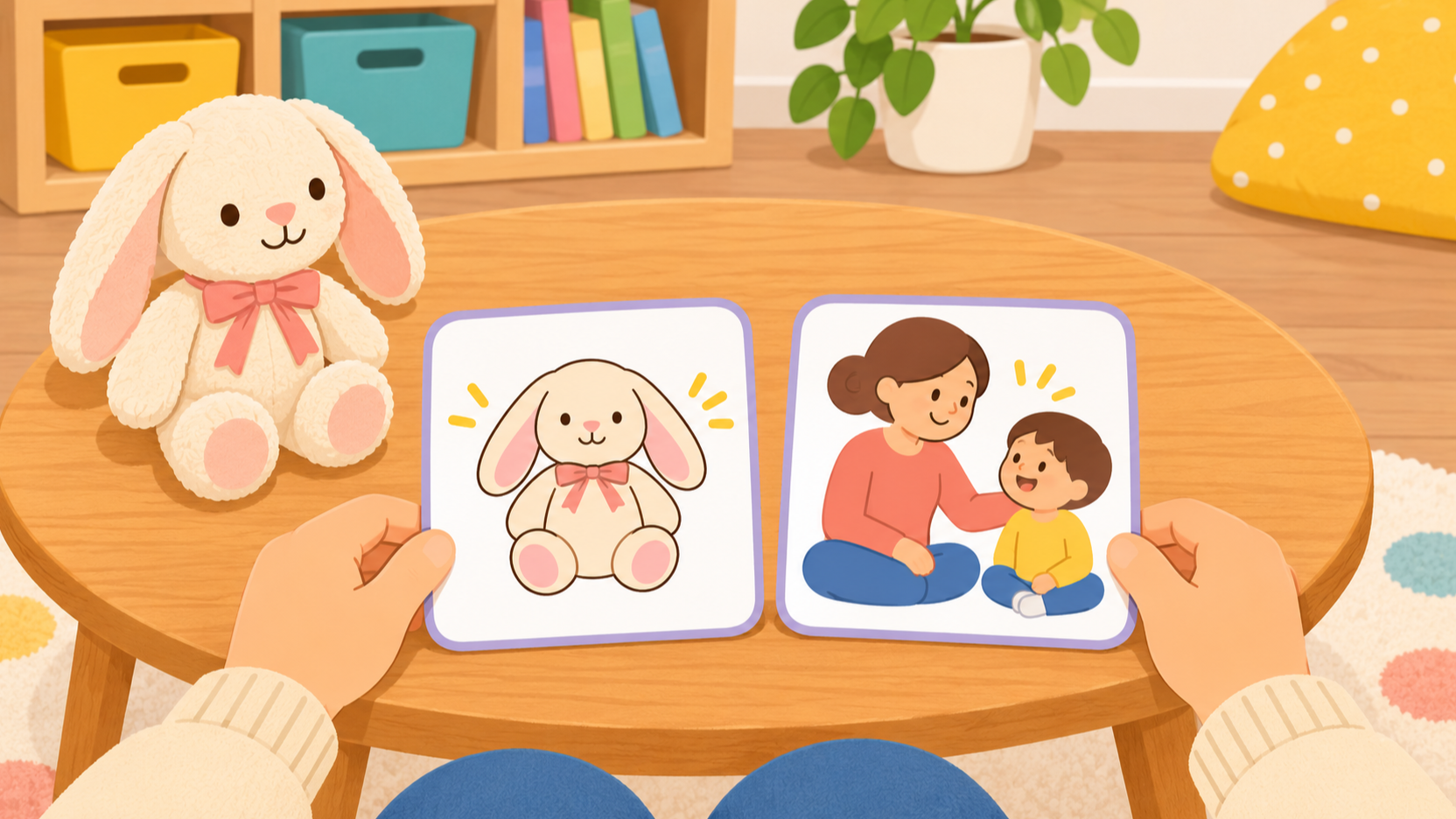
Start with two calm down cards for toddlers that show things your child can do with you, such as holding a soft toy or sitting beside you. Practice the actions during play, then offer the pictures when frustration starts. If your child pushes the cards away or gets more upset, set them down and stay nearby. A point, a reach, or moving toward you can be enough to communicate a choice.
Key Takeaways
- Put one familiar action on each card and begin with two options your child can use right away.
- Show the picture while you do the action together. Pretend play gives you a place to practice before a hard moment.
- Accept pointing, reaching, or moving toward an object as a response. Leave room for your child to pass.
- Keep the cards near the routine where you’ll use them. If your child needs your help first, put the cards aside.
What are toddler calm down cards for?
Toddler calm down cards are pictures that show an action a child can try with adult support when they’re upset. A child can point to a picture of a soft toy, for example, and the adult can bring the toy over or sit beside the child while they hold it.
Think of an action card as a visual cue, a picture that stands for something you can do. The action is the part you practice. If the card shows a child sitting beside a grown-up, point to it and sit together. You can say, “Sit together,” as you make room next to you. The picture and the words refer to the same thing your child can see and do.
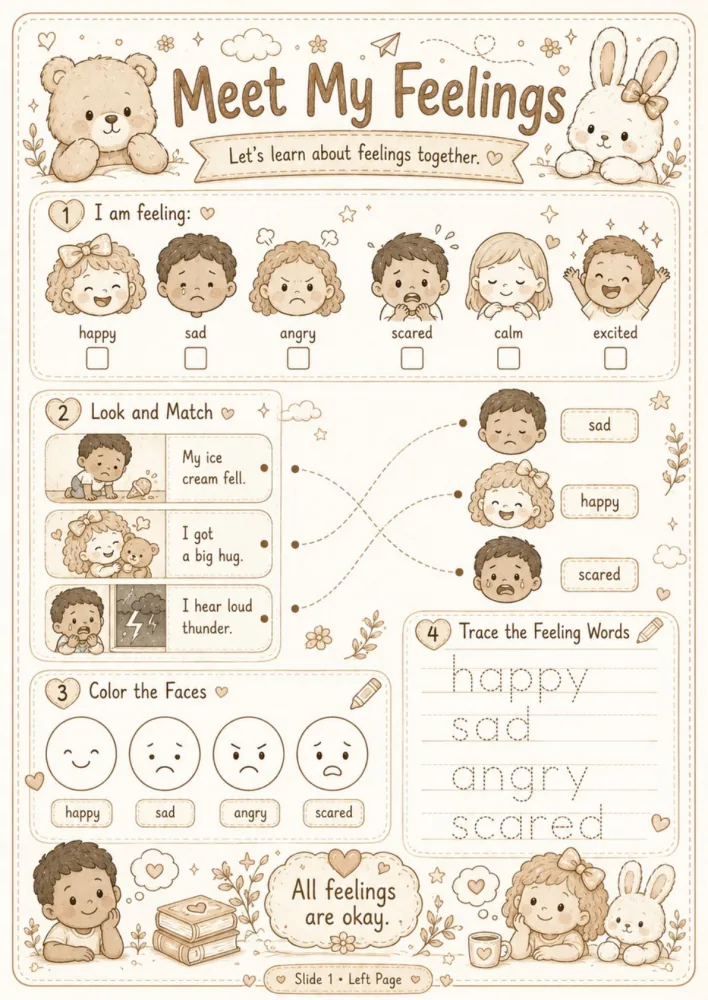
A feelings card has a different job. A face labeled “sad” can give you a way to talk about what a character feels during story time. A picture labeled “sit together” gives your child something to ask for. You can keep both kinds of cards in the same basket and use the action picture on its own when your child needs help. Naming the feeling can wait.
The cards are one way to offer support within a wider routine. CASEL’s framework places managing emotions under self-management and includes practice in both home and classroom settings. CASEL.
For more actions to practice together, see Calm Down Choices for Kids: What Can They Try?.
Which calming pictures should you put on toddler cards?
Choose pictures of actions your toddler already knows or can copy with you. A good starting pair shows two choices you can offer in the same place, such as holding a soft toy and sitting beside an adult. Draw or photograph one action per card and give each picture a short label you can say aloud.
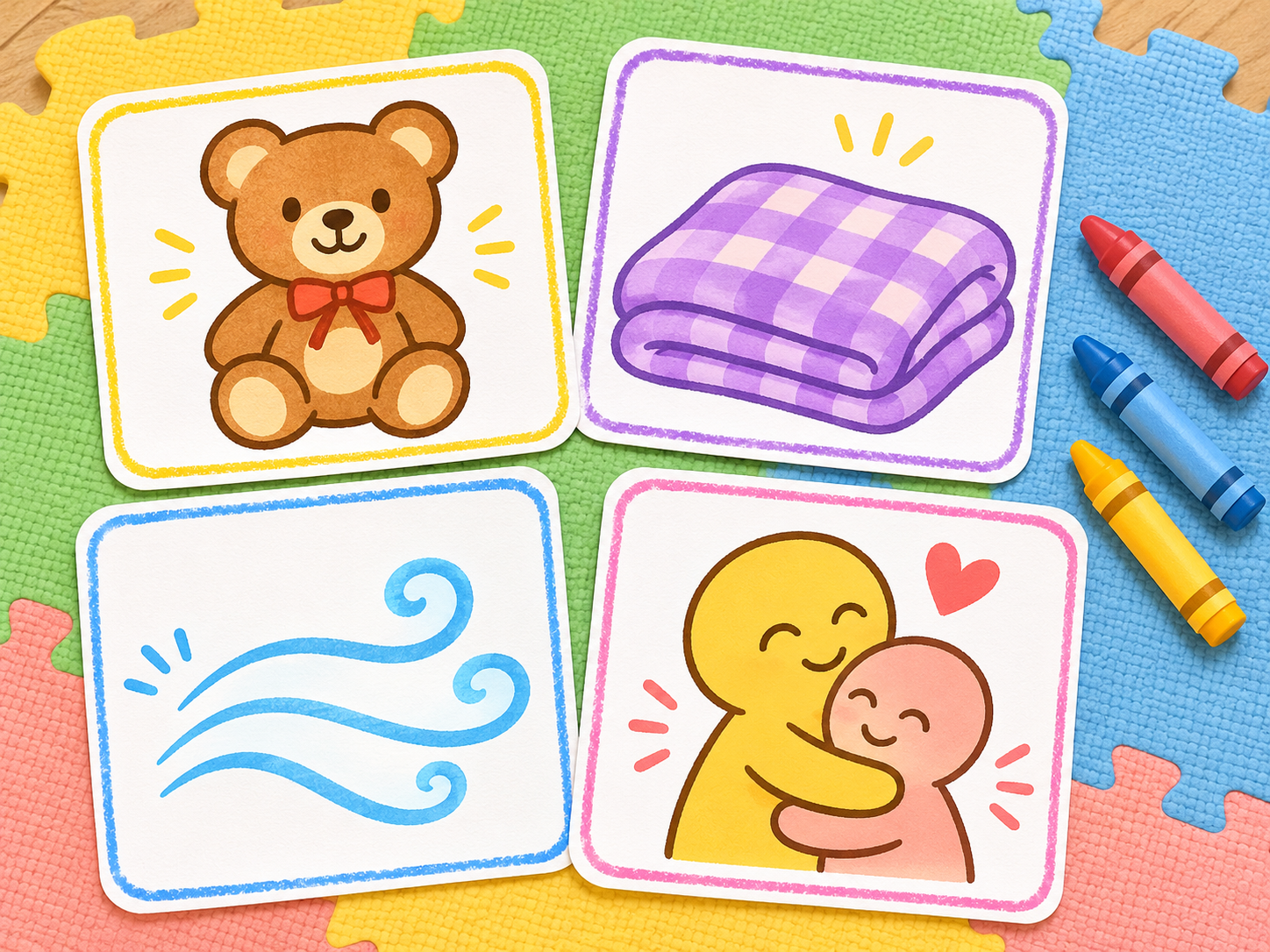
Use the actual objects and places your child knows. If you offer a stuffed rabbit, try a picture of that rabbit. If a card means “sit with me,” show a child beside a grown-up so the picture leaves room for company. Look at each card and ask yourself what you’ll do if your child picks it. That check catches pictures that look clear on paper but leave the next action open to interpretation.
| Choice on the card | What the picture can show | What you do if your toddler picks it |
|---|---|---|
| Hold the soft toy | Hands around a familiar stuffed animal | Put the toy within reach and let your child take it. |
| Sit with me | A child sitting beside a grown-up | Sit nearby and leave room for your child to join you. |
| Blow gently | A grown-up blowing out with relaxed cheeks | Model an easy breath out and let your child copy if they want. |
| Push the wall | Two palms flat against a clear wall | Show how to press gently with feet on the floor. |
| Ask for help | A grown-up helping with a familiar task | Help with the next part of the task, such as starting a zipper. |
I like including ask for help when the hard moment starts with a task your child wants to finish. If the zipper is stuck, starting it for your child answers the request on the card. A picture of a breath would give you a different action to practice another time.
How do you teach toddlers to use calming choice cards?
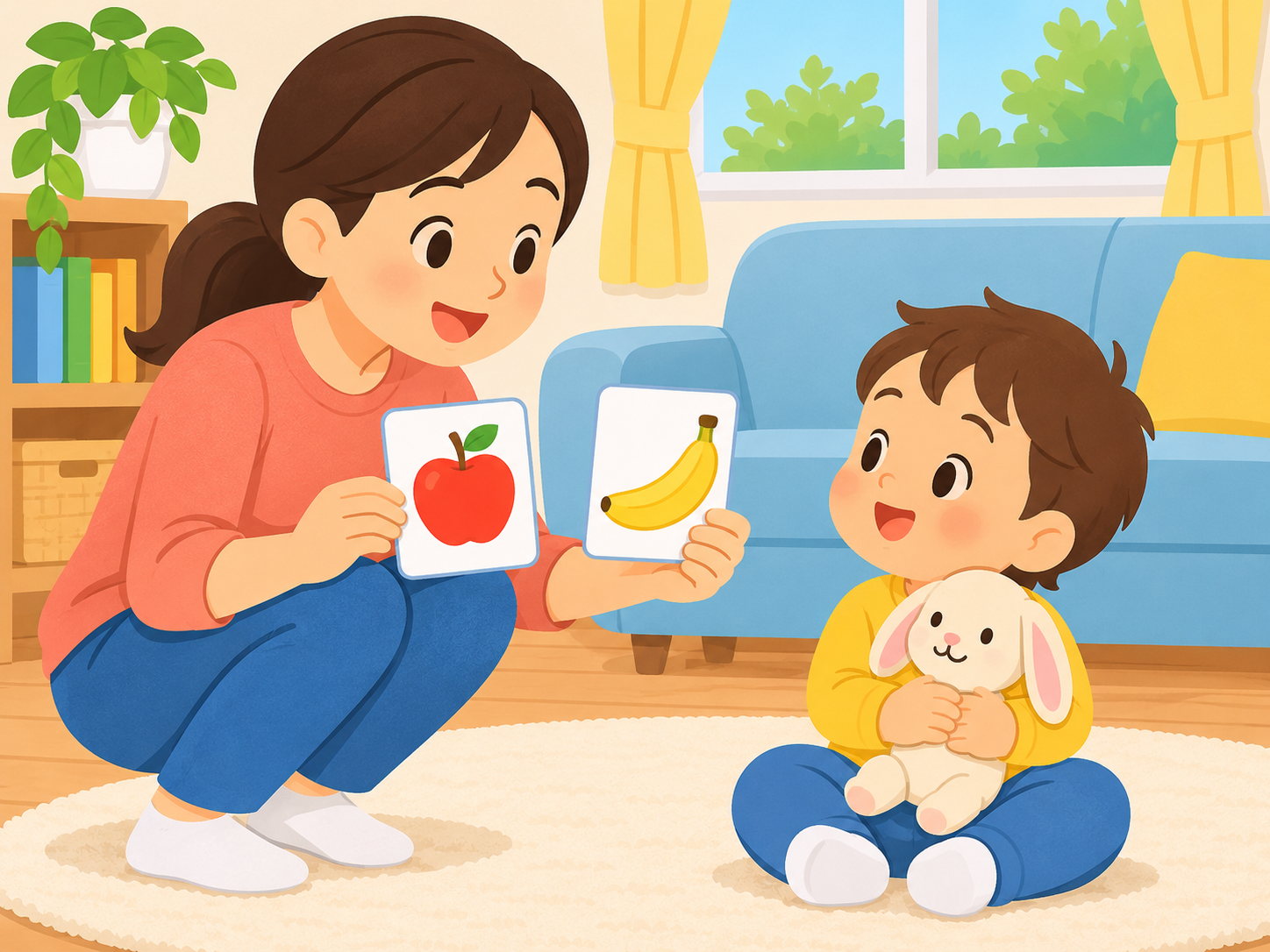
Teach calming choice cards while your toddler is at ease by pairing each picture with a short phrase and the action itself. Use a stuffed animal to act out a familiar snag, such as a block tower falling, then let your toddler point to a card or show the toy what the picture means.
- Pick two actions you can show. Set the cards beside the objects or places they represent. For “hold the bear” and “sit with me,” put the bear nearby and sit where your child can join you.
- Act out one card at a time. Point to the bear picture, say “hold the bear,” and hold it yourself. Set it down where your child can reach it. Repeat the process with the sitting card.
- Give the toy a turn. Let a toy watch a block tower fall. Show a card and act out the next step with the toy. If your toddler carries the toy over to you, go with that response.
- Offer the pictures during a small snag. If a puzzle piece won’t fit and your toddler is still looking toward you, show a familiar card. Say the same words you used in play. Give your child room to respond before you speak again.
Watch what your child does with the picture. If they point to the bear and then look for it, the picture gave you a request you can answer. If they reach straight for the bear, hand it to them. You can keep the picture available and follow the request your child already made. Play gives you another chance to connect the picture with the action later.
When should you offer toddler calm down cards during a tantrum?
Offer a familiar calm down card if your toddler is upset and still able to look toward you or reach for something you offer. Put the cards down if your child pushes them away or if you need to stop unsafe behavior. Stay available and offer a choice again when your child starts to reconnect with you.
Pediatrician Wendy Sue Swanson advises parents to “give your child control over little things” during a tantrum and recommends addressing hitting, kicking, biting, and throwing. With cards, a little choice might be where to sit or whether to hold a toy. The adult still handles safety. American Academy of Pediatrics, HealthyChildren.org.
Here’s how that can look at the end of block play. You say the blocks are going away and your toddler reaches for the tower. You show “sit with me” and “hold the bear.” If your child reaches for the bear, bring it over and leave room for them to sit with you. If they sweep the cards away and throw a block, set the pictures aside, move the remaining blocks away, and say, “I’ll move the blocks to keep us safe.” When your child comes toward you, make room beside you. The next action is already available.
Afterward, you can say, “You came and sat with me.” That describes what happened. Save another practice round for play, especially if your child has already moved on to the next part of the day.
How do you set up a calm corner or a toddler calm down map?
Set up a calm corner, a place where your toddler can pause with a grown-up, by putting familiar choice cards beside the things they show. For a calm down map, place pictures in the order you use them during a routine, such as sitting together and then choosing a soft toy or asking for help.
A calm corner can be the end of a couch or a spot on the floor beside your chair. Leave space for you to sit together and keep the objects you picture close at hand. If you have to cross the room to find the toy whenever your child points to it, put the toy by the cards or swap in a picture of something already there.
A map has a sequence. A choice board has options side by side. A single card gives you one action to show. Use the format that matches what you’ll do next. At preschool drop-off, for example, a teacher can show a picture of sitting together by the book basket and then offer a familiar toy. If the child walks straight to the teacher, the adult can sit with the child and leave the second picture for later.
Try the same pictures at home and in your classroom if both places can offer the same actions. If the objects differ, keep the wording and photograph what the child will actually find in each place. For more ideas on arranging the space, see How to Set Up a Calm Corner for Kids.
Should you draw, print, or buy toddler calming cards?
Draw or print a small set of toddler calming cards first if you’re working out which pictures your child recognizes and which actions fit your routine. A purchased set is an option if its preview shows actions you can offer and a layout that lets you display the cards you need on their own.
| Format | Use it when | Check before you commit |
|---|---|---|
| Hand-drawn cards | You want to show a familiar chair, toy, or action. | Can you act out what the drawing means as you point to it? |
| Printable cards | You want separate pictures for a wall or for use beside you. | Can you print the page you need and show just the pictures you plan to use? |
| Purchased set | The preview shows choices you already practice. | Do the pictures show the action clearly, and will you have what you need to offer it? |
For a printable, look at the preview as if you were about to use it. Find the picture you would point to during a familiar routine, then check how you’d cover or remove the other options. If the page includes a full sequence, decide whether you’ll use it as a map or cut out the individual action pictures. A hand-drawn card gives you an easy way to try an action that the preview doesn’t show.
Start where the next choice will happen. If cleanup is the sticking point, put the two pictures near the blocks and practice with a toy during play. The next time you offer the cards, notice what your child reaches for and whether you can respond. If they choose your lap instead of the pictured chair, draw the choice they actually made.
Shop the topic
-
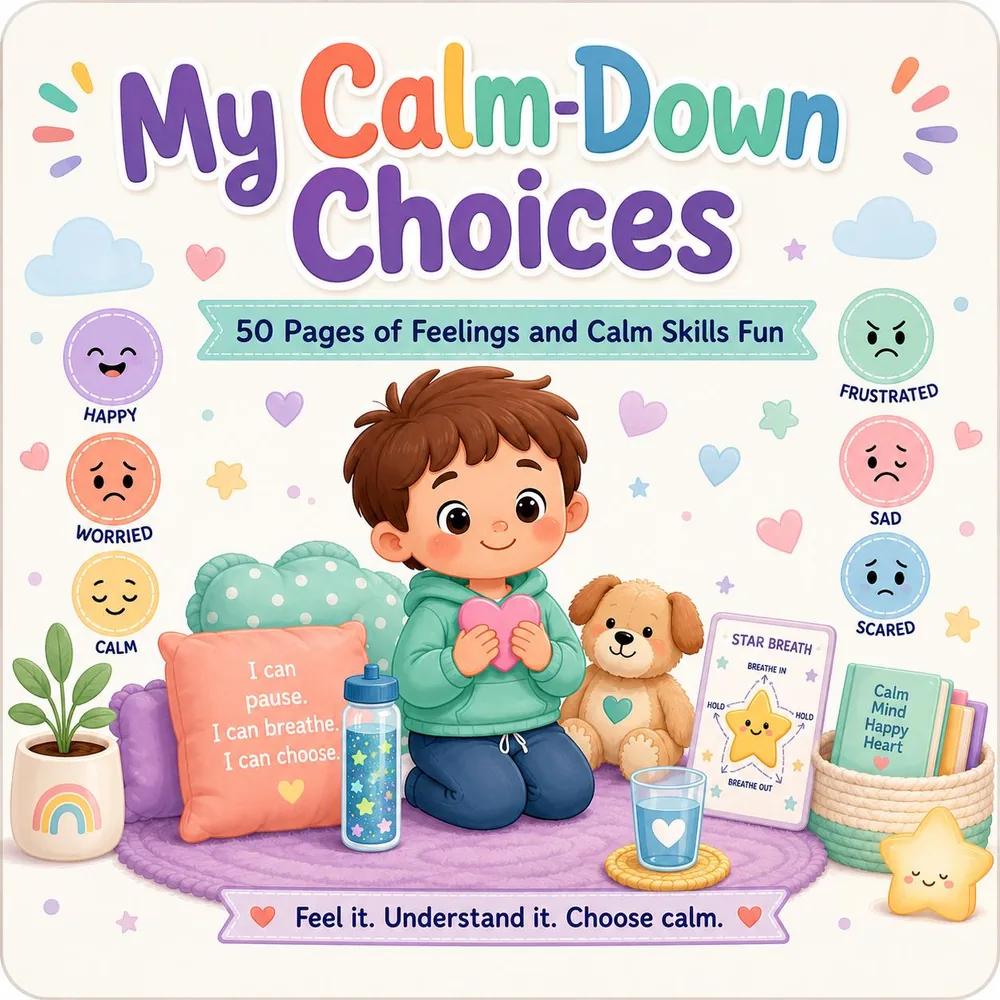
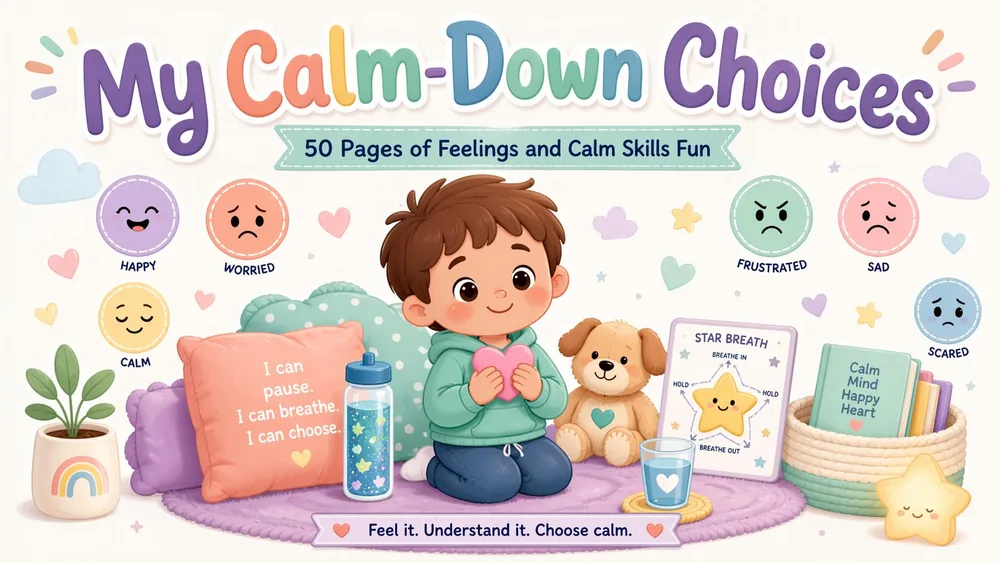
My Calm-Down Choices Pack
50 pages of social-emotional learning: feelings, body awareness, breathing practice and calm-down strategies.
$7
Get this product View details -
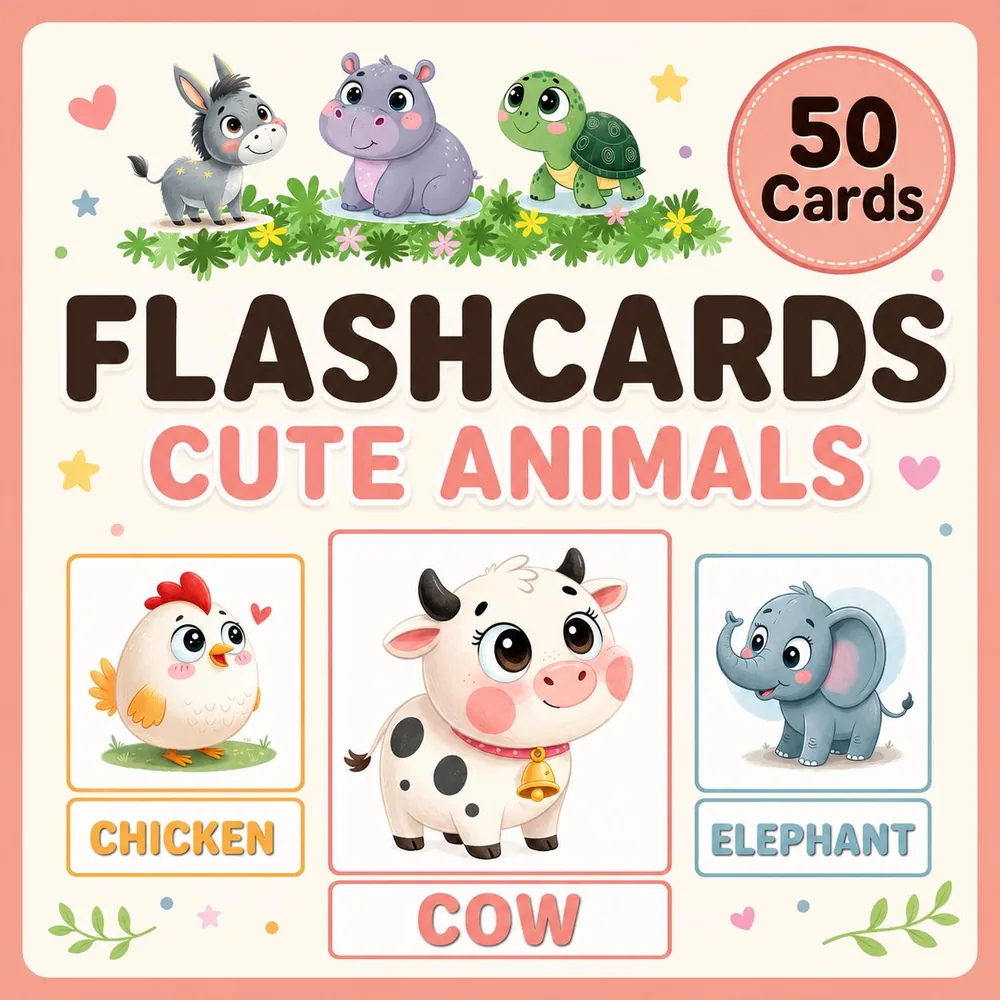
Animals Flashcards for Kids: 50 Cards
50 printable animal flashcards with cute illustrations: builds vocabulary, memory, and visual recognition.
$7
Get this product View details -
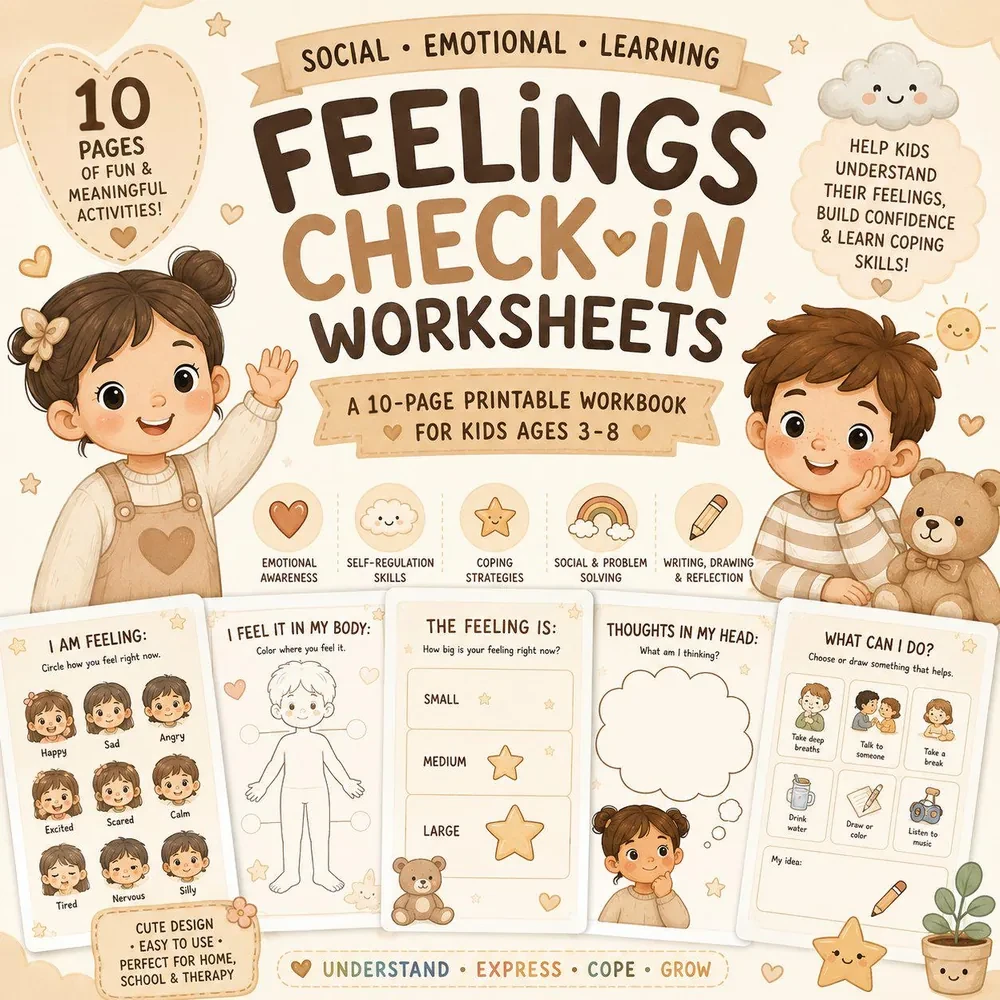
Kids Mood Tracker & Feelings Workbook
10 feelings check-in pages: name the feeling, find it in the body, size it and choose what helps.
$7
Get this product View details
Frequently asked questions
What age can toddlers start using calm down cards?
You can introduce calm down cards when your toddler can connect a familiar picture with an object or action during play. Start with a photo of something your child already uses, such as a stuffed animal. Point to the photo and bring the toy over so your child can see the connection.
How many calm down cards should I show my toddler at once?
Start with two familiar cards, and show one if your toddler is having trouble choosing. Make both actions available before you offer them. You can keep other cards nearby for practice, then swap one in when you have a reason to use it in that routine.
What if my toddler throws the calm down cards?
Put the cards away and focus on keeping the space safe. Stay close enough to offer help and keep your words short. During a quiet moment, try mounting one picture where you can point to it, or model the action with the toy itself before bringing the picture back.
Do I need a calm corner to use calming cards with a toddler?
You can use calming cards wherever you can help your toddler do the action on the picture. A card by the blocks can offer help during play, and a card near the couch can invite your toddler to sit with you. Keep the picture where you'll actually use it.
Can I make toddler calm down cards without a printer?
Yes, draw each action on a piece of paper or show your toddler a photo of a familiar object. Use one picture at a time as you demonstrate the action together. If your child reads the drawing differently from you, try a picture of the actual toy or chair.