
Letter Tracing Worksheets for Struggling Writers
Part of: Alphabet Tracing Printables: A Parent's Guide
By KubbyLab Team · Updated
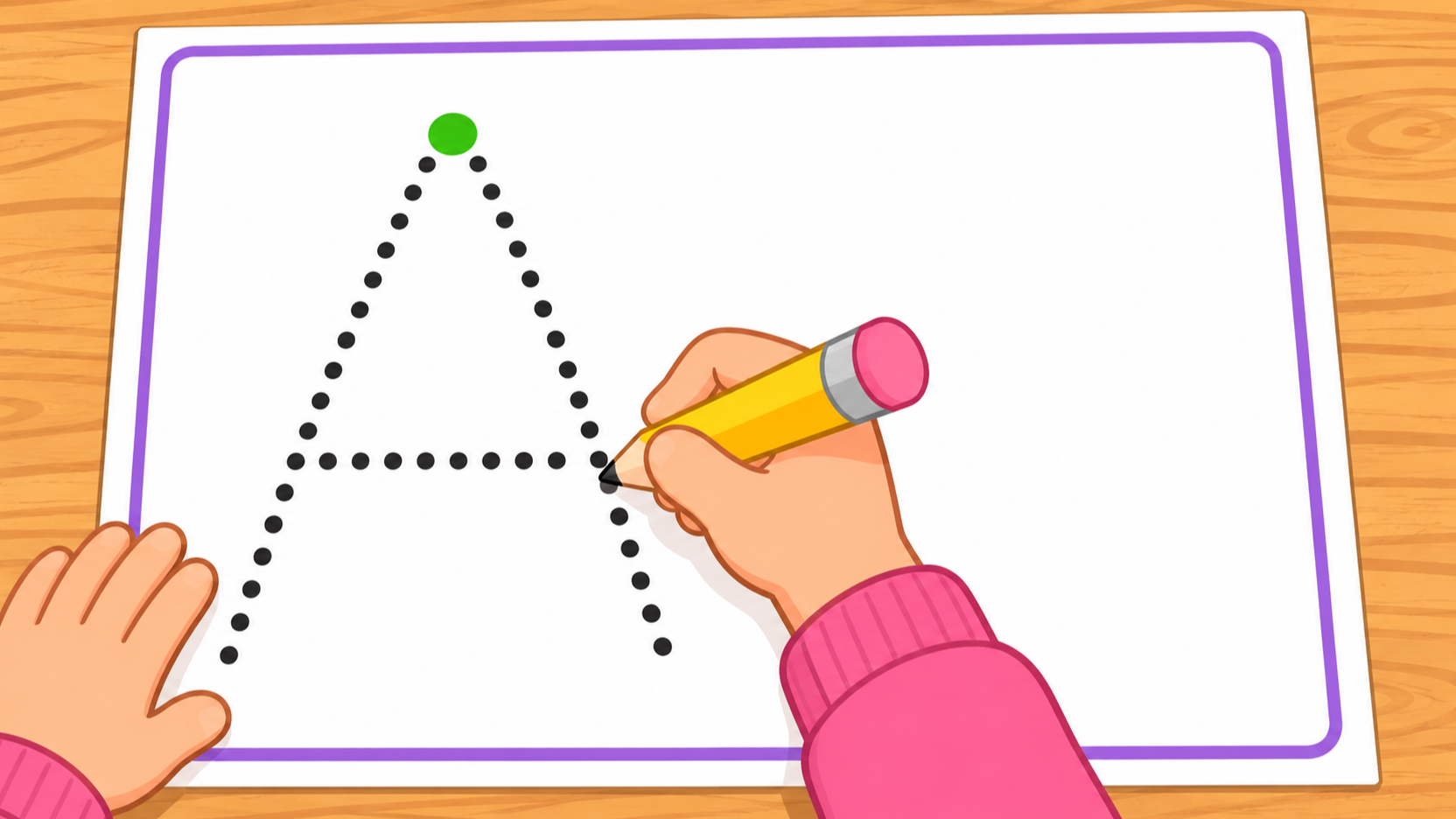
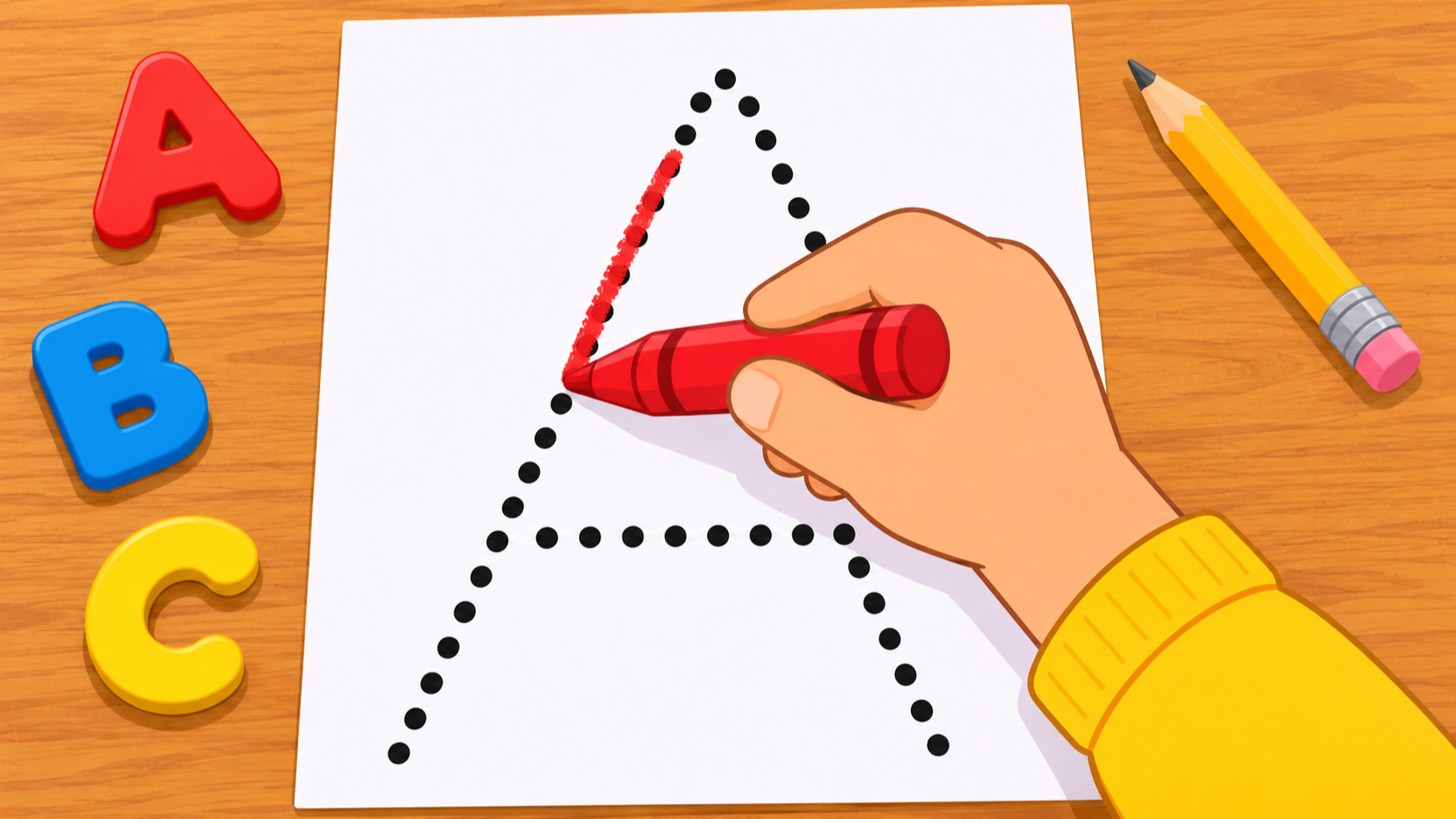
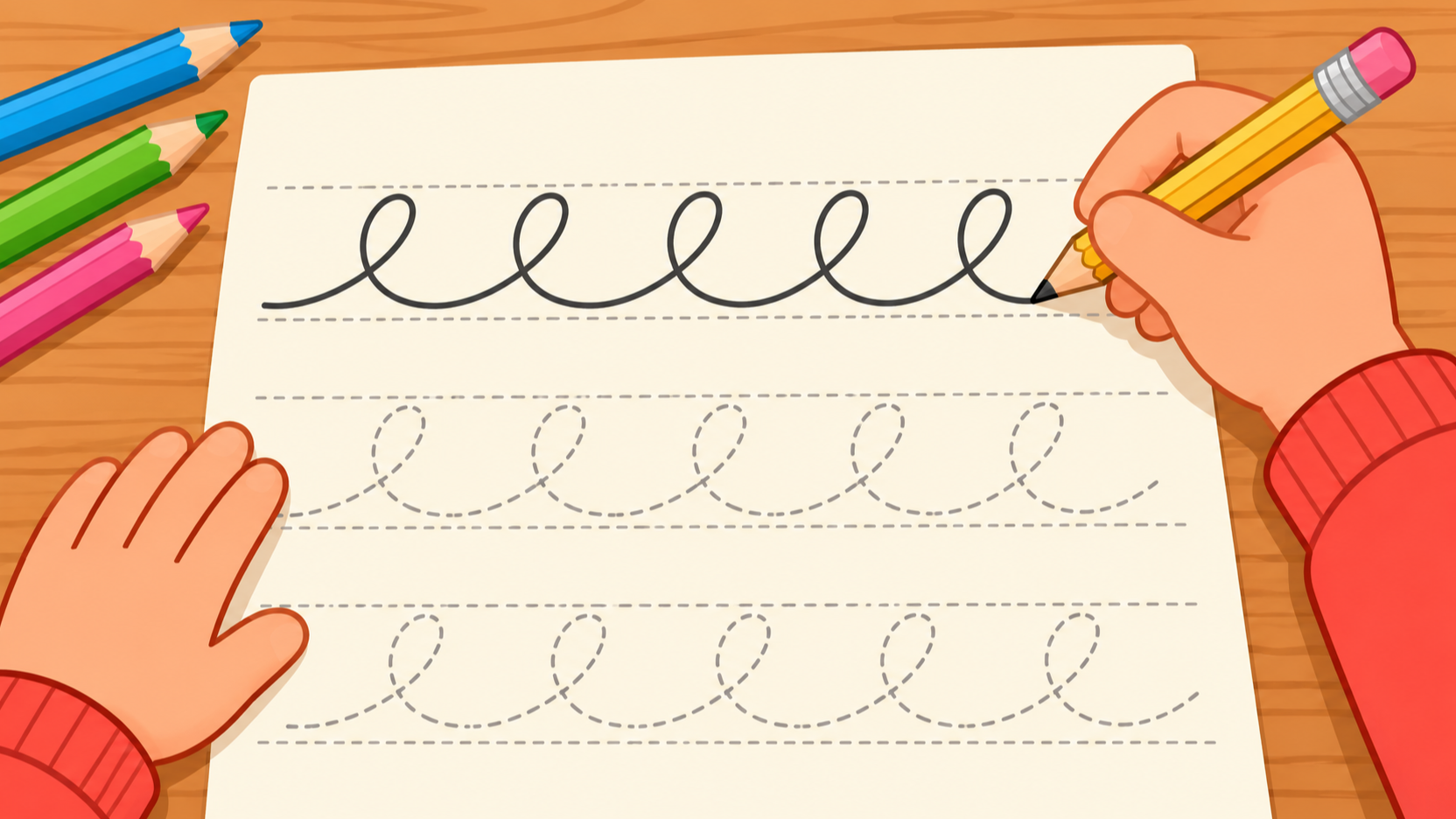
Choose letter tracing worksheets for struggling writers with a large letter, a clear starting dot, and room to copy the letter beside the model. Start with one letter your child knows. Show how to make it, let your child trace it, then cover the tracing path and leave the model visible for a copy attempt. If the copy is hard to start, bring back the dot.
KEY TAKEAWAYS
- Start with a single letter your child recognizes, such as an initial from their name.
- A starting dot shows where the pencil goes first. An arrow shows which way it moves.
- Compare a traced letter with a copy to see which cue your child still uses.
- Use the worksheet alongside drawing, finger tracing, or writing during play.
What should you look for in letter tracing worksheets for struggling writers?
Look for a practice sheet that shows one large letter at a time, with a starting dot to mark where the pencil first touches the paper and an arrow to show the direction of the stroke. Pick a sheet with a plain model and enough open space to copy the letter at about the same size.
Check the blank area as closely as the dotted letter. If the model is large but the copy space is a narrow handwriting row, your child has to shrink the movement while figuring out how to draw the letter. Fold the page to show one row, or put a blank sheet next to the model so the trace and copy can stay the same size. The Alphabet Tracing Printables: A Parent’s Guide covers how different page layouts fit into early alphabet practice.
Open the preview before printing a whole pack. In a free A and B printable, look at how the page shows the slants and crossbar of A or the straight line and curves of B. If both letters are on one page, cover the letter you’re saving for later. An alphabet writing practice sheet can work as a reference if you put a blank piece of paper beside the chosen letter. Check that the printed shape matches the version your child is learning at school or at home, especially when lowercase models vary from one sheet to another.
Which handwriting practice sheet fits the difficulty you see?
Choose the handwriting practice sheet by watching where your child pauses. A child who asks where to begin can try a starting dot, while a child who starts readily but squeezes the letter into a small space can try a larger blank area. Change one feature so you can see what happens on the next attempt.
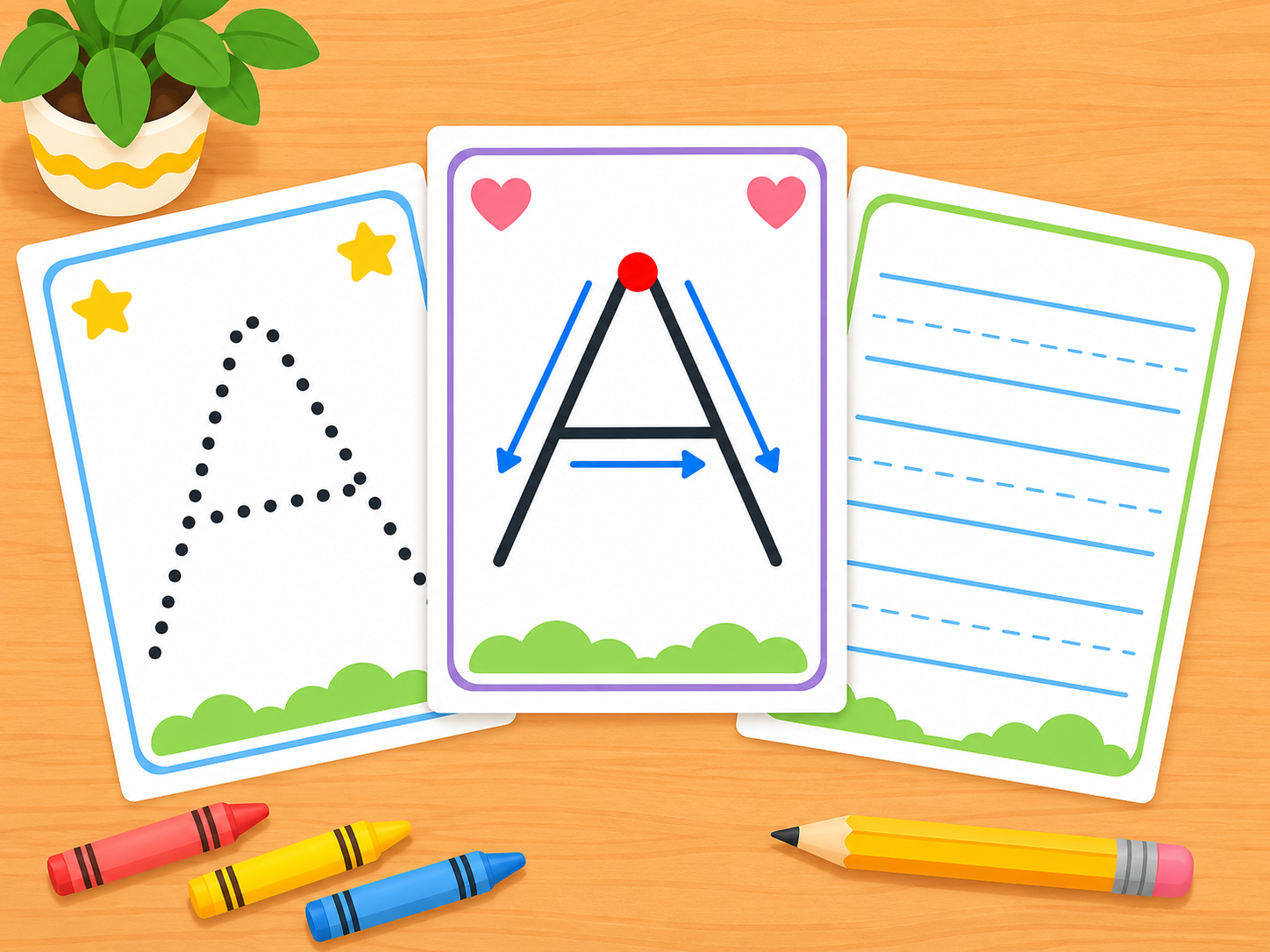
Letter formation is how a writer starts a letter and makes the strokes that give it its shape. A finished letter can show you that a stroke is missing. Watching the pencil tells you where the attempt became difficult. For example, if a child draws the upright line of B and stops there, model where the first curve begins before asking them to trace again.
| What you see | Practice option | What to watch on the next try |
|---|---|---|
| Your child waits before putting pencil to paper. | Add a starting dot beside a visible model. | Do they begin at the dot without a spoken reminder? |
| Your child begins in the right place and moves in the opposite direction from the model. | Add an arrow to the first stroke. | Do they follow the direction when the arrow is visible? |
| The letter fits in an open space but crowds the ruled row. | Use a large blank box or unlined paper. | Can they keep the shape when there is space to move? |
| The full row draws attention away from the letter you are showing. | Cover the other rows with scrap paper. | Can they stay with the letter in view? |
| The trace follows the path, but the blank space stays empty. | Keep a plain model visible and add a dot to the copy space. | Can they begin and continue without a dotted path? |
Use the comparison to choose a cue for the next turn. A single page gives you an example to work from, and what you see can change with the letter or the writing tool.
How do you use a letter tracing sheet without filling every row?
Use a letter tracing sheet for a short turn with one familiar letter. Model the first stroke, offer a trace, and leave room for a copy while the model stays visible. End the writing turn if your child asks for a break or stops engaging with the letter, even if the rest of the page is blank.
Set out the sheet and a pencil, marker, or crayon your child can comfortably use. If the sheet moves when they write, hold a corner or tape it down. Sit beside your child so you can point to the model from the same side of the table. Set a piece of blank paper next to the sheet before you begin so the copy has a place to go.
- Show the stroke. Say the letter’s name and draw it where your child can see your starting point. Keep any spoken cue tied to the movement, such as “start at the top and go down.”
- Offer a trace. Let your child trace the letter. If the pencil pauses at a change in direction, point to the next part of the stroke and give them a chance to continue.
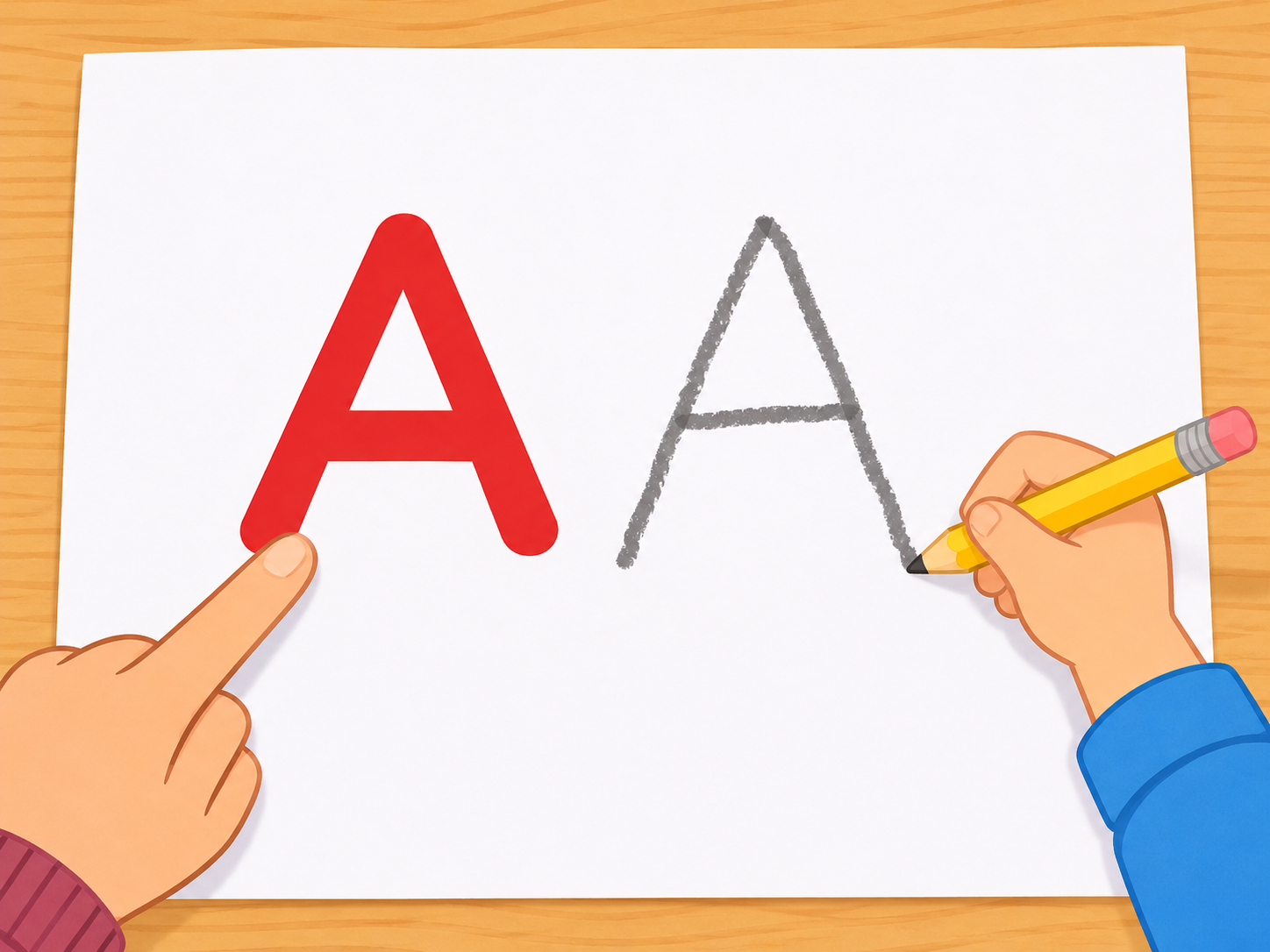
- Try a copy. Cover the dotted letter and leave the plain model visible. Invite your child to make the letter in the blank space. If starting is the hard part, put a dot where the first stroke begins.
- Notice one action. Say what you saw in plain language, such as “You went all the way down from the dot.” Keep the sheet if you want to remember which cue you used.
How can you tell when your child is ready to copy a letter?
A child is ready to try copying when they can look at a model and are willing to make the letter in a space without a dotted path. Keep the model visible for the first copy and watch how they begin. If the first stroke stalls, give a starting dot and leave the rest of the space blank.
Set up a small comparison with uppercase L. Put a large dotted L next to a plain L. Below the plain model, leave two open spaces. Add a starting dot to one and leave the other empty. Keep the spaces big enough for the same letter size. Tracing means moving over the printed letter. Copying means looking at the model while drawing a separate letter. The open spaces let you see what happens when the printed path goes away.
You sit down with an L sheet and a blank space. Your child follows the dotted L and then pauses over the empty space, so you offer the space with the dot. Your child starts there, draws down, and turns across. You finish the turn with a letter they made from a starting cue and a visible model.
If the child begins both copies but leaves off the bottom stroke, keep the model in view and demonstrate the turn. If they can copy L with the model visible, you can cover it for a separate try from memory another time. Leave the letter size alone for that attempt. Changing the size and hiding the model together makes it harder to see which change mattered.
What can children do when pencil tracing gets frustrating?
When pencil tracing gets frustrating, put the worksheet aside and practice the same letter movement through play. Draw the letter in the air or sweep a finger through a tray of sand. Keep the same starting point and stroke direction as the paper model, and let your child decide whether to return to the pencil.
Sky-writing means drawing a letter in the air with a finger. Stand beside your child and face the same direction so your movements are easy to follow. For uppercase L, reach up, move your finger down, and then move it across to the right. If you’re using a tray, show the movement in the sand beside the paper model. Smooth the surface when your child wants another turn.
I like giving the mark a job in play. An L can label a pretend library shelf, or a child can add their initial to a drawing before putting it on display. Teacher educators Christina Mirtes and Jessica Grimone-Hopkins describe their approach in terms of “how to create a learning environment that supports literacy development in preschool.” Their examples put writing materials where children can use them during play. NAEYC’s guide to playful preschool literacy.
Keep the letter familiar if you’re also changing the material. If straight strokes are the part your child wants to practice, pre-writing lines and shapes gives you a place to continue with lines, turns, and curves. You can leave the unfinished worksheet on the table for another day and use the rest of this turn for drawing together.
How do children move from letter tracing to words and sentences?
Move from letter tracing to words by giving the practiced letter a place in writing your child cares about. Let your child add an initial to a picture, copy a familiar word from a card, or write one part of a shared sentence while you write the rest. Keep a model available when your child asks for it.
In a tracing-to-sentences worksheet pack, look at what changes from one page to the next. One page may offer large letters, while the next asks for small letters, spaces between words, and a full line of copying. Try the part that fits the writing your child is doing. A blank card and a visible name model can give a child a place to use one letter without adding all the demands of a sentence page.
A short shared caption gives the child a way to take part when forming letters takes effort. Ask what they want the drawing to say, then write their words as they watch. Leave space for the letter or word they’d like to add. The National Association for the Education of Young Children recommends asking a child about a drawing and writing down what the child says as a way to connect their ideas with written words. NAEYC’s Everyday Steps to Reading and Writing.
If the same difficulty keeps getting in the way during classroom writing or writing at home, share a traced sample and a copy with your child’s teacher. Describe which cue helped them start and where the pencil stopped. That gives you a concrete place to begin the conversation.
Keep reading
Alphabet Tracing Printables: A Parent's Guide
Choose alphabet tracing printables, teach letter strokes, and adapt practice with clear examples for preschool and kindergarten.
Cursive Handwriting Practice Worksheets for Beginners
Choose cursive handwriting practice worksheets that fit your child's next step, from tracing broad curves to joining letters and writing familiar words.
Zaner-Bloser vs D'Nealian Cursive for Beginners
Compare Zaner-Bloser vs D'Nealian cursive, see how each starts with print, and choose a worksheet that matches your child's handwriting model.
Frequently asked questions
Can I use a free A and B tracing worksheet if my child struggles to write letters?
Yes, a free A and B tracing worksheet can work if the letters are large, the starting points are clear, and you have room to add a copy. Show only the letter your child is practicing. If the page is crowded, put a plain sheet beside it and copy the model there.
How many times should my child trace the same letter?
Start with one trace and see whether your child wants to try a copy. Repeat the trace if your child wants to see or feel the movement again. If they put down the pencil, ask to stop, or lose track of where the stroke begins, pause and offer a different way to draw the letter.
Should my child start with uppercase or lowercase letter tracing?
Start with the version your child recognizes and has a reason to use, such as the capital at the start of their name. Match the letter shape to the example they see at home or school. You can show the other case on a separate card once your child is ready to look at both.
What if my child reverses a letter while copying it?
Show the model beside your child's copy and point to the part that faces a different way. Demonstrate the letter, then offer an empty space with a starting dot if they want to try again. If the reversal keeps interrupting everyday writing, share a few samples with their teacher.